The Glenbuchat Image Library
No: 2582 Contributor: No Contributor Year: 2024
37 Mary Queen of Scots portrait


? The final portrait of Mary Queen of Scots. (1542-1587)
This portrait of Mary Queen of Scots is similar to others which highlight events surrounding Mary Queen of Scots both in the past and at present.
In Newe was a small portrait of what is assumed to be Mary Queen of Scots in a dark wooden frame. The portrait is painted on wood and still has vibrant colours.
If a larger view required click on the ‘view large version’ link at the bottom of the page.
Click to see the album of Treasures of Castle Newe
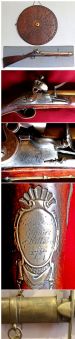
The pictures above show:
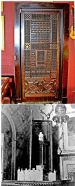
1 The Newe Painting of Mary Queen of Scots in its frame
2 Close up of the Newe painting
3 The Jedburgh Portrait (Antwerp Portrait) which is almost exactly the same as the Newe portrait.
4 The Mary Queen of Scots portrait recently removed from Blairs
5 The Monument in Antwerp with a copy of the same pose of Mary Queen of Scots as the Newe and Jedburgh paintings.
Starting with the present.
The Memorial Portrait of Mary Queen of Scots
The Memorial Portrait of Mary Queen of Scots was a highlight of the collection at Blairs Museum, Aberdeen (Site of the now closed Blairs Catholic Seminary). Recently however it has been removed to Glasgow, thus causing some local concern about cultural misappropriation.
From ‘historyscotland.com’
“Chief amongst the Blairs collection is the Mary Queen of Scots Memorial Portrait, a painting which has had an equally colourful and dangerous history. The painting was commissioned by Elizabeth Curle (pictured on the right of the painting) who was lady in waiting during the last eight years of Mary’s life, who accompanied Mary to the scaffold and was the last person to embrace her. It was painted somewhere between c. 1604 and 1618 by an unknown artist in the city of Antwerp. On her death Mary divided up her property and gave to Elizabeth a miniature of her, which is also in Blairs collection and which bears a remarkable resemblance to the Memorial Portrait. After the execution, Elizabeth left for Antwerp, where it is believed the painting was made.
On her death in 1620, Elizabeth bequeathed the painting and the miniature to the Scots Collage in Douai where her nephew Hippolytus Curle S.J was a priest. There the painting stayed until the French Revolution forced the students and staff to flee when the building was sacked and the belongings seized. However, in such reverence was the painting held, that it was saved by John Farquharson Rector of the College. He took the painting to a friend who lived near to the College where it was cut from its frame and hidden up a disused chimney.
After the peace of 1815, the Scottish Bishops claimed compensation for Douai and in 1831 the French Government granted permission for the painting to be transferred to the College at Blairs, the only remaining college possessed by the Bishops in Scotland. This was in line with Elizabeth Curle’s will which stipulated that if the funds of Douai College were ever to be transferred, the miniature and painting should be transferred too as a memorial to her benefactions to Douai.
At some point in the 17th century the miniature was reset as a reliquary and Mary’s image was placed amongst the relics of saints and crowned by ‘IHS’, on the converse of the miniature around the symbol of Our Lady – ‘Maria Regina Angelorum’ are more saintly relics. Therefore, within a matter of only a few years, Mary has become saintly, she has transcended the accusations levelled during her lifetime to be presented as martyr in the company of saints.”
St. Andrew’s Church in Antwerp
In St. Andrew’s Church in Antwerp is a monument to the two ladies in waiting who were present at Mary’s execution Elizabeth Curle and Joanna Kennedy. These are the ladies who commissioned the picture in Blairs of the Mary Queen of Scots Memorial Portrait. The painting was done after Mary’s death and the face was taken from the miniature paintings. There is no crown as the picture of Mary the religious martyr and not the Queen of Scotland.
It is assumed that the circular portrait above the monument is also a copy of the miniature, but it appears rather crude with an over large crown.
The following documents from the 1850’s indicate the possibility of copies also with a crown.
Monument To the Memory of Mary Queen of Scots at Antwerp
Having visited the interesting city of Antwerp in the autumn of 1846 I can answer the Query of your correspondent CED from personal inspection The monument to Mary Queen of Scots is still in existence and consists of a richly ornamented slab placed at a consider able height from the pavement against a pillar in I think the southern transept of the church of St Andrew I was told on the spot that it was erected by two English ladies but my informant was silent as to the tradition respecting the head In the centre of the carvings which adorn the upper part of the monument is inserted a medal lion portrait of the beautiful but unfortunate queen it is extremely well painted and represents her in that peculiar costume so familiar to those acquainted with her accustomed style of dress.
The portrait of Mary Queen of Scots is above the tablet which was I believe erected to the memory of Elizabeth Curle who after the execution of her mistress resided at Antwerp and was buried in that church
Mention is made of this crowned portrait of a circular form in Mackie's Castles and Prisons of Queen Mary and of the close resemblance it bears to another in the possession of Lady Cathcart who assured Mr Mackie that the two portraits were painted by order of the queen and presented by her to two Scottish ladies but whose names are not mentioned
Mackie's Castles and Prisons of Queen Mary
“While on the subject of pictures we cannot omit naming two paintings of Queen Mary which we had the pleasure of inspecting when visiting Glasgow In Cathcart House which is about three miles distant from Crookston there is a beautiful circular portrait of Queen Mary with the crown on her head. (The Antwerp Painting) The face resembles very much the portrait from which our engraving is taken We had the honour to receive the following history of this picture from the hands of the Countess Cathcart The picture was painted before her execution at Fotheringhay There were two painted and given by the queen to two Scotch ladies They went abroad after her death and died at Antwerp leaving directions to have the pictures placed over their tombs in St Andrew's church at Antwerp When we were there we saw the tombs One picture still hangs there exactly the same as ours but not in such good preservation There is the stain in the wall where this one had been and the person who showed us the church was delighted to hear where it was as tradition mentioned it but there was no clue as to when it was taken away It has always been supposed by the family that it was brought to Scotland by Charles the eighth Lord Cathcart who was educated at Leyden and served in the Marlborough wars”
Mary Queen of Scots' Visitor Centre in Jedburgh
Another copy of the painting is held at the Mary Queen of Scots' Visitor Centre in Jedburgh and it is called the ‘Antwerp Portrait’ It is virtually identical to the Newe Portrait. It is more delicate and appears to be older.
It would seem that the Mary Queen of Scots portraits from Blairs, Jedburgh and Newe, were are all taken from the same source possible the miniature given to Mary Queen of Scots to her ladies in waiting before her death
 View Large Version
Picture added on 14 April 2024 at 22:58
This picture is in the following groups
castle
castle
castle