The Glenbuchat Image Library
No: 2575 Contributor: No Contributor Year: 2024
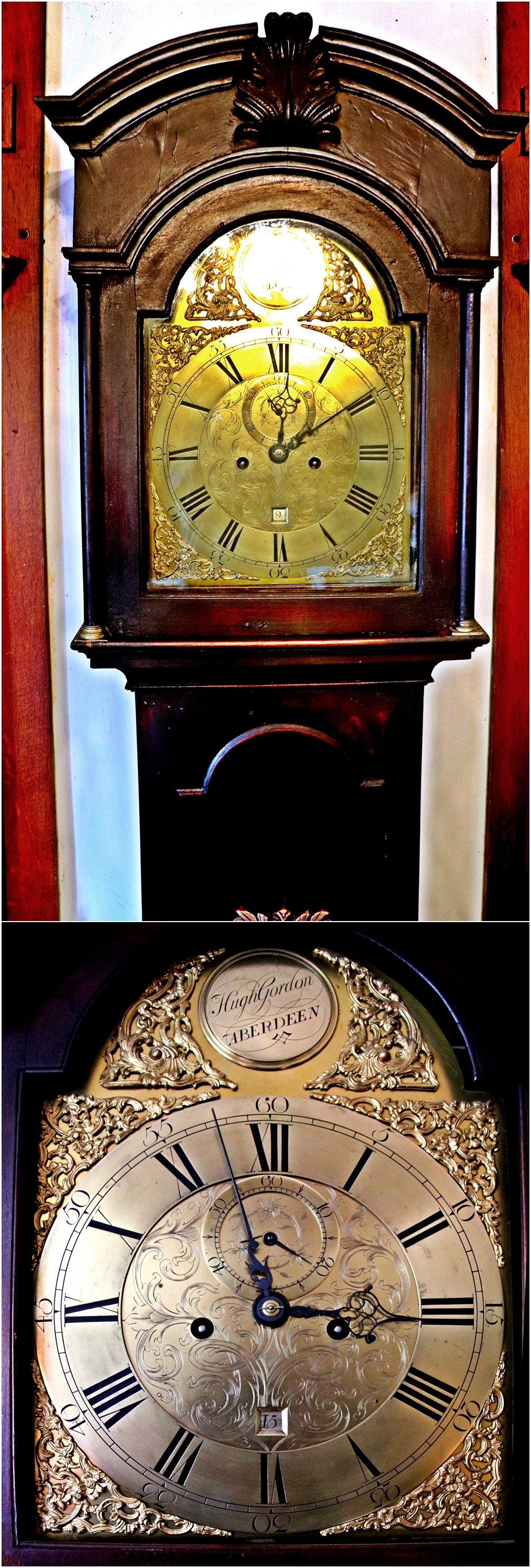
32 Hugh Gordon Clock


Hugh Gordon Clockmaker
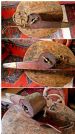
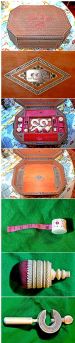
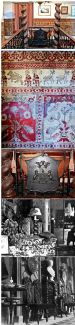
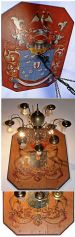
The pictures above shows
The Hugh Gordon’s Grandfather clock, probably made before 1790s therefore it was probably bought by Bombay Jock
If a larger view required click on the ‘view large version’ link at the bottom of the page.
Click to see the album of Treasures of Castle Newe
It is interesting that Hugh Gordon who was brought up not far from Strathdon, went to India when John Forbes ‘Bombay Jock’ and not long after Charles and Kohn Forbes has also gone to India.
High Gordon
Hugh Gordon was born in 1766. The starting points of Hugh Gordon's life were Rhynie and the Cabrach, fairly remote backwaters, where his father James Gordon of Old Meldrum lived and worked (and was buried in a snowstorm).
He arrived at Madras in 1792 to be reunited with his elder brother Robert Gordon who had run away to make his own way in the world. For a number of years Hugh Gordon was employed by the East India Company but was also in business as a watchmaker and silversmith on his own account from 1793 giving birth to one of the most important dynasties of colonial silversmiths active in Madras in the 19th Century. He continued in business at Madras until 1803 when, in that year, his business was passed to the firm of Gordon & Lovell (George Gordon I, Francis Lovell, and Robert Gordon II). He appears to have made his fortune in Madras, and in 1804 he returned home to Aberdeen a wealthy man.
When he returned from India with his fortune in 1804, Hugh Gordon bought the estate which he re-named Manar, after the straits between India and Ceylon (Sri Lanka) where according to some accounts Hugh had made part of his fortune in pearls.
On 2nd April 1807 Hugh Gordon of Manar married Elizabeth Forbes of Echt, a well-established family.
Hugh died on 11th July 1834, aged 68, at Manar House
In 1821, Hugh’s grandson, George Gordon, founded the company George Gordon & Co. in partnership with his brother Robert Gordon III, John Law, and Andrew Barron (the last of whom died there on 15 July 1832). The company produced silverware in the Regency, or Georgian, style, which, at the time in Madras, sometimes featured traditional Indian design and iconography and retailed to wealthy British citizens and Indian aristocrats.
Although George Gordon retired to the U.K. in the 1830s, the firm continued operating as Gordon & Co. in Madras, until 1848, using the maker’s mark “GG&Co.”
 View Large Version
Picture added on 20 February 2024 at 21:34
This picture is in the following groups
castle
castle
Having read the very interesting article re.Hugh Gordon,I confirm that I have a Hugh Godon longcase clock .The clock was bought unexamined by me at an auction in Inverness nearly fifty years ago,and has kept perfect time since . 28-1-2026
Added by Ray Smith on 28 January 2026
If hugh Gordon was born in 1766
And the journal says 1748
And 1753 ,I am not able to understand
Kindly educate me sir , please
Ed
Thank you for your observations. There was an error in the article when there was confusion between two Hugh Gordons, both clockmakers in Aberdeen and Aberdeenshire about the same time. I have removed from the article above reference to the other one, Hugh Gordon Aberdeen, 1748-90
And the journal says 1748
And 1753 ,I am not able to understand
Kindly educate me sir , please
Ed
Thank you for your observations. There was an error in the article when there was confusion between two Hugh Gordons, both clockmakers in Aberdeen and Aberdeenshire about the same time. I have removed from the article above reference to the other one, Hugh Gordon Aberdeen, 1748-90
Added by Manoj on 13 July 2026
Several weeks ago I tried sending photos of my Hugh Gordon clock. As I not very proficient with the computer,can you please confirm if they were successfully received . Thanks
Not received but solution emailed Ed
Not received but solution emailed Ed
Added by Ray Smith on 20 August 2026
castle