The Glenbuchat Image Library
No: 2449 Contributor: No Contributor Year: 1907
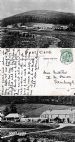
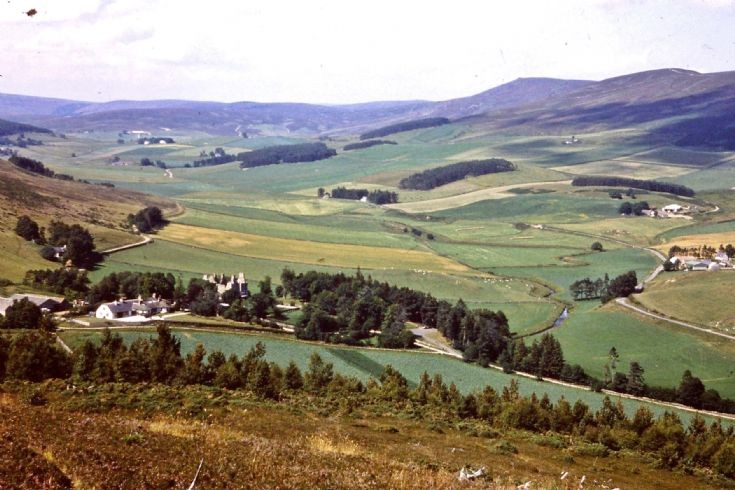
21 Glenbuchat Agricultural Experiments 1907


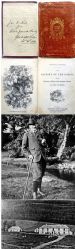
James Barclay, who bought the Glenbuchat Estate in 1901 had a great interest in agricultural improvements He pioneered experiments in new scientific farming methods. He was also an enthusiastic supporter of the Aberdeen Agricultural College He was a relation of the Barclay of. Barclay Ross and Hutchison., the Aberdeenshire Agricultural Machinery manufacturer
Click for more information on James Barclay.
The following is an article in the Aberdeen Press and Journal of Saturday 05 January 1907, outline agricultural experiments undertaken at the Glenbuchat estate.
AGRICULTURAL. EXPERIMENTS JN MANURING GLENBUCHAT ESTATE.
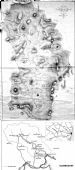
There has been issued Mr J. W. Barclay of Glenbuchat, report of experiments manuring carried out by Thomas Jamieson, director of the Aberdeenshire Agricultural Research Association, the farms of Sunnybrae, Upperton, and Kirkton, on the estate of Glenbuchat.
The experiments wore made "with the object of ascertaining approximately what quantity of phosphorus in a form available plant must be added to a soil to produce a maximum crop; and (2) what quantity of form available by plants, the same soil unmanured so far as that may determine the crops it produces. The report, which is exhaustive one, gives evidence of much careful research and painstaking preparation. number of tables are reproduced showing the quantity and cost per ounce of manures given to both grass and grain drops, as well minute details in reference to the experiments grass and oats; and in the preliminary observations is explained that the two fields on which the grass and grain experiments were made are contiguous, and apparently of similar quality. They had been manured in each of the three-preceding year with, in all, 225 lbs phosphate of lime, and after deducting the phosphate in the three years' drops, 167 lbs. of phosphate per acre would have been left in two unmanured plots Sunnybrae. The fields Upperton and Kirkton had received little manure in preceding years, and probably there was no residual in the soil. In answering the first question under the statement as the objects of the experiments, the report states that-—The Sunnybrae experiments, both grass and grain crops, have, consequence of the previous manuring, to be considered apart from the grain experiments on Upperton and Kirkton. grass crops Sunnybrae on the four manured plots increased with the increased quantity of phosphate, and plots No. 2, 4, and 5 the increase was as nearly in exact proportion the quantity of phosphate in the manure applied expected in a field experiment. From this may inferred that practically all the phosphorus (185 lbs.) the manure applied to grass plot No. 5 was necessary, and the same time sufficient, to produce the maximum crop of tons of hay on the Sunnybrae field, but it is estimated there was also a residue of 167 lbs. of phosphate of lime from previous manuring. "The outcome is different with the grain experiments. The manured plots all show an increase over the plots, but not in proportion to the phosphate in the manure.
The 9.2 qrs. grain on the unmanured plot 11 Sunnybrae may be considered a maximum crop, and therefore to be inferred that the residue of previous manurings formed a stock of phosphate sufficient to grow maximum crop of oats, and that the manure supplied in the experiments was unnecessary. "Now, why does the experiment on grass give a different response from that on grain on what may be considered similar soils? The explanation seems be that maximum crop of tons hay contains 87 lbs. of phosphate and a Hi qr. crop of oats (grain and straw), only 67 lbs., a difference of 20 Now grass plot No. 5 the proportion phosphate the increa.se of hay to the phosphate in the manure applied to it is only .13 to 1; and in the same proportion it would be necessary to apply 154 lbs. of phosphate to get the 20 lbs. phosphate in the increase of the hay crop. This conclusion is confirmed by the experiment, for 185 lbs. more phosphate was applied to produce the 3-ton maximum crop of hay than was required by the 91 qrs. maximum crop of oats. It may be added that the cost of replacing the phosphate abstracted by the three tons of hay, say 87 lbs., would 3d in Aberdeen.
"The answers of the Upperton and Kirkton grain experiments correspond in some respects with each other. The crops of all the manured plots exceeded that of the unmanured, and, Upperton. No. 2, the crops increased with the increase of phosphate applied, but not proportionally. The highest return of phosphate ''n the increase crops in proportion the phosphate applied was on the two No. plots; the Upperton returned one-ninth (.111) and the Kirkton between seventh and n eighth (.134) of the phosphate in the manure. "Our conclusion is that the 128 lbs. applied the two No. 4 plots was sufficient for as large a crop a? the other elements of plant food and the mechanical condition of the soil, seriously affected the dryness of the season, could produce. The Sunnybrae soil was deeper, and provided more moisture, although analysis shows did not contain as much phosphate either Upperton or Kirkton and although the Upperton soil contained a larger percentage phosphate, the soil did not appear to be in as good mechanical condition that of the other fields. But although by this test of the proportion between the phosphate in the increase of crop and that in the manure, the No. plots stand first, it would evidently in practice be more advantageous to be guided by No. 5 manuring, because its cost is the same as that of No. 4."while both the crop per acre and the residue of phosphates left in the soil are larger." Answering the second question as what quantity of phosphorus in a form available by plants was present in the unmanured soil, the report states that "the phosphorus estimated as phosphate of lime the soil of the experimental plots was as follows—the weight of an aero of soil nine inches deep being reckoned 1000 tons: —Sunnybrae. _ .185 per cent, phosphorus—9£ tons phos. lime per acre; Upperton, 22 per cent, phosphorus—11 tons phos. lime per acre; Kirkton, .214 per cent, phosphorus—lo.7 tons phos. lime per aero. For the purpose of this inquiry, the Sunnybrae grain experiments must be left out, because more phosphate was applied than necessary for a maximum oat crop. The grass experiment is complicated also by the_ surplus phosphate cf lime from previous manurings, but as the figures are in some respects interesting, the following details may be given:
GEASS EXPERIMENT. " If it is assumed that the phosphorus in the soil, in form available by plants, contributed to the growth the crop on the unmanured plot (43 cwts. in the same proportion as the phosphorus in the manure added to the crops the manured plots; then the unmanured crop of cwts. nay contained 63 lbs. phosphate lime, and as the increase the manured plot No. 5 contained .13 of the phosphate in the manure, it follows that the phosphorus in the soil in the form of plant food was 63-.13 equal to 485 lbs. phosphate of lime. By analysis, the soil contained equal to 21,280 lbs. phosphate of lime, and dividing these figures by 485, it would appear that of the phosphorus in the Sunnybrae soil l-44th part was in the form of plant food.
GRAIN EXPERIMENT. " The unmanured plot gave a crop (5 qrs. oats) that, contained 37 lbs. phosphate, and at, Upperton the largest increase in phosphate the manured plots was l-9th (.111) of the quantity in the manure, it follows by the same calculation that the soil contained the form available plant food equal 333 lbs. of phosphate of lime. The analysis shows that the soil contained equal 11 tons phosphate lime (24,640 lbs.), so that only l-74th part the phosphorus in the soil is in form available by plants. As already mentioned, the Upperton soil did not appear be in good mechanical condition as the others. The mould was not fine.
GRAIN EXPERIMENT. ''The unmanured plots Kirkton gave 4 qrs. oats containing 39 lbs. phosphate, and the highest the Kirkton manured plots returned .136 of the phosphate in the manure, it follows the previous assumption that 287 lbs. of the phosphorus in the Kirkton soil was in a form available by plants. According to the analysis the unmanured Kirkton soil contained equal to 10.7 tons phosphate lime, say 23,184 lbs., and thus less than l-84th part of the phosphorus the soil was in a form available by plants. " Phosphorus is the essential element all plant and animal life, and without phosphorus the land would bo a sterile waste; this is probably the reason why nature so jealously provides against its exhaustion. A certain portion the unavailable phosphate no doubt does yearly become available but although there is in the experimental soils much phosphorus as would grow 600 s x qr. crops of oats, experience tells us that the quantity that yearly becomes available is not sufficient to grow cereal crop that will pay the cost of cultivation; and so, if the phosphate abstracted by a crop is not replaced, the cereal plant gives place some other that does not demand much phosphate for its growth. V Besides the answers to the questions sought be solved these experiments, the results give incidentally in other directions information that, if confirmed, will prove of great practical value. " (1) The figures demonstrate that moderate doses of manure are not so profitable heavy applications. But this heavy manuring necessary_ only until the store of phosphate in the soil is equal to what indicated the experiment. ‘!. Thereafter the store of phosphate should be continuously maintained by an average expenditure less than 2s 9d per acre per annum—assuming maximum crops, oats. 33 tons turnips, and 3 tons hay, and half the phosphate in turnips returned in the farmyard manure, and half the phosphate in two grass crops grazed.is left on the field. " A comparison of the returns in grain and straw informs that phosphate increases the growth of both grain and straw up a certain point, and beyond that point adds chiefly the grain. None of the crops even where 10 qrs. per acre was the yield, were permanently laid by the heavy rainfall August, and may therefore assumed that the abundance phosphate strengthens the straw sufficiently carry the weight of the grain it produces. (3) requires a larger quantity of phosphate to grow a maximum crop of hay than one oats, hence necessity of largely increasing the supply phosphate to our pastures. " (4) Even on grain and grass crops it is more profitable to use finely-ground insoluble phosphates than phosphate in the soluble form. " (5) The great crops of 9,1 qrs. of grain and 43 cwts cf hay on the unmanured plots at Sunnybrae prove that the residual phosphate from the manuring the three previous years ren aired the soil in a form benefit the succeeding crops " (6) In every case the larger the supply of phosphates the earlier did the grain ripen, and the manured crops ripened seven to ten days before the unmanured; even plots 4 and 5 Sunnybrae ripened some days before Nos. and 2, although these also had good supply phosphate. " (7) The crops well supplied with phosphate showed the first sign of ripening the grain, and not the straw." The report concludes as follows: "Although comparison of the figures of the several experiments discloses a. remarkable harmony in some of the results, they do not profess be either approximately accurate for general application, because trustworthy conclusions cannot be gained from field experiments of a single season: and even if the conclusions could be accepted, they would hold good only for the fields on which the experiments were made, and for that particular season, because probably crop depends much the composition, mechanical condition, drainage, and depth of soil its manuring. But a series of experiments various soils and different seasons would doubtless point general conclusions that could not fail to be of great assistance to farmers in manuring. It is chiefly with the object stimulating such inquiries that the figures of these experiments and the deductions from them are made public."
Picture added on 16 May 2022 at 21:44
This picture is in the following groups
estate
estate
estate