The Glenbuchat Image Library
No: 2680 Contributor: No Contributor Year: 2026
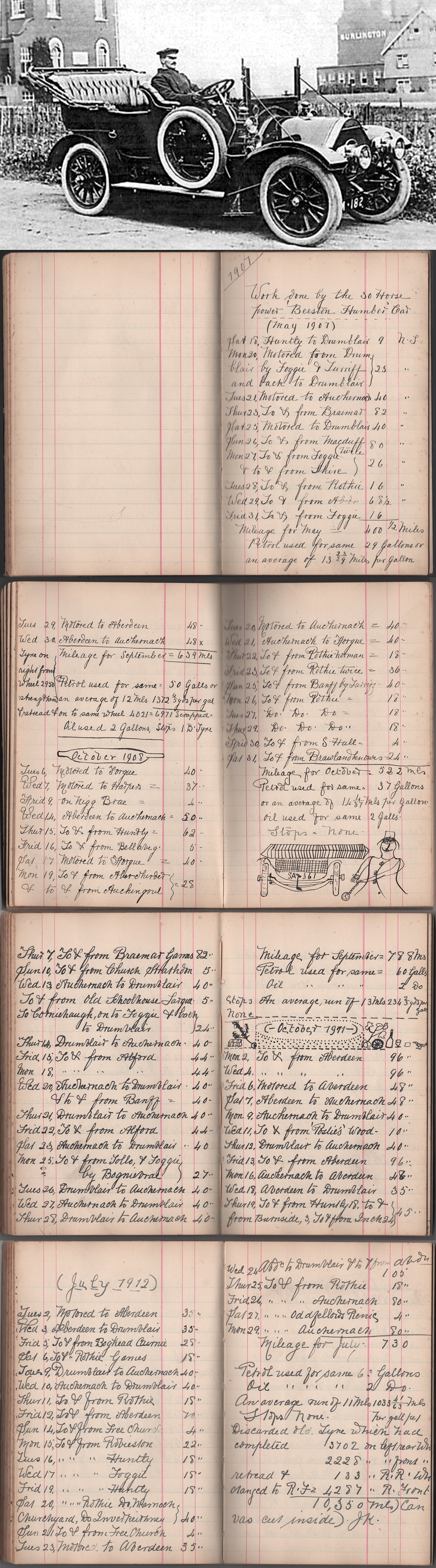
4 Log Book Extract 3


The Log Book Excerpts 3
May 1907 – July 1912
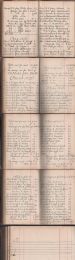
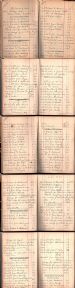
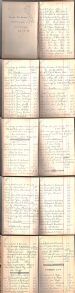
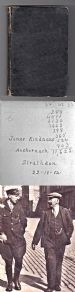
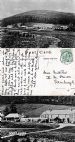
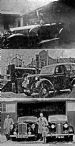
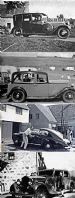
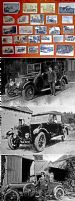
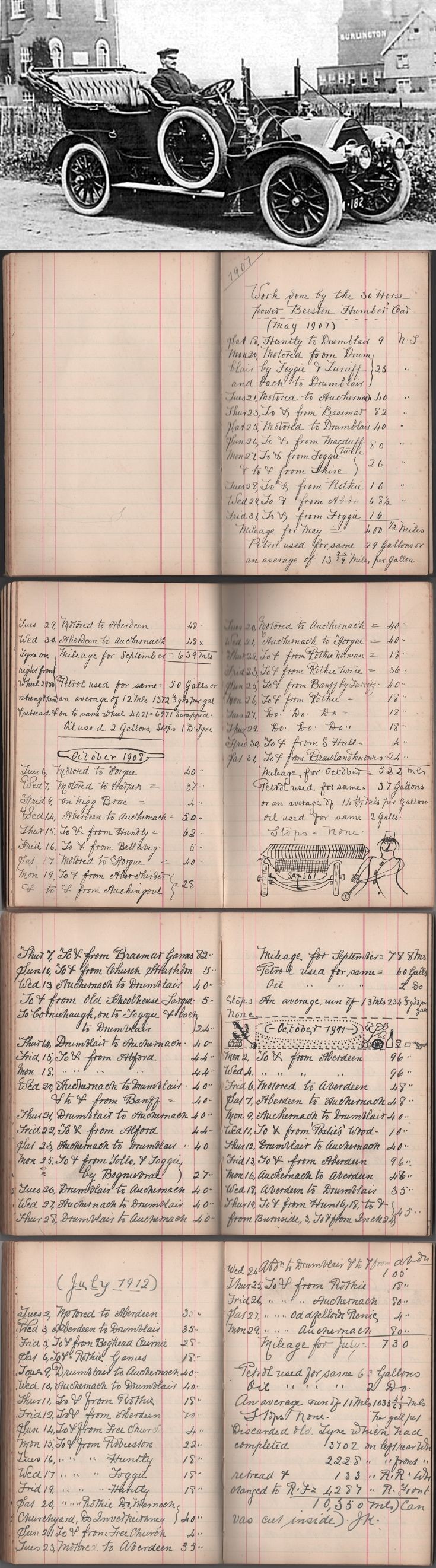
The Photos above show
1 Beeston Humber 30hp 1907
2 Diary Entries selection: May 1907 – July 1912
Note that James adds the mileage made by each tyre
Introduction Page
In some months the mileage was 600 miles which is a considerable mileage in unmade up roads.
The entry above in May 1907 notes ‘The work done by the 30 horse power Beeston Humber Car.’ It is assumed that the car was purchased then.
See below details of the Beeston Humber Car.
Note that the miles per gallon for the new car were between 11-13mpg while the previous car was more frugal at 15-23mpg. The car was bought from Rossleigh Garage in Aberdeen who were distributers for Humber cars amongst others. It may be that the earlier car had been a 16/20h p version i.e. with a smaller engine.
In October, note that James has deviated from his regimented writing habit and added a small cartoon with him as the chauffeur and the front of the new car with the number plate SA 361.
There is another small cartoon in October 1911
Beeston Humber 30HP (From internet sources)
Before the century’s turn there was no real motor industry in Britain and although the atmosphere was full of good intentions, it was really only the Coventry-made Daimlers that from mid-1897 were produced in reasonable numbers, with an approximate total of around 300 cars sold by the end of 1900.
Humber was but one of many cycle makers that had a go with powered vehicles before 1901 but interesting though their early efforts maybe they were essentially false-starts, as was the case with the other pioneers. Two years on and they had set off in the right direction with a reasonable range of models and their single-cylinder ‘Humberette’ was the first serious attempt at a mass-produced British motorcar.
This 15hp car complete with coachwork cost £340 – roughly the price at the time of a decent family home in one of the better London suburbs. The brightwork on this car is not brass but nickel-plated, a much more common finish than is often these days assumed to be the case, whilst despite the anti-dust screen at the rear no hood was fitted and a windscreen was an optional extra. Also of note is that the tyres are not black but grey, as was the norm then and for many years afterwards.
1907 Beeston Humber Car SA 361
In 1907, the Beeston Humber line, produced by Humber Ltd. at their factory in Beeston, near Nottingham, featured upscale, high-performance models designed separately from their Coventry-built counterparts.
The 30hp Model: For the 1907 season, the four-cylinder 30hp Beeston Humber replaced the earlier 16/20hp model. It featured a four-cylinder engine with a bore and stroke of 110mm × 130mm, displacing 4,942cc. The 30hp chassis was sold for £495.
The car was designed by Louis Coatalen (who later became famous with Sunbeam), with T.C. Pullinger managing operations at the Beeston works. A Beeston Humber also competed prominently in the 1907 Isle of Man Tourist Trophy (TT) race for heavy touring cars.
Beeston-built luxury car production continued until 1908, after which Humber consolidated all manufacturing at their new works in Stoke, Coventry.
1907 Model Features: Beeston Humbers from the 1907 season were known for their superior build quality, featuring a robust 4-cylinder engine (often 30hp, displacing nearly 5 litres). Unlike the 3-speed gearboxes of the Coventry versions, the Beeston models boasted a 4-speed gearbox, premium finishes, and distinct quirks of the era, such as single-spoke steering wheels and anti-clockwise rotating engines.
A 1907 Beeston Humber, registered in Aberdeenshire, Scotland, with the license plate SA 361 is historically tied to the Auchernach Estate.
Here is a breakdown of the specific details
The Prefix: The letter combination SA was the first vehicle registration prefix allocated to Aberdeen County Council following the Motor Car Act of 1903.
The Identifier: SA 361 indicates it was one of the early motor cars officially registered in the Aberdeenshire region during the Edwardian motoring boom.
 View Large Version
Picture added on 16 November 2026 at 20:23
This picture is in the following groups
estate
estate
estate