The Glenbuchat Image Library
No: 637 Contributor: No Contributor Year: 2010
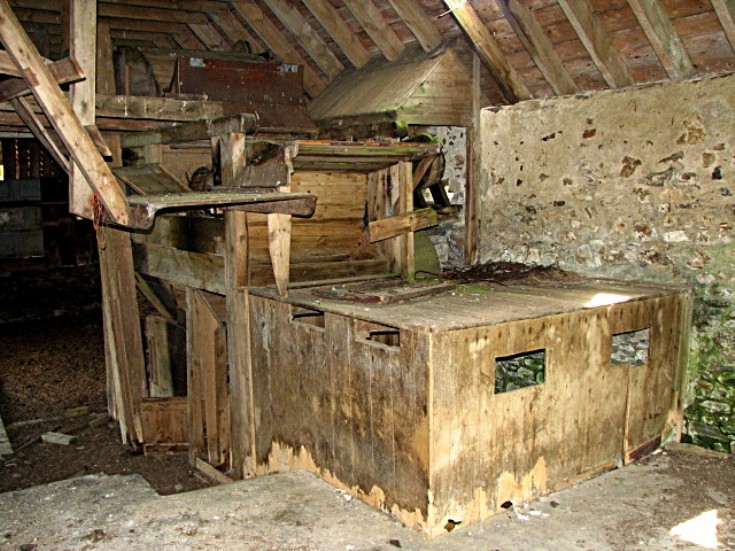
27 Badenyon Farm steading - Threshing Machine


The steading is U-shaped on plan and a threshing machine survives in the western wing. This was originally driven by a ‘Horse engine' outside the W wall, but much of the walkway has been removed. Subsequently the threshing machine was driven by a small petrol or diesel engine.
The wood of the outside of the machine is covered with penicled comments
The thrashing machine, or, in modern spelling, threshing machine (or simply thresher), was a machine first invented by Scottish mechanical engineer Andrew Meikle for use in agriculture. It was invented (c.1784) for the separation of grain from stalks and husks. For thousands of years, grain was separated by hand with flails, and was very laborious and time consuming. Mechanization of this process took much of the drudgery out of farm labour. Threshing is just one process in getting cereals to the grinding mill and customer. The wheat needs to be grown, cut, stooked (bundled), hauled, threshed, and then the grain hauled to an elevator and the chaff baled. For many years each of these steps were an individual process, requiring teams of workers and many machines.
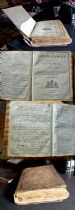
The 1881 Household Cyclopedia said of Meikle's machine:
"Since the invention of this machine, Mr. Meikle and others have progressively introduced a variety of improvements, all tending to simplify the labour, and to augment the quantity of the work performed. When first erected, though the grain was equally well separated from the straw, yet as the whole of the straw, chaff, and grain, was indiscriminately thrown into a confused heap, the work could only with propriety be considered as half executed. By the addition of rakes, or shakers, and two pairs of fanners, all driven by the same machinery, the different processes of thrashing, shaking, and winnowing are now all at once performed, and the grain immediately prepared for the public market. When it is added, that the quantity of grain gained from the superior powers of the machine is fully equal to a twentieth part of the crop, and that, in some cases, the expense of thrashing and cleaning the grain is considerably less than what was formerly paid for cleaning it alone, the immense saving arising from the invention will at once be seen.
"The expense of horse labour, from the increased value of the animal and the charge of his keeping, being an object of great importance, it is recommended that, upon all sizable farms, that is to say, where two hundred acres [800,000 m²], or upwards, of grain are sown, the machine should be worked by wind, unless where local circumstances afford the conveniency of water. Where coals are plenty and cheap, steam may be advantageously used for working the machine."
Picture added on 05 July 2010 at 10:45
This picture is in the following groups
Badenyon
Badenyon
Badenyon