The Glenbuchat Image Library
No: 480 Contributor: No Contributor Year: 1942
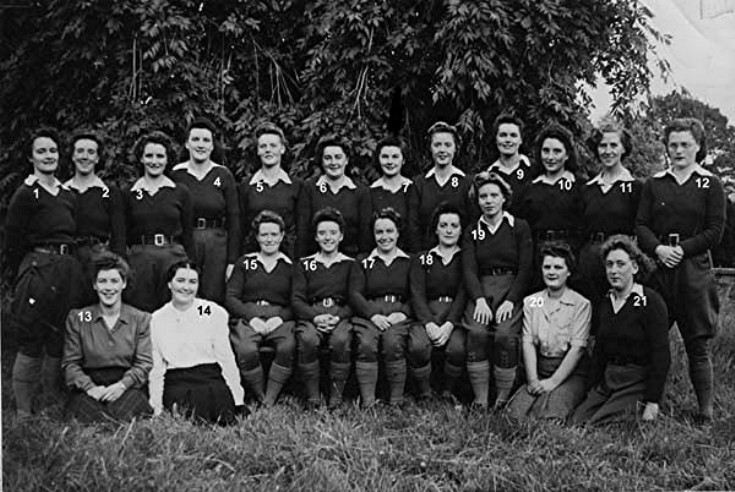
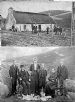
40 Lumber Jills at Glenkindie House 1942


Women's Timber Corps based at Glenkindie House

Picture courtesy of Forrestery Memories
Photograph courtesy of Margaret Angus(nee Stewart), Huntly.
Glenkindie House in Strathdon, Aberdeenshire was a base and living quarters for groups of the Timber Corps over the war period 1942 to 1946.
The individuals within this group are: 1.Miss Harrod(England), 2.Betty McLean from Glasgow (previously unidentified see below), 3.Margaret Winton(Glasgow), 4.Isobel Knox(Edinburgh), 5.Morag Gordon(Glasgow), 6.Betty Hastings(Poss Edinburgh), 7.Margaret Stewart(m.Angus)(Pitlochry), 8.Nan Kerr(Glasgow), 9. Vera Knox(Sister of 4), 10.Jenny Milne or Mill?(Edinburgh), 11.Alice Muir(Anstruther), 12.Miss Garden -I/C Glenkindie group(Aberdeen), 13.Betty Jack - House Orderly(Fife), 14.Miss Davidson - Cook(Aberdeen), 15.Betty Yule(Fife), 16.Nettie Grey(Edinburgh), 17.Peggy Anderson(Edinburgh), 18.Lizzy Bell, 19.Gladys Donald (m.Coutts)(Skene), 20.Jean Hadden - House Orderly(Elgin), 21.Ann Rankin(Poss Edinburgh).
From www.womenstimbercorps.com
During World War 2, over 4,900 young women joined the Women's Land Army Timber Corps (W.L.A.T.C.) in order to make a contribution to the war effort. They worked in the forests of Great Britain, felling, snedding, loading, crosscutting, driving tractors, trucks, working with horses, measuring and operating sawmills.
This was done in all kinds of weather. One thousand were camped in wooden huts in the north of Scotland, others in rugged billets, far from the comforts of family and home.
A female forester was expected to wield a six pound axe, and produce enough timber to supply timber for pit props for the mines, telegraph poles, road blocks, ships masts, railway sleepers, gun mats, mobile tracking to support tanks, ladders, newsprint and even crosses for soldiers graves.
Timber Corp. members were sufficiently experienced to be sent to Germany after the war to salvage equipment from abandoned sawmills. Although forestry enjoyed a more attractive image than farming, it nevertheless required stamina and expertise. The "lumber jills" as they were called wore the same uniform as the Land Girls, with the exception of the Green Beret, and the badge, which instead of a wheat sheaf featured a Fir tree, surmounted by a Royal crown.
Training centres were set up throughout the UK, Shandford Lodge in Brechin, Angus in Scotland was one of these training camps. Here the young women were taught the rudiments of forestry, handling axes, saws, vehicles and horses. It was a rude awakening for some, as the majority had been city bred and were unfamiliar with the wide-open spaces or the deep woods. After a two-week course they were dispersed throughout the countryside, most of the Scots went to camps situated in remote areas of the Highlands. Inverness-shire, Morayshire, Argyllshire and many other parts of Scotland. In England, the Timber Corp members were dispersed to a variety of private billets and were involved in a more varied type of forestry. However, it was with a cheerful heart these young women undertook the task before them, learning the skills needed to get the job done to win the war.
Picture added on 13 April 2010 at 22:30
This picture is in the following groups
people
people
people




Now corrected
Editor