The Glenbuchat Image Library
No: 2644 Contributor: No Contributor Year: 2025
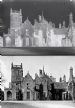
175 Weavers Cottage Glenbuchat c 1960's


Weavers Cottage
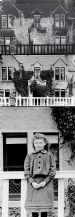
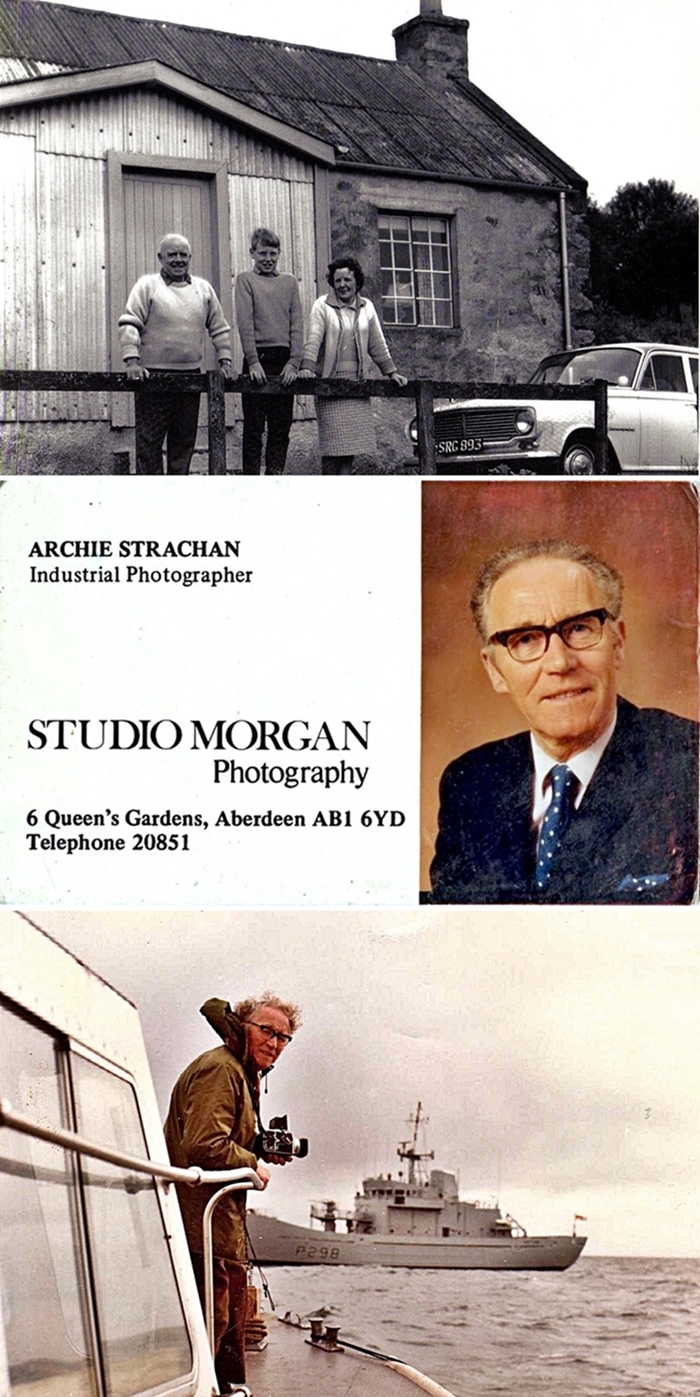
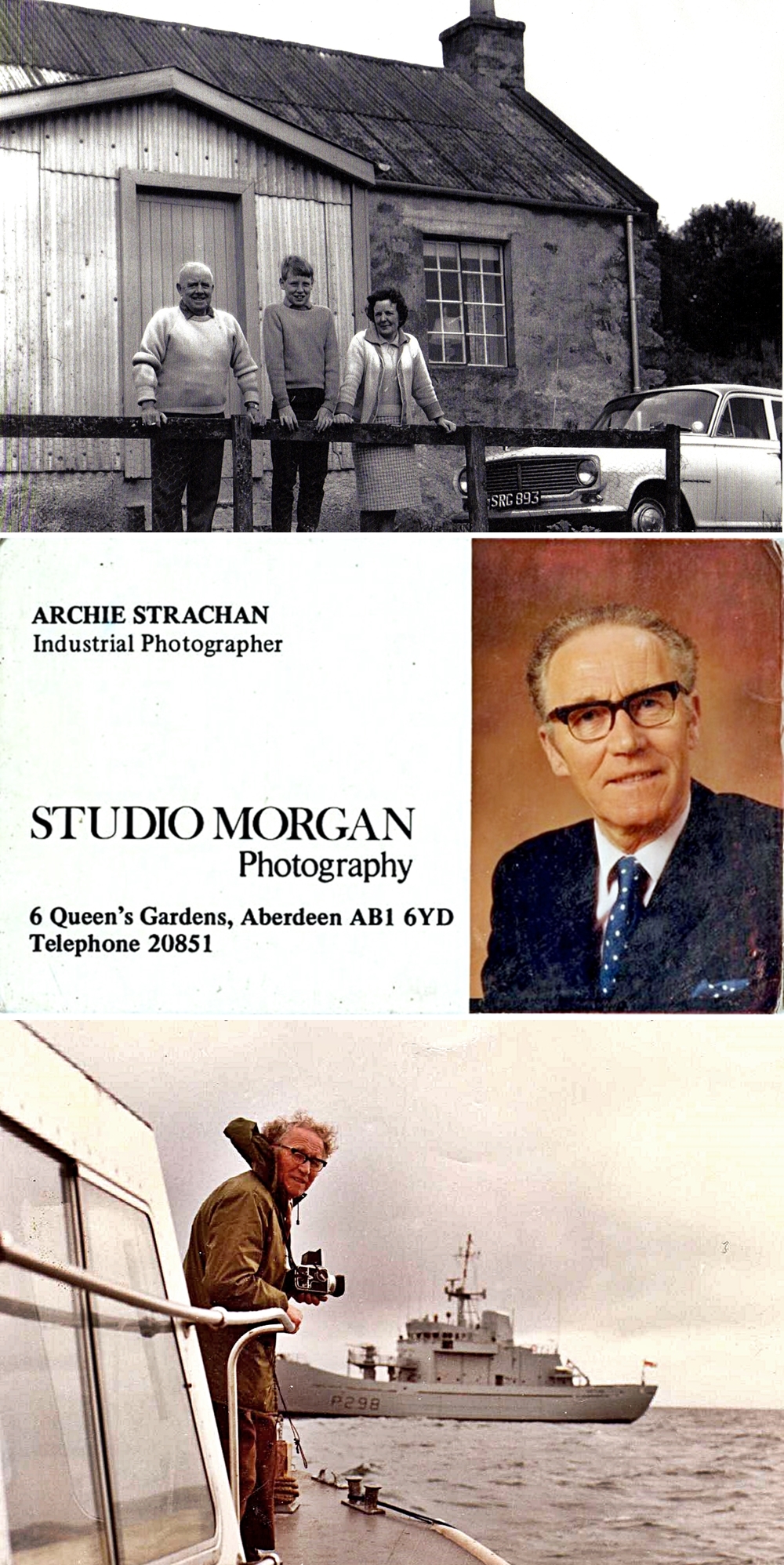
The Photos above show:
1 The Strachan family at Weaver’s cottage
2 Business Card of Archie Strachan
3 Photo of Archie Strachan on the Aberdeen Pilot boat photographing one of Hall Russell’s Ships
The above picture was given to the owner of Woodside cottage, a neighbouring cottage to Weavers Cottage, a couple of years ago by Malcolm Strachan. Unfortunately, for a while it became lost in their computer. Fortunately, however, it has now resurfaced.
It is a picture of the family of Malcolm Strachan, taken by his father A J B Strachan
The photograph includes Malcolm’s Grandad Joe from Oldham, Duncan his younger brother and his mother Doris Strachan
Malcolm has been in contact and kindly provided the following reply:
“I'll start by saying it was my father A J B Strachan who took the photograph and is the only one I have unfortunately. He was a well-known commercial photographer based in Aberdeen and his business provided a huge portfolio of work in Shipbuilding, Art Gallery, Aberdeen University and Construction etc.
The Strachan family rented Weavers Cottage from the late 1950's to around 1966, from Glenbuchat Estates. As I remember the Estate then decided to sell the cottage and my father decided not to purchase the property.
There was no electricity in the Glen at that time, Tilly lamps were used and coal fires for warmth.
The Shand family of Balnagowan Farm were very friendly and Mrs Shand used to light the fire and provide milk and eggs for my parent’s visits. I can remember their daughter Ann, and when she was married at Glenbuchat Kirk my parents were not allowed into the service by the minister because they were from Aberdeen and there was a Typhoid epidemic in the city. My father took a photograph of my mother looking through the Kirk window at the proceedings. After the wedding they went to the village hall with the rest of guests for food and drinks.
Photo of Ann Shands wedding 1954
My wife Helen and I have often visited Glenbuchat, and recently stayed at Weavers Cottage and how much it has changed. We thoroughly enjoyed the visit, and wondered what my parents would have thought of the renovation and all modern conveniences.”
In 1953, Archie Strachan donated 40,000 Washington Wilson glass plates and negatives to the university, chronicling the astonishing assortment of work c
George Washington Wilson used various glass plate sizes, but a commarried out by the man who became a household name during his life from 1823 to 1893.
A. J. B. Strachan (Archibald Strachan known as Archie), Malcolms Father
Born in 1915 in Aberdeen; died in January 1982.
Archie was apprenticed to Fred Hardie, a photographer in Aberdeen who worked with George Washington Wilson. Later Archie worked with Studio Morgan Aberdeen, His business card is shown above.
Around 1936 Archie bought Fred Hardies business after his death and all assets which included the GWW glass negatives.They were stored in the basement in tea chests, and his son remembers the University Air Squadron who had a flat bed lorry came to transport them to the University.
My dad was moving premises at the time and he had to find a suitable home for the negatives.
Archie is considered one of Aberdeen’s best-known commercial and industrial photographers of his time, especially for his architectural and maritime work. He photographed a lot of granite buildings in Aberdeen — including a commissioned series by the Aberdeen City Council photographing the entire length of Union Street. He also had commercial contracts in shipyards (especially Hall Russell’s) and with Rubislaw Quarry
He retired in 1979
His preservation and donation of historic photographic plates (Wilson’s collection) makes him an important contribution to photographic heritage and local history.
Around round 1936 Archie bought Fred Hardies business and all his assets after his death which included the GWW glass negatives. They were stored in the basement in tea chests, but Archie was moving premises at the time and he had to find a suitable home for the negatives. Archie’s son remembers the University Air Squadron, who had a flatbed lorry, came to transport them to the University. The collection included approximately 27,000 negatives and a number of albums and weighed a number of tons. In 1954 Archie donated the collection to the University of Aberdeen Library.
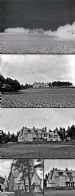
George Washington Wilson used various glass plate sizes, but a common size was 10 x 8 inches for negatives like the one for "Dividing the catch of the fulmar, St Kilda". Other sizes, such as 12 x 10 inches
4×5 in ~1.8 tons
5×7 in ~3.1 tons
6.5×8.5 in ~5.0 tons
8×10 in ~7.0 tons
The George Washington Wilson photographic collection at the University of Aberdeen now comprises over 37,000 or 38,000 glass plate negatives in total, created by the firm from the mid-1800s until 1908.
Aberdeen University George Washington Wilson Collection
Key details about the collection:
The purchased collection included approximately 27,000 negatives and a number of albums. From Fred Hardie
Strachan, was an assistant to one of Wilson's senior photographers, Fred Hardie, later donated this material to the University of Aberdeen Library in 1954.
The George Washington Wilson photographic collection at the University of Aberdeen now comprises over 37,000 or 38,000 glass plate negatives in total, created by the firm from the mid-1800s until 1908.
George Washington Wilson (1823-1893), born in the North East of Scotland, went to Edinburgh and then London in the 1840s to train as a portrait miniaturist. He became established in Aberdeen in the 1850s as an artist and photographer, and quickly made a name for himself among the middle classes and landed gentry. His patronage by the Royal Family during their visits to the Balmoral Estates began in 1854 when he was invited to take photographs of the Royal family in the grounds of Balmoral. He received the official appointment of Photographer Royal for Scotland in 1860 and his relationship with the Royal family continued throughout his career. Wilson's success allowed him to employ staff photographers to carry out the routine portraiture business whilst he travelled the country indulging in his new interest in landscape photography.
Wilson won a number of prizes for his photographic works including winning medals at the Great London International Exhibition of 1862 for his experimentation for quick exposures.
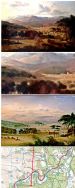
George Washington Wilson and Co., captured images from all over Britain, recording everything from the natural grandeur of Fingal's Cave on the Isle of Staffa to the bustle of London's Oxford Street. Wilson had a staff of photographers including his son, Charles Wilson, who with senior staff photographer Fred Hardie, toured the colonial townships of South Africa. Dispatched to capture images of Australia in 1892, Hardie also travelled through Queensland, Brisbane, Sydney, Melbourne and Adelaide. These tours provide a vivid picture of gold miners and early settlers at work and play, and of the native or aboriginal way of life. The company invested in sourcing independent photographer to capture the western Mediterranean, where they took images of Gibraltar and the south of Spain, Morocco and Tangiers.
Throughout, Wilson demonstrated technical and commercial acumen, and, by the early 1880s, the company he founded had become the largest and best-known photographic and printing firm in Scotland. Wilson handed the business over to his sons, Charles, Louis and John Wilson in 1888. The company, however, only survived for a short time under the management of Wilson's sons, with much of the company being sold in 1905 and the company finally ceasing trading in 1908.
The company stock was auctioned off in 1908. The plates passed into the possession of Fred Hardie, and then to the photographer, Archibald J. B. Strachan, who in 1954, offered them to the University Library. The University is pleased to acknowledge the foresight and beneficence of Mr. Strachan.
The entire collection of 'George Washington Wilson and Company' glass plate negatives is available digitally on our website. Each high-resolution image provides a superb level of detail and the collection is fully searchable. Access to the original glass plates is therefore not permitted for conservation reasons.
 View Large Version
Picture added on 10 November 2025 at 21:49
This picture is in the following groups
buildings
buildings
buildings