The Glenbuchat Image Library
No: 2622 Contributor: No Contributor Year: 1910
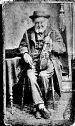
4 Soldier in Tropical Uniform


4 Soldier
Click for Introduction to Thomson Slide Collection
The soldier is dressed in what seems to have been topical kit and is assumed to be from a regiment posted to the eastern Empire.
The regiment has been identified by the badge on the Pith Helmet. The badge shows a galloping horse above a scroll which would bear the unit title, 'West Yorkshire'. It is the badge of other ranks, Prince of Wales's Own (West Yorkshire Regiment)
Shown above also is the regimental uniform (picture from regimental museum) which is exactly the same as in the photograph including the Corporal’s stripe on the left lower arm.
Prince of Wales's Own (West Yorkshire Regiment)
The Regiment was originally formed in 1685 by Sir Edward Hales and was numbered as the 14th Regiment of Foot in 1751. County associations with Bedfordshire and Buckinghamshire were replaced in 1881 when the Regiment was renamed The Prince of Wales's Own (West Yorkshire Regiment). During the First World War the Regiment raised over 30 battalions.
Under the reforms the regiment became The Prince of Wales's Own (West Yorkshire Regiment) on 1 July 1881.
Victorian period
1st Battalion returned to the West Indies and Canada between 1836 and 1847, before deploying to the Crimean War (1854-56) in 1855, where it served at Sevastopol. It spent the rest of the 19th century in Malta, the Ionian Islands, India, Aden, England and Ireland.
In 1858, the regiment raised a new 2nd Battalion, which was stationed in New Zealand and Australia throughout the 1860s. In 1880, 2nd Battalion moved to India, remaining there until it was sent to fight the Ashanti in West Africa in 1895. In November 1899, it deployed to the Boer War (1899-1902).
1st Battalion also spent time back in India, from 1897 to 1911, after a year in Hong Kong in 1896.
The Photograph
The photograph is different from the others in the collection. It is taken in a studio and all the rest of the collection are taken outside. The studio style is more in keeping with a colonial photographer than a local Strathdon photographer. There appears to be a leopard skin under the hat. The quality of the slide is slightly less than the other photos.
Normally a photographer would provide prints for their client and not the plates which they would keep on file or reuse.
Taking into account the above possibilities my interpretation is as follows.
One of the slides on the list in the box lid is titled ‘?Nurses Brother’.
Perhaps the soldier was visiting his sister in Strathdon. He had a photo of him taken in India but wanted copies made . Knowing of the photographer the soldier arranged for copies to be made of the photograph. Thus, the local photographer had fresh slides of the soldier and gave prints to the soldier or his sister.
As the photographer may not have known the soldier and forgotten his name, this may be why he is titled ?Nurses brother.
Click to see next photograph which may be connected to this soldier.
Picture added on 28 July 2025 at 14:09
This picture is in the following groups
people
people
people