The Glenbuchat Image Library
No: 2461 Contributor: No Contributor Year: 2022
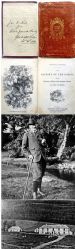
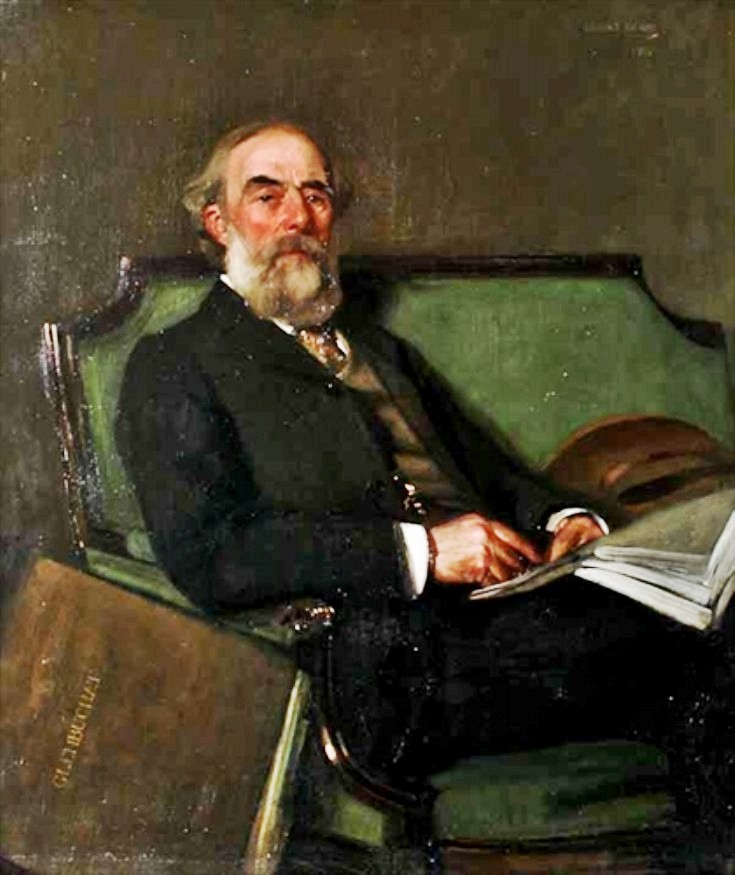
137 James W. Barclay laird of Glenbuchat


Land Tenure Reform
by James W Barclay
Biography
James W Barclay born in 1832, was the son of a Cults builder and educated at Aberdeen Grammar School and thereafter Aberdeen University. He left before graduating and set up in business around 1854 as a General Merchant in Aberdeen dealing in grain, flour and later as an agent for Baltic produce. He subsequently had interests in shipping, colonial mortgage companies and from 1860 in agriculture as a tenant farmer at the Mains of Auchlossan, Lumphanan, Aberdeenshire. His business ventures prospered and he was able to pursue a career in public affairs. In 1864 he stood for, and was elected aa a councillor to Aberdeen Town Council where he made his mark, with special interests in Harbour Works etc.
As tenant at Mains of Auchlossan For 28 years, until 1888, he gained a reputation as an excellent practical farmer, despite the unpromising start of taking on the risky business venture of a 23 years free lease with an extra 5 years rental of the 170 acres arable and 70 acres of rough pasture land. with additional mostly boggy land and the small Auchlossan Loch. The rent-free deal involved draining the Loch and marshy ground at his own expense and bringing it into cultivation. This increased the farms to around 390 arable acres but at a cost of around £5000 to himself which he hoped to recover from the rent-free lease. Near the end of the lease, he calculated he had lost out financially and described the scheme as ‘a very rash and foolish undertaking on my part’ but in support of his brother ‘was bound in honour to see it carried out.
This seems to have been an early attempt at demonstrating the benefits of improved ‘higher farming’ to his fellow farmers. ‘Mr Barclay’s reputation as an experienced agriculturist and as one who could practically demonstrate the great possibilities and advantages of land cultivation when properly undertaken. even under the most adverse of circumstances was firmly established by what he did at Auchlossan’
Barclay and his mentor, William McCombie of' Tillyfour in the Vale of Alford, were the prime movers in devising and instigating a scheme which was successfully in organising Aberdeenshire Farmers in stamping out the ‘cattle plague’ rinderpest in the mid l860‘s. which threatened to wipe out the cattle industry. by preventing the transport of cattle into Aberdeenshire and the slaughter of suspected herds. Amongst many commendations for this work, he was personally awarded 500 guineas: by a grateful Government.
William McCombie of Tillyfour, ‘The Grazier King’ was a popular big tenant farmer who spoke up for small farmers and farm servants against the landlords. He became the Liberal MP for Aberdeenshire from 1868-1876. After 1868 it was almost impossible to be an MP in the North East without agreeing to support the demands of tenant farmers.
In 1871 Mr Barclay resigned from the Town Council and the following year he stood for election as an MP for Aberdeen City. He was unsuccessful but in a by-election in the farming county of Forfarshire later the same year, he was returned as a Liberal M.P. As an MP. he lived in London for the greater part of the year and heave up Business interests in Aberdeen in 1880.
Barclay's business mind turned to the plight of the agriculture industry. Up till the early 1870‘s farming was prosperous and both laird and tenant farmers and crofters did well. But competition from cheap imports of cattle and grain from the colonies especially Canada, and the United States and Ireland caused a widespread depression in British agriculture. As a businessman with an interest in the north easts largest industry, he sympathies lay with those who worked the land and produced the wealth of the country, tenant farmers, and he wished to see them freed of restrictive practices and wished to maximise production from farming. in order to compete with foreign imports. Here he became into the conflicting interests of Laird and tenant farmer which restricted the full-blown freedom from restriction of capitalist Farming. The restrictions on farming were distilled down to a few key issues and a movement for tenants’ rights developed which gradually took the Form of political conflict with the farmers interests being represented by the Liberal Party and the Lairds by the Tory Party in the only arena where legal change could take place, Parliament. The NE was a lease holding county ~ tenants in general had little interest in owning their farms. But they were bound by the usual 19-year lease, hated lawyers, factors, hypothic, (charge on property in favour of a creditor) restrictive teases and crop rotations.
The Aberdeen Agricultural Association, later the Agricultural Research Association was set up in 1871 and James Barclay was central in its establishment and was also a Vice-President of the association.
A meeting attended by 6,000 farmers in December 1881 led to the creation of a Scottish Farmers’ Alliance. James Barclay also became Vice President of Farmers Alliance (Scottish) and expressed views considered so radical by some that they were compared to communistic. In fact, he was more capitalist freeing the tenant for maximising production. He gave expert evidence to a Royal Commission on Agriculture in 1881where he presented his opinions. Another member of the Royal Commission, perhaps exasperated by Barclays detail of his answers. breadth of knowledge and the logic of his reasoning asked sarcastically if he ‘had any plan for producing sun heat’ (Mr. Naper.)
He helped introduce into Aberdeenshire a scientific agricultural association to which money was contributed by some landlords. He encouraged experiments in manuring, and the instruction of young farmers in the aspects of elementary science as relevant to the business of agriculture.
He encouraged agricultural experimentation on the Glenbuchat estate and wrote papers on them as well as writing articles on Agriculture in the press. After 150 years of inactive Lairds, Glenbuchat was fortunate in having the enterprising and revolutionary, hands-on approach of Mr J.W. Barclay.
The following article is one he wrote on Agriculture reform and it is based round his experiences in Glenbuchat.
Land Tenure Reform
by James W Barclay
From 3 Articles published in
1906
l. Introductory
The principal objects of Land Tenure Reform are to increase our rural population and the produce of the land.
No one doubts that if these objects could be obtained on sound economic conditions. that is, if the increased population could live in reasonable comfort without being a burden on the rest of the community. and if the produce could with profits be increased, the results would be advantageous to the nation as a whole as well as to individuals; and few deny that if these objects could be brought about by measures that were equitable. although an interference with legal rights, it would be the duty of Parliament to enact them. There is thus substantial agreement on the objects to be sought and on the principals of the legislation to obtain them; the difference of opinion is respecting the reassures that will prove effective. and at the same time fulfill the required conditions. if in these circumstances we make ourselves acquainted with the causes of the depopulation that has already taken place, the steps necessary to increase the produce of the soil, and the difficulties to be encountered, we shall be in the best position to devise measures of reform that will prove effective and practicable.
2. The Estate of Glenbuchat
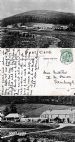
With this object l propose to examine the reasons of the decline of population on the estate of Glenbuchat acquired by me in 190], and to explain what has since been done to increase the fertility, with the results. so far as yet disclosed. To avoid the personal pronoun. I will speak of myself as the Laird, and my purpose will, l hope excuses the equitism of the story. Glenbuchat Estate is on upper Donside, forty miles from Aberdeen and fifty from the nearest railway station. It comprises: the whole parish of the same name, and, being bounded on three sides by the watershed of the mountains enclosing the valley of the Buchat. and on the fourth by the River Don, it is isolated by these natural features, and thus offers exceptional facilities for ascertaining the causes that have led to the rural depopulation, and for examining any suggestions for stemming or reversing the outward movement of its inhabitants. The area of Glenbuchat parish is just over eleven thousand acres, whereof about seventeen hundred acres are arable, and its altitude is according to the orange survey between eight hundred and two thousand four hundred feet.
The soil has been formed by decay of the surrounding metamorphic melts and is naturally fertile, with a porous sub-soil favourable to the growth of plants. The natural fertility of glen has attracted settlement in the earliest times. for there are several prehistoric underground houses in the glen and its neighbourhood. Cultivation for such an extended period, with a very scatty supply of extraneous manures, has largely exhausted the mineral constituent of plant food in the soil; and a good many outlying fields have in consequence for many years been left untilled. The infields on a few farms fairly manured yield fair crops. Seven tenants on the estate pay over £50 rent, twenty-eight between £50 and £8, and there are twenty-five crofts at a smaller rent, besides cottages and gardens, the average rent of which is about £4.
The agricultural and shooting rents are nearly equal, but taking into account the respective charges the shooting is by a good deal more valuable. The local rates amount to £227, whereof the Laird pays £152.
The Estate was owned by the Duke of Fife and his ancestors formerly one hundred and fifty years, until sold twenty-five years ago to an English banker, who died within a year of its purchase. and the estate was afterwards managed (the shooting being let) by his trust. There has thus been practically no resident landlord on the property for more than one hundred and seventy-five years.
It was the policy of the Fife family not to spend money in the improvement of the Estates; the tenants had to provide their own homes and offices, but the Landlord gave the necessary timber and the wood, and in a few cases slates from the quarry; on the other hand, rents were not raised. The trustees of the last landlord carried out a similar policy.
Rents seemed low; there were at least no arrears of rent or complaints of over rental, and tenants were never evicted. They had thus practically fixity of tenure, but without that security which it may be deemed as necessary to induce a tenant to do his best for his holding. in confidence that he or those that come after him, will reap the whole fruits of his labours.
Decline of population
The population of the Glen has varied considerably. In 1811 the population was four hundred and eleven; and from that date steadily increased until l87l it reached five hundred and seventy. Then the population steadily declined and the last census (1901) showed only four hundred and three; now it is less. A similar demise of population has taken place over the greater part of Aberdeenshire. probably fi-om similar causes, and the isolated position of Glenbuchat enables us to trace what they are.
In the early part of the last century smuggling was, after farming, the principal occupation in the Glen; everyone was directly or indirectly interested in the making of transporting of whisky to the low country. That employment came to an end with the enforcement of the Excise Laws.
Later the quarrying of lime, and the digging and capping of peats to burn it, gave employment to a considerable portion of the people. The lime was sold for building or used for manuring the land. Every farm had its lime kiln; but the soil ceased to respond to repeated applications of lime and when the railway was brought to Alford it could be had cheaper from Aberdeen than quarried and burned in the Glen. The period I870 to I872, when the population reached its maximum was a time of great commercial prosperity. and labour was greatly in demand in our towns; at about the same time the manufacturing enterprise of the towns began to supplant the labour employed in country work. Ln the memory of persons still living, nine weavers found employment in the Glen; now there is but one who occasionally weaves a web for curious visitors.
Nine shoemakers were required to equip the Glen but at present shoemaking wants are fully provided by the post runner. There were five tailors where now the local merchant keeps but two, and two oatmeal mills and one walk mill were in use, but now only one - in meal mill- finds work half the year. The disappearance from the Glen of these twenty-five tradesmen and their dependents accounts for the greater part of the decrease of its population, and there has been no compensation in other directions.
Then it has to be kept in mind that in former days the whole population lived on food that would now be rejected by the meanest in the Glen. Sowings, green kale. and kale brose, now rarely seen, were standing dishes, and even wholesome strength giving oatmeal porridge and milk, the best food for children. is giving place to white bread and tea.
For the last two or three generations the more enterprising and gifted of the young men and women have left the Glen, compelled to seek a field for their talents that by their race, by that spirit of enterprise and adventure that scatters the lowland Scot over the whole surface of the globe, and brings him as Macaulay says, to the top wherever he may east his lot as surely as cream rises to the surface of milk. Some have greatly distinguished themselves, one might say in every walk of life, and have conferred far greater benefits on the nation than if they had remained at home to till crops, that even if rent free would barely with great labour and anxiety yield sufficient to bring up a family in decent comfort. The exodus is stimulated by the periodic return on holiday, with soft hands and smart clothes, of those who have already gone. and ardent use is not discouraged by the fate of numerous bright, healthy fellows, who have left their highland glens and returned in a few years to die of consumption contracted in the crowded shops or in the noisome alleys of our great towns. Some may rashly assume that the remaining inhabitants are survivors of the unfittest, but nature continuously renews itself by “a simple life" in the open air, and the glen proudly maintains that the rising generation shows no falling off either of physical or intellectual vigour, for our thirty-five odd years, compare favourably with others, and recently one of its sons distinguished himself by carrying off to the Aberdeen University in one year the gold medal in soldiery and in other the same distinction in medicine. The young men and women are much attached to the Glen, but they seem more influenced to remain by filo affection than by any other motive. Young men stay to work hauling to keep a home for a widowed mother, and daughter return to assist parents in household duties, much more irksome and distasteful than what they leave. Parents make great sacrifices to send out their sons and daughters fully equipped to play a part in the outside world, and are proud to see them occupy the higher station in life than themselves. That indeed is one of the great objects of their life, and these characteristics are more or less common to the crofters of small farmers on the east coast of Scotland.
Farm Houses and Steadings
The outcome of the estate management to his predecessors, the Laird found to be that only a few dwelling houses were slated, the rest were thatched and mostly in a condition more or less unfit for human habitation. The housing for the livestock was correspondingly bad. On many farms the land was in the lowest stage of cultivation with outlying fields no longer ploughed but lying as permanent pasture without grass.
In addition to these comic evils 1902 and 1903 were bad seasons, the oat crop being greatly destroyed by early frosts, as in 1902 was also the case in many parts of Aberdeenshire. The tenants bore their misfortunes with a courage and absence of complaint that sighted the Laird’s sympathy and admiration. They had had seven or eight what they called good years. and were prepared for one frosty year, but the second year's damage could not fail to discourage the most hopeful.
In these circumstances the Laird felt it incumbent on him to take energetic measures to lift the farming in the Glen out of the depressing condition into which it had as a rule fallen. He was not without experience, for he had himself formerly farmed some three hundred and fifty acres of land as an improving tenant and had felt the effect of this insecurity of tenure. He had also for more than forty years been a student of scientific agriculture and for thirty years Vice President of the Aberdeenshire Agricultural Research Association. Now that he had become a Laird. it seemed fitting that he should put in practice the doctrines respecting land tenure and high famine he had formerly preached.
In the first place, it was necessary to provide the tenants with decent homes, that was a duty which fell to the Laird and caused little difficulty. On the outlay for new houses the Laird asked for two and a half per cent in addition to the former rents fixed when the tenants provided houses for themselves. But in most cases the Laird had to be content with less or nothing. The tenants, however, provided the carriage of materials which would have cost about £20 for a dwellinghouse, but as the carriages were performed in summer when the horses were otherwise employed, the caning: was not money out of pocket. The new dwelling houses as a rule comprised a kitchen, scullery, bed closet, and sitting room (seldom used) on the ground floor, and upstairs two bedrooms with storm windows and small forrets. The porch over the front door helps to make the whole home comfortable, and a milk house was built to the hack of the house. ln a good many cases water is laid on in the scullery. The cost of these houses. stone built and slated, is when the tenants provide the carriages about £160.
3. Fixature of Tenure
The Laird has somewhat reluctantly set forth his dealings with the tenants. for the purpose of placing before enthusiasts like himself in favour of increasing the rural population and the fertility of the soil, some of the practical difficulties in realising the objects they seek. He has always been. and still is, of the opinion that the tenant must have fixity of tenure to induce him to make the most of the land, but he is bound to confess that alter some experience he doubts whether the cultivators of the land are prepared to accept it with what it involved. and whether fixity of tenure is an ideal of the crofters on the east coast of Scotland. When in former years he advocated fixity of tenure to his constituents-. he did not find the response he expected among tenants. either large or small, except in the ease of some crofters past the prime of life, who had, about the sixties of last century. expended their energy in reclaiming waste lands under what were called “improving leases “, and who found when the lease expired, that they had to pay the full market value of the holdings they themselves had made, with so far only a very poor return for their labours. But there has been little reclamation of land by tenants under improving leases during the last twenty-five years, and the energies formerly expended in reclaiming waste land have been transferred to industries in towns or to our colonies.
In any case the leasing of land, even for a long period, is not now enough to induce a man to take his future and all his lives labour on is holding. the rent of which is subject to revision. It is one thing to dig one’s own acres and something very different to sweat on the land of another ‘s; and the lowland Scot will never feel that leased land belongs to him. Neither am I much in favour of the cultivator acquiring the freehold of his holding, even if he can buy it with money borrowed from the State on favourable terms. The cultivator would probably after thirty or forty years of hard labour and strict care of money, become owner in fee simple, but when be comes to die, leaving a widow and family, trouble would certainly arise. All the eggs are in one basket, and for an equitable division, the holding. in the most favourable view, has to be again redeemed, now from a mortgagee, on more onerous terms than before; and so, it would be from generation to generation. Would it now be better for the smallholder to invest his savings in the Post Office Savings Bank, and then there would be some free cash to divide at his death? If the holding is sold, it is not easy to see how its sale can be restricted to a man who will himself cultivate it, and if it is not so restricted the landlord again comes in.
No legislation can prevent an excessive price or rent being paid or promised for land, when there is an excessive demand for it All Parliament could do to maintain fixity of tenure would be to adopt the principles of a Ground Gain Act, and provide that every cultivator of land should hold in perpetuity at a fixed rent, except in such cases as home farms of detached fields without a dwelling house. But, as I have already said, I am doubtful whether lowland Scottish tenants are prepared to except fixity of tenure even at the fixed rent.
If, however, the state resolved to offer fixity of tenure, let the State advance to the tenants of an estate who want fixity, the money to pay the landlord the value of the buildings and existing improvements that belong to him, the advance to be repaid on terms similar to those of the Irish Land Purchase Acts, and let the Landlord deduct from the rent five or six per cent on the money he receives. The tenant would then have fixtity of tenure at a somewhat reduced rent but would have to maintain his houses and the Landlord would have it in the improvements some security for his rent and against deterioration of the holding.
If the State is to interfere between landlord and tenant, this proposal seems to give all the advantages to the tenant that would benefit the public. with the least hardship to the landlord and the smallest burden to the State. while the change would come about gradually.
If the farmer desired to become owner of his land in fee simple, the holder would no doubt be willing to sell the fixed pound rent at about the fair market value, and the landlord would probably find a more ready market for his ground rent than for his estate under existing conditions.
The most popular form of holding land by its cultivator depends on the generous nature of the race that cultivates it. The cell will live in a squalid house with his pig and his cow and dig - it cannot be said cultivate - a wretched patch of inhospitable land. without improving either the one or the other, or looking for a better at a distance, and his idea of bettering himself is to get his rent reduced or to escape payment of it. The Scottish Crofter makes with his Laird a hard bargain about the rent, but it is a point of honour with him to pay it. and the great object of his life is to raise himself, by persistent industry and self-denial, to a better holding. Should the burden of a family defeat his ambition for himself, he will strive the more strenuously to give his children a better chance than he himself had. We may thus understand why the Scottish Crofter is not, at least in his early years, anxious for fixity of tenure, or the Scottish Ploughman for allotments. The former hopes for a better "place", and the latter looks for a croft.
4. Fair Rents
There are other difficulties in the management of land by Act of Parliament that are not dealt with in the story of Glenbuchat. For example, the expression “a fair rent” seems very seductive, but it is more indefinite than a “fair days wages for a fair day’s work”. The fair rent of a farm cannot be determined without knowing the quantity and the quality of the crops it produces. No inspection or analysis of the soil or description of the condition of a farm, however detailed, but without knowledge of the crops it yields, will enable men of skill to compare the value of a farm at one time with his value at another. The truth of the saying that “the worst farmer is the dearest rented” will be recognised by the skilled farmer or estate agent, and in this view the periodical fixing of fair rents may prove an encouragement to bad fainting. A revision of rent will certainly discourage improvement, as has been its effect in the past. Freedom of Cropping and of Sale, and Depreciation of holding. A skilful tenant may well have freedom of cultivation and have liberty to sell the produce of his farm, and he may avail himself of these rights without depreciating his value, provided he restores to the land, in the form of manure, the mineral plant food the crops have abstracted from it. And as that is what every farmer ought to do, there would be no hardship to anyone if statutory provision were made to enforce this practice. Estate regulations profess to prevent deterioration by prescribing a rotation, and by prohibiting the sale of the farm of certain crops, but no provision is made for restoring the fertility extracted by the crops.
Such regulations are much more of an embarrassment to a good farmer than security against the bad one. A tenant entering a farm in a high condition of fertility may by good cultivation and using stimulating manures, that have been no residual value, have a rotation of good crops without contravening many estate regulations or the land disclosing much sign of depreciation, especially to an arbitrator who has not seen the farm when the tenant entered; but the holding would be depreciated to the amount of the value of the mineral plant food extracted by the crops and not replaced. and there would be a greater loss in the poor crops the farm would yield until fertility could be restored. It is all but impractical, without present knowledge of farming, to prove that a tenant is depreciating a farm, and it is doubtful whether an attempt has ever been made to do so except indirectly. on the ground that the tenant was breaking a prescribed rotation.
Compensation for Disturbance
The effect of this provision would be even more uncertain than the granting of free cultivation and the sale of produce. especially where the system of nineteen years leases prevails. The landlord at the end of lease would never know whether his tenant was to leave or not until he actually received notice from the tenant, and he could not give notice. however well warranted, without anticipating a claim for disturbance.
On what basis is the loss caused by disturbance to be assessed? Is moral of intellectual damages or injury to feelings to be taken into account. or only the cost of removal? It used to be said that three flittings were as bad as a fire. If the stocking does not realise as much as the tenant expected, is the difference to be a claim against the landlord?
It does not seem possible to define what disturbance is unreasonably without specifying the Acts - for example, secretarian of political differences between the Landlord and his tenant. Again, would the landlord be justified in refusing a renewal of his lease to a tenant who is a good enough farmer but a bad neighbour, or whose moral character is unsatisfactory and a bad example. ln Scotland nowadays the landlords are certainly very few who would part with a good tenant on political or secretarian grounds, and such a tenant so persecuted might expect to find that the closing of one door as the opening of another and a better.
In any ease a fine for disturbance would seriously interfere with a landlord’s management of his estate, and discourage any expenditure on its improvement. He would never know whether a bargain with his tenant would prove good in Law or be overruled by Act of Parliament. If at the end of the lease he made a private arrangement with his tenant to leave, would the bargain hold good or could the tenant still appeal to the arbitrator? If the bargain would stand, might it not be embodied in the lease of the farm?
Again, the appointment of the statutory arbitrator would of course, be, or would be considered, political. and alter some experience the arbitrators’ views on disturbance would influence both landlord and tenant in their relations with each other and politics would, as in Ireland, enter into land questions to a the great dispeace of the country.
Decrease of the Rural Population
The story of Glenbuchat proves that its decline in the rural population has not been caused by landlords so much as by economic changes entirely outside their control, chiefly by the towns absorbing what was formerly country work. There are now few tradesmen in the country, and the want of them and their dependents accounts to a large extent for the decrease in the rural population. Landlords have no doubt joined small crofts to larger farms, but it will be Found that in many cases in localities distant from large towns or railways this was for want of crofters to take them.
Then the lower prices of agricultural produce combined with more expensive living makes the area of land and country family in former times, now quite insufficient on the same system of farming. Crofts have thus been conjoined partly because some crofter leaves and his successor cannot be found and partly because another crofter cannot be kept on the land unless he gets more acres, and partly because the cost of the buildings is too great for the rent obtainable to be remunerated.
We are told that a system of leasing land at a fair rent with periodical revision has proved successful among the Celts on the west coast of Scotland but the recent reports of the Crofters Commission give no information on which an opinion can be based.
ln recent reports of the Commissioner for the “Daily Mail” confirmed by the “Chief Officer of Health" for the district give small ground for claiming success in the case of “The Lewis" crofters. Mr Wallace, the Commissioner, writes - “I inspected one house" (no exception apparently to the others), “I waded through manure that covered the floor of the stable sitting room; I groped through the darkness of the smoky bedroom. The walls were still wet with the rain that had fallen overnight and the clay floor was an ooze. There is no Kathera village or Chinese vocation in the Empire with which the place is fit to bear comparison”. Further on - “I have no hesitation in saying that the condition of the crofters in this district is a disgrace to humanity, and what is perhaps more important a disgrace to themselves. That the normal restitution of Lewis is the most repulsive form of destitution imaginable I again assert; bl-11 that there is any extraordinary distress existing in the Island is not borne out by investigation”.
Mr Edgar Wallace's picture of the Lewis and its inhabitants is drawn to nature, neither exaggerated nor toned down to please" Comments won’t be superfluous. The Commission has sacked me, and it is presumed properly, greatly reduced rents and blotted out arrears, and such boons are no doubt very acceptable to Celtic crofters, but it is yet too soon to claim success for the policy of encouraging a dense population on an infertile soil and in an ungenial climate. We had in the Ireland of 1846 an example of what the outcome may he, and may not this recent telegram of Mr Weir, MP, in the public press predicting that in consequence of the failure of the herring fishing many hundreds of fine young men will, during the coming winter. be on the verge of starvation and must emigrate or die, be a danger signal to our legislators not to disregard. Peasant proprietorship as in France has been held up as an example, but Scotsmen who have seen the French peasant proprietor in his home would be sorry to see our Scottish peasants fall into similar conditions, physical and moral.
Even were it otherwise the environment of the Celtic crofter of the west of Scotland is very different from that of the peasant proprietor on the fertile soil and in the genial climate of France, and there is besides this all-important difference between them - the French peasant restricts his family the Hebridean Celt does not.
Whatever may be the outcome of the policy of the Crofters Commission on the west Coast of Scotland, the conditions on the east coast, and the character of the two races are so different that the experience with the celt on the west cannot be a trustworthy guide to what would be suitable for the lowland Scot on the East; and the interests involved both present and future are so momentous that before any measures of land tenure reform can be widely settled a Royal Commission or Select Committee should ascertain the hindrances to improve the cultivation, and to the increase of the rural population in Scotland, and report what legislated measures are necessary to meet them.
Mr James W Barclay
Picture added on 17 November 2022 at 17:41
This picture is in the following groups
estate
estate
estate