The Glenbuchat Image Library
No: 2426 Contributor: No Contributor Year: 2021
34 Alan Cameron's memories of Glenbuchat


Glenbuchat Memories
Click for Introduction of Alan Cameron’s holidays in Glenbuchat
Glenbuchat 1920s – 1930s
Photos above
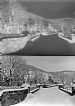
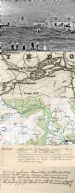
1. The Craigton shop in the 1950’s. Note the tidy vegetable garden behind.
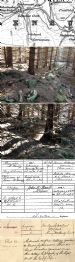
2. Charabanc at the Kildrummy bends. On Daimler Chassis similar to the one owned by Walter Davidson
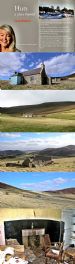
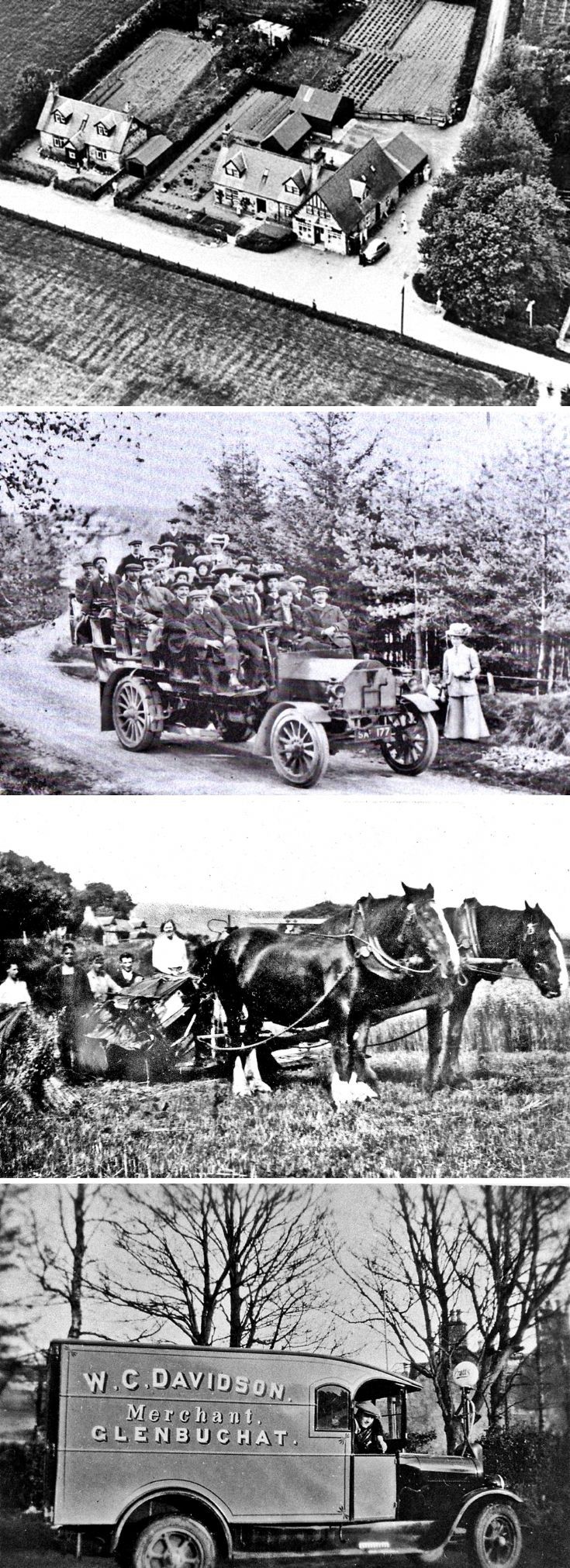
3 .Cameron Family harvesting at Sunnybrae
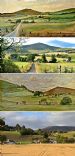
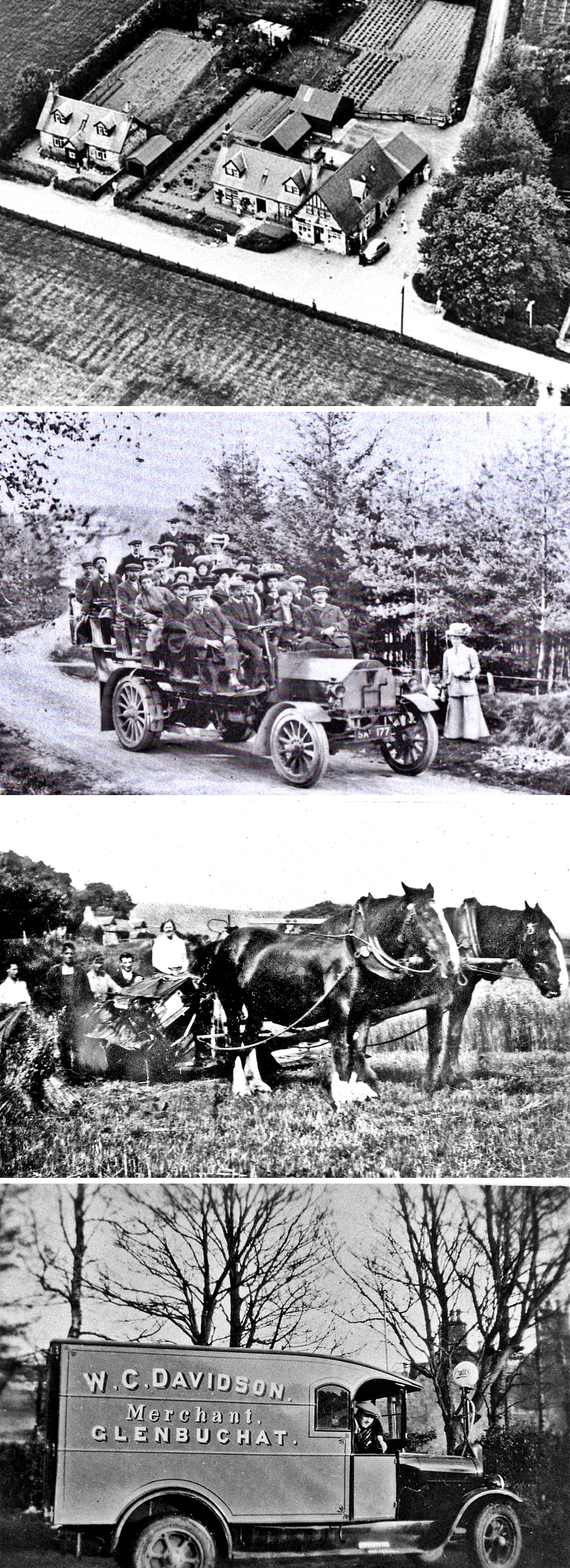
4. Davidson’s shop van with petrol pumps behind.
The following pages provide an idea of what the Glen looked like in those far off days and an insight into the lives of the Glen folk and some of our relatives. Of course, they were immensely evocative for me and probably my brother and sisters, as we had such strong family ties in Glenbuchat.
During our childhood in the 1920's and 30's we always spent our summer holidays there and got to know many of the residents who regularly visited Grandfather's shop at Craigton. We also went out in the mobile shop lorry driven by uncles Walter, Jim or Bob and met people in more remote farms and crofts. Our youngest uncle Donald incidentally normally served in the shop and assisted Grandfather. As children we roved around the area, collecting a can of milk from the Dockington farm which was about half a mile from the shop, sometimes helping in the fields during hay making, sometimes to accompany the carts going to get peat from the "Moss" in the surrounding hills, and generally enjoying a children’s paradise. When we grew up a bit, Grandfather sometimes let me take telegrams to the Upper Lodge when the Laird and his family and guests were staying there. I got a few pennies for the job and got to use the old Post Office bike which was always a brute and hard work for a youngster. (Grandfather was of course a Sub Postmaster as well as a shopkeeper).
Click for The Davidson Family history and more details about Glenbuchat
During the shooting season I remember going with farm workers on to the hills where they were engaged on a casual basis as "Beaters". Their work was to frighten the grouse in the heather by shouting and beating the heather with sticks and so get them flying towards the "butts" where the "Gentry" stood ready to shoot down as many as they could. I received a few pennies for my assistance but it was a hard, dusty and tiring way to earn it. As you can see, our various activities brought us into contact with many of the places and people portrayed in the photographs and whilst the pictures may only be of passing interest to others, they conjure up to me so many happy childhood memories’ Most of those Glen folks are now long dead but I will remember them all with affection to the end of my own days.
Some of the school pictures are very interesting as they show some of our aunts and Uncles, and also cousins, as schoolchildren. It may have been a small country school but I am sure it provided the Glen children with a very sound education. My mother was educated there in the years before the First World War and she was able to hold her own with people educated at much more imposing establishments. One thing that she was taught good handwriting and as a prolific letter writer a1l her 1ife, it was admired by many.
On the south side of the River Buchat nearer the foot of Ben Newe, lay the old parish church and manse. (Known as the "Auld Kirk"). This I believe, was of the Established Church of Scotland and we know that the Reverend Spark was minister there from 1886 to 1932. Sometime during the mid "Thirties" it would appear that the church was no longer in regular use, though a service was held there once a month possibly to ensure its use as a place of worship. There was another church and manse located next to Craigton but I think it was for the use of the "Free Church of Scotland". However, the family went regularly to this church and also once a month to the Auld Kirk, so I am not sure if there was any significant difference between the two churches.
There was no organ in the Auld Kirk so hymns were sung without any accompaniment and I can remember Grandfather standing in front of the congregation and striking a tuning fork to obtain the right commencing note. The Auld Kirk still exists today and is a listed building of special historical interest, though it is no longer a place of worship. The manse incidentally, became a private residence during the "Thirties". However, the burial ground there is still in use and over the last 5 or 6 years some of us have attended the funerals of Uncles Bob and Jim and the interment of Aunt Polly's ashes. The gravestone of Grandfather and Grandmother Davidson is in a prominent position facing the path up to the Kirk. An inscription has been added to the gravestone to commemorate Aunt Polly. A walk round the cemetery reveals several headstones of other relatives (Davidsons, Chrees and Camerons) and many other former residents of the Glen known to us in years gone by.
I mentioned Grandfather's interest in music and another of his accomplishments was that of band leader. He had a small band which played at dances in public halls throughout the surrounding glens and villages. My mother was a member and played the piano whilst Grandfather played the cornet. There were other instruments including a base, fiddle and I can remember them all being taken out for cleaning during one of our holidays at Craigton. Of course, that was long after the band used to play and I think it was disbanded by 1920 Another of Grandfather's interests was that of beekeeping. Apparently, he enjoyed some regard in the beekeeping fraternity as he once showed me an article he had written for the "Beekeeper" magazine. This was when I stayed in the Glen over the winter of 1941-1942 and he also told me that before the War he exchanged stock and information with a beekeeper in Holland. He was a good gardener and the front of the house was full of rose bushes.
By the side of the house, he cultivated strawberries and other soft fruit, though how he found time was a mystery.
My Grandparents the Davidsons, had a family comprising four boys and three girls. My mother Christina was the eldest child, followed by Walter, Jim, Polly, Bella, Bob and Donald. I think that is in the right order but future research can put it right if necessary. As my uncles grew up, they were absorbed into the business which had expanded to include motor vans serving remote communities, farms and the like, in the surrounding countryside and well into neighbouring glens. Walter operated a van selling drapery, footwear etc whilst Jim handled groceries and hardware in his van. Bob and Donald worked mainly in the shop but later in the Thirties Bob was often used to drive a large van to bring in supplies from Aberdeen.
I have no doubt that the business venture with the vans resulted from Grandfather's early interest in motoring and his entrepreneurial spirit. On one of the very few occasions he ever left Aberdeenshire (holidays were never taken by him) he travelled down to Birmingham to an auction and bought a second-hand Daimler which had once belonged to the King of Spain. I don't know if it was his first vehicle but somehow, he got it home to Glenbuchat. Here the body was detached from the chassis and hung up on chains inside the lorry shed at the rear of the premises. The shed was high enough to permit this, and I recall playing in the shed with my brother Adrian and looking up at the body with its scarlet paintwork, brass door handles and the Spanish Royal coat of arms in gold paint on the doors.
Grandfather built a charabanc body on to the Daimler chassis and used it as a conveyance for his band and for other special occasions. I remember reading a story about a trip he made with a party to Perth and the hazards and problems they encountered, especially when negotiating the mountain pass south of Braemar aptly named Devil's Elbow. In those days the pass must have been a motorist's nightmare with its terribly steep, corkscrew bends and rough surface. It was bad enough when I cycled over it in 1943, but that is another story. Nowadays the pass is still steep but many of the bends have disappeared and only the weather at times can make it seem daunting. The story, incidentally, was written in pencil on one of the shop storeroom doors and signed by someone calling himself "Bumbee Willie". Who he was, goodness knows, but he listed the passengers, time taken and incidents along the way I can remember little of the details but somehow, I was left with the impression that Grandfather had coped in his usual calm and confident manner?
I believe that the vehicle was eventually converted into a lorry and used in the late 20's and early 30's to carry goods to the Glen from the railway station at Alford. After the rail link at Alford closed down, the supplies were handled by road from Aberdeen.
It is surprising to think that the Glen Road, right up to the mid 30's was not tarmac surfaced and whilst reasonably level it was quite rough for vehicles. Nevertheless, the number of motor vehicles using the road increased to the point where Grandfather, ever with an eye to business, did a deal with an oil company and had a petrol underground tank and dispensing pump installed on the roadside near the shop. I quite often helped to fill customers cars with petrol in later years and recall that the pump was operated manually by winding a handle to the top of a rack device for one gallon and then repeated for subsequent gallons. There was a glass container at the top of the pump to show each gallon before it ran through a flexible pipe to the vehicle. Grandfather had other cars as time went on and I remember two cars when I was a small boy, which had canvas roofs and celluloid side screens. They were both American cars but with right hand drive. The first I believe, was called a Durance, but I may be wrong. The other was a Studebaker. When we were on holiday in the Glen, Grandfather would often take the family out for a drive on a Sunday afternoon. We must have been crammed in, but still went a fair distance over some very steep mountain roads. One memory I have is a trip to Speyside via Rhynie and Cabrach and having afternoon tea in a nice wooden cafe near the river.
In the middle of the 30's Grandfather bought a large saloon car with fixed roof and wind-up windows. I think it was a Wolseley but cannot be sure. Anyhow I thought it was beautiful with its maroon and black paintwork, large chrome plated head lamps, and wire spoked wheels.
During the second world war, Grandfather had a pretty rough time, keeping the business running as best he could, with Jim, Bob and Donald all away as soldiers. Uncle Walter could not help much as he was running his own business (General Merchant) in the village of Lumsden by then. Grandfather employed a shop assistant called Ella Stewart and he went out on the road himself driving a large mobile shop round the same areas that his sons used to cover. It must have been terribly hard on him as he had a bad leg and suffered from asthma. He was into his sixties by then and at the end of his rounds he had to do the post office work and I know from my stay in the Glen in 1941 how late into the night he worked. The winter weather was also a trial for him and driving the van in heavy snow or ice every day must have taken a lot out of him. Possibly those years shortened his life somewhat and he died just after the war ended (1946).
I will refer to Grandfather again, in the story of my own life, as he made such an impression on me. I should think all my brothers and sisters must also have been influenced by him to some degree, despite the fact that we really only saw him during our summer holidays. It would be easy to say that he bought our regard with the sweeties he always had for us but I am sure that, as we all grew up, we recognised his many qualities and tried to copy them where possible.
Uncle Jim took over the business when Grandfather died in 1946 and there had to be major changes. Jim, his wife Tibby and their family of two girls, Sheila and Evelyn, moved into the house at Craigton and Grandma went to live in Jim's former house called Coldstrifin next to the old "Smiddy" (Blacksmith's shop) located a mile or so down the Glen. Aunt Polly gave up her work in Aberdeen and came back to look after Grandma until the old lady died in 1951.
Uncle Walter had of course his own business at Lumsden, where he lived with his wife Bessie and his only child, Walter. During the early 30's, and before the Lumsden business, he and his family lived in a house located near Sunnybrae farm, a short distance from the shop at Craigton. I cannot recall the name of the house at the moment, but the next occupier was an elderly woman called Mrs Joy who kept geese and made hop beer which Grandfather loved with his Sunday lunch. There was one hilarious occasion when a bottle of Mrs Joy's brew exploded as Grandad started to open it at the dinner table and the contents were deposited over everyone and everything including the ceiling.
Uncle Bob came back to the shop after his demobilisation and worked for Jim as a van driver until his retirement. He married Jean Duncan who was the daughter of Alex Duncan, a former Head Gamekeeper for Glenbuchat Estate. They had two children, Brian and Doreen and lived in a cottage up the "Crag" behind the shop.
Uncle Donald also returned to work for Jim for a while before he went into business on his own at premises nearer Aberdeen. He married a nursing sister called Eunice and eventually they emigrated to Queensland in Australia where Eunice was a hospital matron for many years.
I cannot provide much information about the shop's fortunes from that time on, as we no longer visited the Glen. This was quite understandable, as we were busy with our own grown-up lives then and had many other matters to occupy our minds. However, I know that Jim opened a branch at Bellabeg in Strathdon, just over the hill from Glenbuchat, and that his daughters Sheila and Evelyn managed it for him.
I recall the occasion not so long ago when I copied some of the inscriptions shown in the previous page, in addition to other memorials relating to my mother’s family. I was with my wife Jean and other members of the family attending the funeral of our Aunt Polly. The weather was simply perishing and the wind howled round the Auld Kirk. We had a longish wait for the hearse carrying Polly’s ashes and while I wrote down the information from the tombstones with freezing fingers, the rest huddled behind the Kirk wall. We were all very glad to finally get into our various cars and make our way to an hotel for a cup or glass of something warming. However, for those who may not have visited the Glen, it is not always like this and some years previous to that, we attended the burial of my Uncle James (Davidson) in Glenbuchat. The month was August and the weather fine. Standing in the kirkyard and looking out over the Glen and the hills beyond, gave a feeling of real peace and tranquillity.
The Glen is a very lonely place compared to what it was in years gone by, and I was quite sad to think that Camerons and Davidsons no longer lived there. Some of the farms still operate but the crofts, houses, and cottages have mostly been converted to holiday homes for townsfolk. Fortunately, it has not spoilt the Glen and it is still a lovely place to visit but in my own mind I will always see it as it was in mv youth.
“Erected by Ann Farquharson in memory of her husband -
William Chree. Farmer, Sunnybrae. Died 28th March 1900 Aged 77 years.
Also the above Ann Farquharson who died at Sunnybrae
18th December 1915. Aged 86 years.
And Daniel Cameron. Farmer, Sunnybrae beloved husband
of Anne Chree. Died 31st July 1914. Aged 69 years.
Also the above Anne Chree who died 18th January 1942
Aged 89 years.”
“Erected by George Cameron in loving memory of his wife -
Jeannie G. Petrie who died at Sunnybrae 18th June 1948
aged 60 years.
Also, in memory of the above-named George Cameron who
died at Greensyle, Kildrummy. 2st September 1959 aged
77 years
The following is the text of the sermon given by the Reverend William Spark who was Minister of the Established Church in Glenbuchat from 1886 to 1932. His wife was Isabella Ogg, farmer’s daughter from Baltimore farm. They had three children, John, Archibald and Annabella. Archibald was the eldest son and as Lieut. A.C. Spark he was killed at Ypres in 1917 at the age of 21. The Reverend Spark was also a part time farmer and he farmed at Kirton with the help of a grieve and farmworkers.
Sunday April 1st 1900. Glenbucket.
I cannot conclude my sermon today without referring to the great loss, which we as a congregation have sustained by the death of respected Elder Mr. William Chree of Sunnybrae.
Elders of this church, some 13 years ago, when I was ordained Minister among you, were - Messrs James Cameron, George Begg, Wm. Dawson and John McRobbie, these had all died, with the exception of Mr. Cameron, our late respected teacher who, however had left this Parish.
By the reduction of Elders, it was found necessary to add twice to their numbers during those few years. With your assistance the church has been very fortunate in having Elders highly respected and worthy of this honourable office in The Church of God.
At my first ordination of Elders it was a very anxious time for me, in the fact that I was newly come amongst you and was somewhat inexperienced in Church procedure. However, your aid in selecting as worthy Elders, Messrs Wm. Bigg, James Ross, and Wm. Chree lightened my burden as well as that of the Kirk Session. Their ordination took place on 7th October 1888. Mr Begg died several years ago. Mr Ross more recently, and now we mourn the loss of Mr Wm Chree who died on the 26th March 1900, at the ripe age of 77 years. He has thus filled his allotted span of existence in this world. As an individual and a parishioner, he was highly respected alike for his honesty and fair dealing, for his quiet wit and genial conversation, his unusual memory of former events, modes and habits of life and his liberality. As an Elder he was attentive to the duties that fell to his lot, anxious that all our transactions in Kirk Session should be carried out faithfully, and that all services, especially so on Communion Day, should be done decently and in order. And as a Christian he was a diligent reader of his bible and a regular and devout worshipper in The House of God.
One part of his faith brought hope and genuine love in no ordinary degree, in short, a man of peace - living in peace and dying in peace. Well may we say of him in the words of the Psalmist “Mark the perfect man and behold the upright - for the end of that man is peace”.
Note: - The James Cameron mentioned in the sermon above came from another Cameron family who lived in the Glen prior to 1900 and who were not related to us. He should not therefore be confused with James Cameron, one of the sons of Daniel Cameron and Ann Chree.
Additional Information from a letter from James Davidson
In 1982 James Davidson who was the last Davidson to run the Craigton shop, wrote to Ken Cruickshank with some memories of Glenbuchat especially about Walter Davidson’s vehicles.
“Our first car, as I may have told you, was a 40HP Daimler Landaulet, belonging originally to the King of Spain. My father bought it in 1914, fitted it with as a lorry and ran it to Aberdeen every Thursday carrying passengers on top of the goods. This was the start of getting to Aberdeen and back the same day.
In or around 1920, Wallace of Candacraig had a 1914 Mercedes 45HP (now would be 4500cc), this we bought for £100 plus a bottle of whisky for the chauffeur, took off the body and fitted it with a charabanc body to take 20 passengers. It was in great demand for school trips etc. In 1923 we bought another Mercedes from Wallace, making it a lorry to replace the Daimler, which was getting done. These vehicles were driven by a chain on each rear wheel. I think there may be still one of these chains hanging from a tree branch in the hedges across from the Shop, used for a swing for the children to play on.
The Glen game, I would think, ceased around 1938. There was the usual competing for dancing, throwing the hammer etc. They were held beside the old Castle.
The Old Post Office at Bridge o Buchat was a house only (no shop). The house consisted of 3 rooms downstairs and 2 rooms upstairs. The Post Office was moved to the Craigton shop in the early 1920’s. When the house was built, I really have no idea but it was demolished because the tenant then complained about it being damp and the laird would do nothing to improve it. This might have been the early 1960’s. The daughter of the post mistress was Miss Helen McConnachie”
 View Large Version
Picture added on 08 December 2021 at 18:44
This picture is in the following groups
places
places
places