The Glenbuchat Image Library
No: 2396 Contributor: No Contributor Year: 2021
109 Dr Proctors Inheritance


Dr Proctors Inheritance
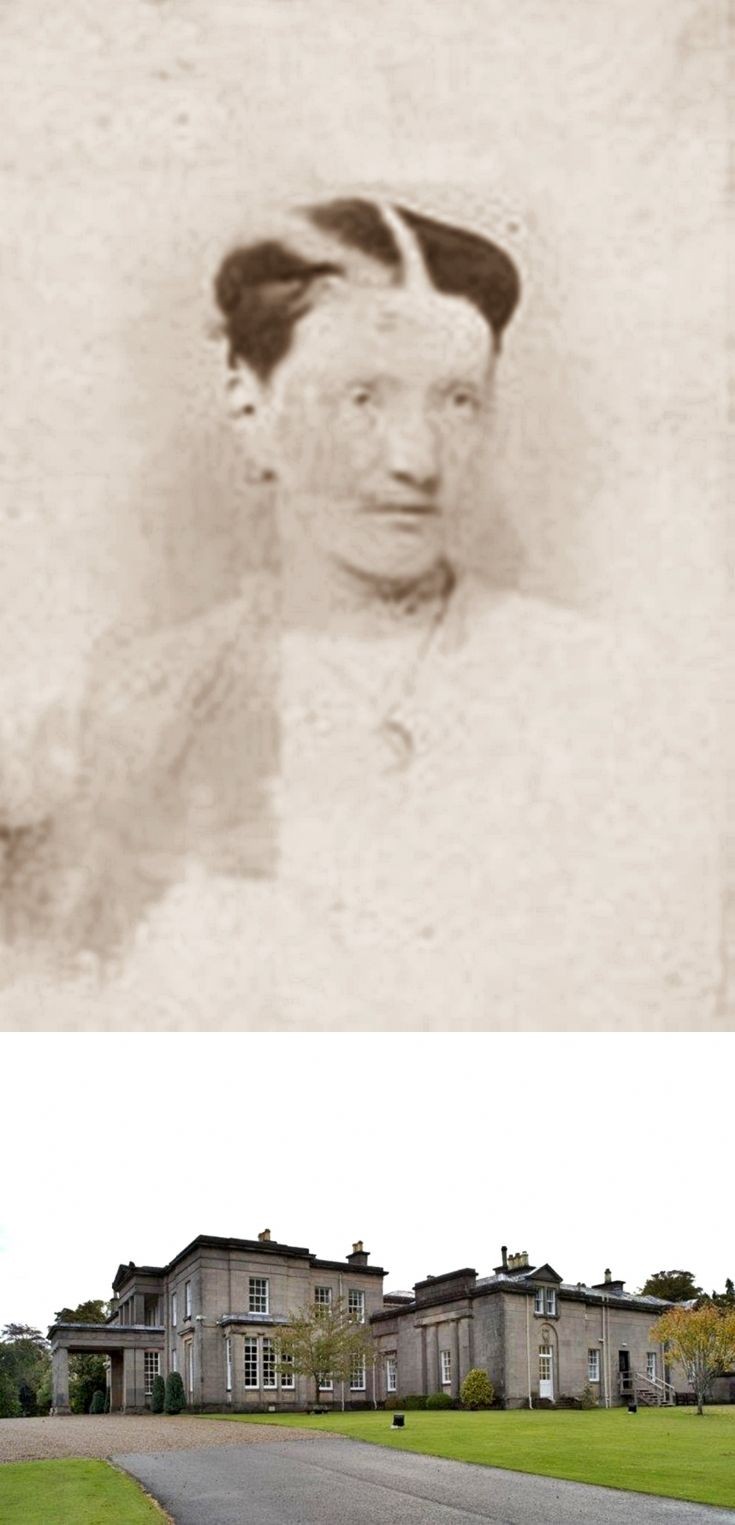
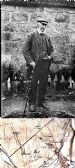
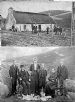
Pictures above
1 Miss Margaret McPherson-Grant
2. Aberlour House
Click for details of Dr Proctor’s family history and early life.
The previous page outlines the life of Dr Alexander Forbes Proctor of Towie. He was the son and brother of doctors and practiced initially in Rhynie. His life changed in 1877 when he in expectantly came into a large inheritance, about 8 million pounds in 2021 money.
The story involves a Towie medical family, the slave trade and sugar plantations in Jamaica, a large Speyside estate, a probable lesbian relationship, and a disputed multimillion pound inheritance.
To understand the full story, you need to understand the family relationships.
The main players are:
Alexander Grant: Sugar Planter and Slave owner of Jamaica
Annie Grant: his sister who married:
Alexander McPherson Surgeon who had a daughter
Margaret Gordon MacPherson (Later) McPherson-Grant
Alexander McPherson also had a sister:
Margaret McPherson 1791–1859
Who Married John Proctor
Father of Alexander Proctor who inherited Alexander Grants estates.
George Grant, of Drumfurrich, MD in Kingussie,
Born: About 1731
Died: 23 April 1816, Elgin, Moray,
Marriage
Janet Donaldson. Born About 1756 And Died In 1834
Children:
Grant, Alexander of Jamaica Baptised: 11 March 1774, Boharm Parish, Banffshire,
Grant, Margaret
Grant, Mary
Grant, William
Grant, James
Grant, Robert
Grant, Charles
Grant, Annie Baptised: 3 November 1793, Aberlour
Alexander Grant Bought the Estate of Aberlour From James Gordon Of Aberlour. It Subsequently Came into The Ownership of His Niece Miss Macpherson Grant.
Grant, Annie (Alexander Grant’s sister)
Baptised: 3 November 1793, Aberlour Parish, Banffshire,
Marriage
Macpherson, Alexander Surgeon, Farmer in Garbity, on 30 April 1825 in Garbity, Aberlour Parish, Banffshire,
Children:
Margaret Gordon MacPherson (Grant)
Birth 27 Apr 1834 Rothes, Moray, Death 14 Apr 1877 Aberlour House, Aberlour,
John McPherson (Father of Alexander McPherson)
Spouse
Margaret Young 1754–
Children
Margaret McPherson 1791–1859
Isobel McPherson 1793–
Alexander McPherson 1796–
May McPherson 1798–
Margaret McPherson 1791–1859 (Wife of Alexander Proctor Snr)
Birth 25 Oct 1791 Huntly, Aberdeenshire,
Death 20 Apr 1859 Tarland, Aberdeenshire,
Spouse
Alexander Proctor 1784–1859
Children
John Proctor 1810–1854
Alexander Proctor 1812–1842
Robert Proctor 1814–1898
David Proctor 1816–1841
Thomas Proctor 1819–1820
Farquharson Proctor 1821–1882
James Proctor 1823–1888
Margaret Proctor 1828–1915
John Proctor 1810–1854
Birth 25 Jul 1810 Marnoch, Banffshire,
Death 14 Apr 1854 Towie, Aberdeenshire,
Parents
Alexander Proctor 1784–1859
Margaret McPherson 1791–1859
Spouse
Margaret Bowman Forbes 1817–
Children
Alexander Forbes Proctor 1839–1903
Mary A Proctor 1844–
John McPherson Proctor 1846–
Robert Farquharson Scott Proctor 1848–
James Proctor
Alexander Grant
Alexander was born in Aberlour Banffshire, and died 07/05/1854 in Arlington Street London. He was a 'Planter and merchant in Jamaica ‘who returned to Scotland about 1838. Aberlour House was built for him c. 1838. He personally left £300,000 at his death in 1854. (£300,000 in 1857 equates to approximately £28,800,000 in 2021,)
He was the son of George Grant and Janet Donaldson. George Grant was the brother of Rev. Alexander Grant, late minister of Glenrinnes, who died in Elgin, Scotland on 28 July 1806.
He had travelled to Jamaica, where he amassed a considerable fortune as a planter and merchant. He was a slave owner, and a member of the Jamaican legislature. It is not certain when he returned to Britain, but it is thought that he was in London by the 1820s, and he visited Aberlour in 1829 to attend to the burial of his father.
His estates in Jamaica and Scotland were inherited by his niece Margaret Gordon MacPherson Grant (1834-1877) who donated money to pay for St Margaret's Church in Aberlour, the organ in Inverness Cathedral and who set up the Aberlour orphanage in 1875. Margaret died in 1877, estate was valued for probate at £195,500 3s 2d including moveable estate on Bryan Castle, Brampton Bryan and Low Layton estates in Jamaica.
She had changed her name by the addition of Grant in 1854, under the will of Alexander Grant. The will identifies a debt to Alexander, under a Chancery ruling in 1842, including accrued interest of £67997 3s 1d from the estate of the late Alexander Thomson, who had been a partner in Donaldson and Thomson, and with whom Alexander Grant was in partnership in a victualling contract for the Jamaica station in the late war.
The following are estates in Jamaica in which Alexander had a financial interest and it should be noted that there included over 1,200 slaves. The money noted below is the compensation paid by the British Government to slave owners after the abolition of slavery.
Jamaica St George 68 (Lowlayton Estate) £5,742 19s 3d Awardee (Trustee) 350 slaves
Jamaica St Mary 165 (Nonsuch and Unity)£4,938 17s 4d Claimants in List E or Chancery cases (Executor or executrix) 121 slaves
Jamaica St Mary 28 (Orange River Estate) £3,563 12s 9dAwardee (Trustee) 217 slaves
Jamaica Trelawney 28 (Bryan Castle Estate) £4,590 6s 0dClaimants in List E or Chancery cases (Trustee) 270 slaves
Jamaica Trelawney 29 (Brampton Bryan Estate) £5,510 19s 7dClaimants in List E or Chancery cases (Trustee) 298 slaves
The total sum of compensation is over £24,000 which is equivalent to £3,314,145.54 in 2021
As part of the inheritance arrangements Margaret Gordon McPherson had to change her name to McPherson-Grant
This was legally arranged and noted in the London Gazette.
Prom the London Gazette of Friday, 16th June, 1854.
Whitehall, June 14, 1854.
The Queen has been pleased to give and grant unto Alexander McPherson of Garbity, in Morayshire, Esquire, Doctor in Medicine, on the behalf of his Daughter, Margaret Gordon McPherson, Spinster, a Minor, Her Royal license and authority, that she, the said Margaret Gordon McPherson, may, in compliance with the direction contained in the last Will and Testament of Alexander Grant, sometime of Jamaica, the West Indies, and late of Arlington Street, in the Parish of St. George, Hanover Square, Esquire, deceased, henceforth take and use the Surname of Grant, in addition to, and after that of, McPherson, and also bear the Arms of Grant, quarterly in the first quarter with those of McPherson, such Arms being first duly exemplified, according to the laws of Arms, and recorded in the Herald’s Office, otherwise the said Royal licence and permission to be void and of none effect: And, also, to command that the said Royal concession and declaration be registered in Her Majesty’s College of Arms.
Miss Grant at Aberlour
Miss Grant lived at Aberlour and had a tempestuous relationship with a Miss Charlotte Temple. The details of this relationship are shown in the subsequent paragraphs. Unfortunately, Miss McPherson-Grant became alcoholic and died in 1877 at the age of 42.
Her death was reported in the newspapers.
DEATH OF MISS GRANT.
Miss Grant, the of estate Aberlour, on the banks the Spey, died on Saturday morning from a shock paralysis, the age of 42yean. About a year ago she sustained a fall when part of the mansion was destroyed by fire, and from the effects of this she never recovered, being seldom out of her room for the last six months.
Nothing serious apprehended till last Thursday, however, when she bid a shock paralysis. The deceased lady was the only surviving daughter the late Dr McPherson, and inherited the estate through her uncle the late Alexander Grant. She came into possession and she proceeded to carry out great improvements, upon which she spent considerable fortune. Conjointly with the Laird of Carron (Mr Grant), she built a female school lour, and in building and endowing Episcopal Church there she is said have faith. The deceased was very generous to poor.
Edinburgh Evening News - Monday 16 April 1877
Miss McPherson had previously made a will leaving her estate to Miss Charlotte Temple. But following on a breakdown of the relationship the will was changed. In view of the extent of the estate, the will was challenged on the ground that Miss McPherson-Grant was not of sound mind. The subsequent background to the case and the case itself was the subject of extensive newspaper interest.
The following entry in Wikipedia explains in details the unusual circumstances of Dr Proctors inheritance.
Margaret Macpherson Grant
Born Margaret Gordon Macpherson
27 April 1834 Garbity, Aberlour parish, Banffshire, Scotland
Died 14 April 1877 (aged 42) Aberlour House, Moray, Scotland
Margaret Macpherson Grant (27 April 1834 – 14 April 1877) was a Scottish heiress and philanthropist. Born in Aberlour parish to a local surgeon, she was educated in Hampshire, and was left an only child when her elder brother died in India in 1852. Two years later, she inherited a large fortune from her uncle, Alexander Grant, an Aberlour-born planter and merchant who had become rich in Jamaica.
Macpherson Grant took up residence in Aberlour House, which had been built for her uncle by William Robertson. She lived unconventionally for a woman of her time, dressing in a manner one newspaper called "manly", and entering into what was described as a form of marriage with a female companion, Charlotte Temple, whom she had met in London in 1864. Macpherson Grant donated generously to charitable enterprises, especially those associated with the Scottish Episcopal Church, establishing an orphanage (now the Aberlour Child Care Trust) and founding St Margaret's Episcopal Church in Aberlour. She drank heavily, and despite attempts by friends and family members to persuade her to stop, she always relapsed into alcoholism.
She made several wills over the course of her life that would have left her estate to Temple but, shortly after Temple left her to marry a man, Macpherson Grant revoked her will; she died intestate five months later aged forty-two. Her disinherited former companion sued, and the court determined that the bulk of her fortune should go to cousins, who were probably unknown to her.
Early life and family
Margaret Macpherson Grant's parents, Annie (née Grant) and Alexander Macpherson, lived in Garrity, Aberlour parish, Banffshire. Her father was a local surgeon in Aberlour, Moray, and her mother, who was from the influential Grant family, was thought to have married beneath her station. The Macphersons married on 30 April 1825, and had their first child, Alexander Grant Macpherson, in 1828; Margaret Macpherson Grant (originally called Margaret Gordon Macpherson) was born on 27 April 1834. While she was in her teens, Macpherson Grant attended school in Hampstead, in north London, studying with Mary Ann Stodart, a writer and activist for women's education. Her brother travelled to India, where he died in 1852, leaving Macpherson Grant as her parents' only surviving child.
Macpherson Grant's uncle on her mother's side was Alexander Grant. Originally from Drumfurrich Farm in Aberlour parish, he had travelled to Jamaica, where he amassed a considerable fortune as a planter and merchant. He was a slave owner, and a member of the Jamaican legislature. It is not certain when he returned to Britain, but it is thought that he was in London by the 1820s, and he visited Aberlour in 1829 to attend to the burial of his father, the farmer George Grant. When slavery was abolished in 1833, Grant benefitted from a government scheme to compensate slave owners, claiming over £24,000 for the loss of his slaves and other business assets, He commissioned the architect William Robertson to build Aberlour House for him, which was completed in 1838. He also had plans to buy the farm on which he was born. Aberlour House became his official residence,[2] although it is doubtful that he ever actually lived there, and he was still engaged in business in London as a West Indies merchant.
Alexander Grant had been involved in business in Jamaica with Alexander Donaldson and Alexander Thomson. [ As the three men were absentee landlords, affairs on their estates were managed by a team of local attorneys in Kingston, with help from the bookkeepers and overseers who lived on the plantations. This arrangement created issues in settling the debts of their estates after Donaldson's death in 1807, and Thomson's in 1818, resulting in years of litigation among the heirs. Because the ongoing revenues from the estates were inadequate to satisfy the debts and accruing interest, Grant pressed for the plantations to be sold. The trustees in Jamaica, John Meek and Joseph Green, resisted these efforts and ignored orders to sell issued by the High Court of Chancery. The lawsuits would not be fully resolved until 1861, by which time Alexander Grant had died, and his estates had come into the possession of Macpherson Grant.
Adult life
When Alexander Grant died in 1854, Macpherson Grant, then twenty years old, inherited the bulk of his wealth, along with Aberlour House and his estates in Scotland and Jamaica, valued in total at £300,000 He also left her an outright settlement of £20,500 payable at his death provided she had attained a majority of twenty years of age, an annuity of £1,500, and several pieces of jewellery and personal property. Amongst the Jamaican plantations in the inheritance were Brampton Bryan, Bryan Castle, Fairfield, Low Layton, Orange River, Orange Vale, and interests in the estates of Nonsuch and Unity. As with all agricultural concerns, the output of the estates varied with changes in economic conditions. When Orange Vale was first established in 1780, its main source of income was its coffee crop, supplemented by selling or hiring out its slave labourers until 1813. After 1850, the main crop shifted from coffee to raising and marketing cattle. By 1856, the estate was selling pimento and lime, which were produced until 1863. By the time Macpherson Grant inherited the plantation, it was economically failing, and the sale of cattle had become its principal means of generating revenue.
Alexander Grant's will stipulated that he wished Macpherson Grant to take the Grant name. Her father therefore applied on her behalf for royal approval for her to add Grant to her own name, and for her to use the combined arms of the Grant and Macpherson families; consent was given in June 1854. She moved into Aberlour House and immediately started improving and extending the building. To do so, she employed A. & W. Reid, Robertson's nephews, who had continued his practice in Elgin after Robertson's death in 1841.They added bay windows to some of the rooms, expanded the service quarters to make space for a new ballroom, and built a porte-cochère at the principal entrance. Macpherson Grant spent her time salmon fishing and travelling, leaving the management of her Jamaican estates to her agents, Milne & Co in Elgin. She also made a will leaving all her wealth to the Scottish Episcopal Church, of which she was a supporter.
With Charlotte Temple
While on a trip to London in 1864, Macpherson Grant became friends with Charlotte Temple, the twenty-two-year-old daughter of William Temple, a landowner and former High Sheriff of Wiltshire. Later that year, Temple visited Macpherson Grant in Aberlour and stayed until the spring of 1865. Some weeks after Temple had left, Macpherson Grant returned to London, and the pair renewed their friendship; Macpherson Grant also became acquainted with Temple's social circle. Soon after, Macpherson Grant asked Temple's parents to allow their daughter to live permanently with her at Aberlour, and in return promised to make Temple the heir to her estate. Her parents were reluctant, but eventually agreed. Macpherson Grant went immediately to her solicitors in London, and drew up a new will, instructing that her estate should not go, as she had previously wished, to the Episcopal Church, but to her own children (should she have had any); should she die without issue, her estate would be bequeathed to an elderly aunt named Margaret Gordon, and if the latter had died it would go to Temple.[35] She then joined Temple, who had been waiting in a carriage outside the solicitor's office, and presented her with a pen, saying "Do you know what I have been doing? I have been making you my heir, and here is the pen I did it with; keep it!"
Macpherson Grant and Temple returned to live in Aberlour House, and spent their time engaging in field sports and breeding livestock. Newspapers carried stories of their shooting expeditions and livestock entries at agricultural shows. Macpherson Grant promoted and supported several charitable causes, especially those involving the church. Her relationship with Temple was described in an account of their affair, published in 1882 in The History of the Province of Moray, as being much like a marriage: Macpherson Grant placed a ring upon the ring finger of Temple's left hand, and Temple referred to herself as 'wifie' in letters to Macpherson Grant. This lifestyle was unusual for the time, and was described as "remarkable tomfoolery" in the local press. Newspapers of the time also commented on Macpherson Grant's "strong-minded nature" and described her as "very masculine in appearance and manly in dress". According to the historian Rachel Lang, the scale of her wealth, and of her charitable donations, afforded her "considerable social leeway" and allowed her to be accepted into society
Macpherson Grant relied heavily on alcohol during the late 1860s. She went through periods of abstinence only to relapse. Temple encouraged her to stop, and tried to prevent any public scandal being caused by her drinking. Macpherson Grant's father also tried to persuade her to reduce her intake; she temporarily stopped drinking when he moved into Aberlour House in 1870, but resumed after he died in April 1871. Following his death, and since her aunt Margaret Gordon had died in 1866, Macpherson Grant thought it necessary to reorganise her affairs. On 31 May 1872, she had her London solicitors prepare a new will, leaving her estate to her own children (again, only if she had had any at the time of her death); if she had no children, her estate was to go to Temple and Temple's heirs. Her Scottish solicitors warned her they were unconvinced that this English document would satisfy the requirements of Scots’ law. Distressed by the prospect that her will might be contested, she instructed her solicitors to communicate with each other and come to an arrangement that would put the matter beyond question. On 8 March 1873, Gibson-Craig & Co produced another will, leaving the whole of her estate in trust, with a provision that Temple inherit it, or be paid a legacy of £20,000 in the event that any children of Macpherson Grant should contest the settlement. Macpherson Grant also gave instructions that her inheritor should become the bearer of the name and arms of Grant of Aberlour.
Philanthropy
Macpherson Grant continued to fund enterprises of the Episcopal Church. She provided the organ for Inverness Cathedral, which was built between 1866 and 1869 by the architect Alexander Ross, and in 1874 she persuaded Canon Charles Jupp to come to Aberlour to act as her personal chaplain with the promise to build an orphanage with a church and school. The orphanage was founded in 1875, under Jupp's administration. It initially operated out of a cottage until new buildings were completed. Alexander Ross was engaged to design the orphanage and its chapel, later known as St Margaret's Church, and work on these started in 1875
Temple's marriage
At some point in 1875 Harry Farr Yeatman, a retired commander of the Royal Navy, visited Aberlour. It is not known exactly when he arrived, but in August of that year there was a report in the London Standard about his success in shooting on Macpherson Grant's land. The following December, he and Temple became engaged. Macpherson Grant's response to this betrothal was mixed: at times, she seemed positive, and offered to host the wedding at Aberlour House; but she also showed distress at the prospect of Temple leaving her. On 11 December 1875, Macpherson Grant had to be rescued from a fire at Aberlour House, the cause of which was never established. She became increasingly confused – sometimes believing she had rescued her servant from the blaze, while at other times thinking she had sustained a head injury.
On 8 February 1876 Yeatman and Temple were married at St Peter's Church, Eaton Square, in London. Shortly before the marriage, Temple had written to Simon Keir, a partner of Macpherson Grant's agents at Milne & Co, requesting that his accounting of sales no longer be sent to Macpherson Grant directly, but rather to Macpherson Grant's Edinburgh solicitor, Mr Falconer. Unhappy with this new arrangement, and with what he saw as Temple's interfering in his affairs, Keir drew up a deed of revocation, which would cancel Macpherson Grant's existing wills. In November 1876 he visited Aberlour, and Macpherson Grant signed the deed, thereby revoking any claim that Temple, now Yeatman, had on her estate. With Temple now gone, Macpherson Grant was depressed, heavily dependent upon alcohol and, according to Rachel Lang, going through a "psychotic episode”. She died on 14 April 1877, after suffering a partial paralysis. Her death occurred before the completion of the orphanage and church and two weeks before her forty-third birthday She was interred in the Aberlour church yard in a burial aisle she had erected for her parents' graves.
Legacy
Since she had signed the deed of revocation, but had not written a new will, Macpherson Grant died intestate. Her trustee, Mr Falconer, determined that the estate should go to cousins on her father's side of the family: James Proctor, of Tarland, Margaret Proctor, of Banchory, and Alex Proctor, of Rhynie. A case ensued at the Second Division of the Court of Session, wherein the Yeatmans' solicitor, Mr Fraser, argued that Macpherson Grant had been coerced by Keir into signing the deed of revocation, because he was aware of her declining health, and the estate should go to Yeatman as previously agreed. He further argued that it was highly improbable Macpherson Grant would have wanted it to go to the Proctors. Not only had she probably never met them, they were from her father's family; her fortune had been amassed by her maternal uncle who had never thought well of her father. After Fraser made his initial statement, counsels for both parties retired to discuss the case in private. Following more than an hour of negotiation, they returned to court, and the Lord Advocate, who was presiding in the case, announced that they had agreed terms. The estate was to pass to the Proctors, and Yeatman was to receive a settlement of £10,000. £10,000 in 1887 equates to approximately £1,100,000 in 2021. She was also entitled to receive a gold watch and a diamond brooch that had belonged to Macpherson Grant, the value of which was to be deducted from the settlement. An 1882 account of the court case noted that the closure denied the public "the full revelation of a curious, an interesting, and instructive romance".
Later events
The Yeatmans relocated to Dorset, and had a son, also called Harry Farr Yeatman, who was killed in 1917, aged 37, in the First World War. He is commemorated by a memorial at St Barnabas Church in Sturminster Newton in Dorset.
William Grant (1809–1877), another member of the Grant family and the son of James William Grant of Wester Elchies, paid for the continued construction of the orphanage, and its chapel, St Margaret's Church. He died in 1877, leaving a legacy of £8,000 to cover the cost of their completion. St Margaret's Church was completed by 23 November 1879. The church was extended and improved in the following decades, has been designated a Category A listed building, and is still used as an active place of worship. The orphanage grew to become the second largest children's home in Scotland, continuing to operate until 1967. The building has since been demolished, leaving only the clocktower in a memorial garden near the church. The charity that managed the orphanage continues to operate as the Aberlour Child Care Trust.
The Proctors, unable to afford the expense of maintaining the estate, sold it to John Ritchie Findlay, the proprietor of The Scotsman newspaper. Findlay expanded his land holdings in the area and was considered to be a benevolent landlord who worked to better the living conditions of his tenant farmers. He died at the estate in 1898.Walkers Shortbread restored Aberlour House to use as their head office.
The Newspapers of the day were happy to print full details of the Proctor’s inheritance.
The Aberlour Succession.
We at liberty to speak more minutely of the successions to the property of the late Miss Macpherson Grant of Aberlour than we have hitherto done. From the first we indicated clearly, though generally, that it was to go to the heirs-at-law, a family of Proctors, nephews of the late Dr Macpherson, father of the lady just deceased.
In the hands of her Edinburgh agents was will, bearing date 1873, leaving everything to Miss Temple, who has since become Mrs Yeatman. Shortly after Miss Grant's death, however, it was found that there was in the hands of her London agents a deed of revocation doing sway with all the wills she had made. This deed, it has been discovered, was executed so lately as November of last year, it is understood she intended to ask her local agents Messrs Grigor & Young of Elgin, to make a new will, but this purpose she had never carried out.
Dr McPherson’s nephews who thus succeed to the property originally numbered five. The oldest is amid, but to his oldest son, Dr Proctor, Rhynie, will fall the whole of the heritable property—the estate and mansion house of Aberlour., worth perhaps £35,000, and West Indian estates, yielding some £3,000 year, and worth perhaps about £33,000 also. Dr Proctor's share will thus amount, it is supposed. to about £70,000. To his three uncles and an aunt four survivors of the five nephews of the late Dr Macpherson already spoken of—will fall the whole of the moveable estate, amounting to about £150,000. They are James Proctor. watchmaker, Tarland; Robert Proctor, in Australia; F Winn Proctor, in America, and Miss Proctor, in Alford. The mother of this lucky family was a sister of the late Dr Macpherson, and they are thus Mira Macpherson Grant's cousins.
Elgin Courant, and Morayshire Advertiser - Friday 27 April 1877
Dr Proctor therefore inherited about £75,000 in 1870 which is equivalent in purchasing power to about £8,986,131.80 today, (2021). There is no evidence that Dr Proctor actually stayed at Aberlour House as his registered address in 1881 was in 230 Union St Aberdeen and that he was still employed in Medical Practice. Despite his riches, however, Dr Proctor vowed to stay in Medical Practice as shown in the following snippet:
Proctor of Aberlour. —Our London correspondent, telegraphing on Friday morning, said: Possibly it may be piper’s news to you, but in case the circumstance has not been made known in your district I may mention that Dr Proctor, of Rhynie, who had such a stroke of luck in the Aberlour succession case, does not intend renouncing his profession. His door plate will make its appearance somewhere ‘between Union Bridge and the Free Church College one of these days.
Aberdeen Press and Journal - Wednesday 09 January 1878
Dr Proctor seemed to have been welcomed as the owner of the Aberlour estate by the locals and this is recorded in a report of a welcoming party. However, the report also had some very critical comments about the court case and the treatment of Miss McPherson-Grant who seemed to have been greatly liked by the community.
Rejoicings at Aberlour
On the evening of Monday last the servants at Aberlour House and a number of parties resident in the village were entertained to dinner and ball by Dr Proctor, heir to the estate, and by Messrs Robert and Farquharson Proctor, Sen. Dr Proctor having been called away on a professional engagement, was unfortunately unable to be present.
Amongst those assembled were; Rev. Jas. Seller, D.D., Aberlour; Rev. James Scott, 8.D., Aberlour; Jas. Fleming, Esq., bank agent. Aberlour Mr John Smith, druggist; Mr Middlemas, merchant; &e., &c. After dinner the guests availed themselves of a permission to inspect the interior of the mansion-house. At nine o'clock the ladies and gentlemen of the house, including Mrs Sinclair, Aberdeen, and Mrs Jones, entered the ballroom, meeting with a cordial reception from the company. Mr John Maitland Jones of Dunedin, New Zealand, in the names of his uncles and father-in-law, said that they had much pleasure in meeting them on this the beginning of a new year. Since last they met together on a similar occasion there had been many changes, not the least of which had been the death of their late mistress and friend Miss Macpherson Grant. ….
…. But before concluding, he would say that Mr James Proctor, our relative and factor for the estates, would have been present only for ill-health, and they would have been glad, he was sure, to see Dr Proctor, to whom these magnificent estates belong— (hear) —but other matters had called him away. Miss Proctor was also absent from ill-health. in wishing you all a happy New Year, let us also wish Dr Proctor much joy and happiness on his accession to Aberlour (loud applause). Ott behalf of his uncles and father-in-law, lie would also thank them for the kind remembrance they all treasured of the late Miss Grant, and the thought that that alone would be quite sufficient to prove to the wiled that everything that had been attempted to be said against her would only fall back upon their own heads (hear, hear, and applause).
The Rev. Dr Seller said he had great pleasure in assuring them on many and wide grounds that the decided issue in the Court last week by which they and the heirs-at-law had been held entitled to the princely properties and effects of their deceased relative, Miss Macpherson Grant, had been hailed not only by this parish, but by the community generally, with intense and hearty satisfaction--(hear, hear) — and, in the name of his parishioners and many besides, he begged congratulate them—(applause). The rich inheritance that had, in the overruling providence of God, fallen to a family of - high moral and Christian character, as he was assured, a character that the teeth of calumny could not bite without being blunted and broken. The process raised against their legal rights and claims had been eagerly watched by the whole community in its stages in court, and the uniform decisions given in their favour had been heard and lauded with an unanimity seldom accorded to any legal contest— (hear, hear). Not only in this quarter, but, as he had reason to know, in the neighbouring counties and far beyond, the ultimate issue was not only wished and hoped for, but anticipated with a conviction little less than certainty— (hear, hear). 'That conviction was founded on the solid ground of justice, truth and. equity--(applause)—which had in the end prevailed. Of the character of that process, and the cruel allegations regarding the dead made to sustain it, he would say nothing. They were before the public, who had already stamped them and their broacher with the character they deserved — (hear, hear). They presented a very humbling picture of human nature. and the whole of it had not been permitted to see the light. The public press bad been eager and almost clamorous to get hold of certain notorious and astounding letters as sin element of the masse, it was, perhaps, well that they should lie kept in their native darkness…..
….. Rev. lames Scott, rising, said he was glad the Messrs Proctor had given kin ar. opportunity of being present that evening, and he was very glad to see so many domestic servants of the late Miss Grant present. He did not intend to occupy their time at se late an hour, but would like just to make a few observations on various things. He was glad to see them there that evening on this joyous occasion, but like most occasions in life, it was not unmingled with regrets. Joy and sorrow were warp and of the web of life. While they rejoiced that the noble mailer and property had found an heir at kin at law, they must also have their regrets that the kind and generous lady of this mansion had passed away. They not only regretted, but felt indignant at the base attempts which grasping avarice and vaulting malaise had made to asperse her memory—(applause). Whatever might have been that lady's shortcomings. she was not so much a sinner but sinned against by heft bosom friend--(hear. hear). The sum of her prosperity declined from the day she came in contact with a certain class of advisers who flocked round her as eagles to the prey. These she renounced towards the close of her life, and if she had been spared, she would have abandoned the alien faith into which she had been coaxed and also coerced, and have returned to the scriptural, ancestral, and national creed of the country—(applause).
….. He knew several members of the Procter family for 27 years, and he could confidently say that they were persons not only of high respectability is society, but of fine feeling, and above all, of thoroughly Christian character. Some of them, such as were best known to him, he regarded as amongst the excellent of the earth, and he would like to meet the man who would point hint to a stain on their characters for at least three generations. lie never a man of fitter feeling, more original genius, and brighter Christian character than Dr Proctor.
If he was not only a member of one of the learned professions, son of an M.D. of respect and renown in his day, but himself every inch the gentleman. and honest as the summer day. They would give hint a hearty welcome, and find him to be a kind landlord— (hear, hear, and applause). Mr Jones returned thanks, and trusted that they might be able to use the means that had been entrusted to them in a proper way, and that they all might experience prosperity and comfort in the coming year (loud applause). Dancing was kept up with unflagging zeal till two o'clock in the morning. when the company dispersed with feeling; of indebtedness to their kind entertainers
Huntly Express - Saturday 05 January 1878
Although there is no evidence that Dr Proctor actually stayed on the estate, there is evidence that Dr Proctor was involved with the running of the estate
ABATEMENT OF Rents.
It is announced that Dr Proctor, of Aberlour, has kindly given the tenants on the estate an abatement of ten per cent on the rents of their farms
Huntly Express - Saturday 14 February 1880
In 1885 Dr Proctor sold the Aberlour estate to a Mr J Findlay
SALE OF ABEBLOUR ESTATE.
The estate of Aberlour, with its fine residence on Speyside, which was to have been exposed to public sale next week, has been purchased by private contract by Mr J. R. Finlay, of the Scotsman. The estate formerly belonged to Dr Proctor, who succeeded to it on the death of the late Miss Macpherson-Grant.
Huntly Express - Saturday 20 June 1885
Dr Proctor died in 1903 while visiting Jamaica. His will again noted in the newspapers, showed that he still left a significant inheritance. £11,000 in 1903 is equivalent in purchasing power to about £1,346,309 in 2021.
WILL of Dr Alexander Forbes Proctor, 9 Golden Square, Aberdeen, who died at Kingston, Jamaica, on the 25th U June last, left personal estate in the United Kingdom valued at £7811 7e Bd, of which £4935 10 2d was employed in West Indian merchandise. The trustees under his deed of settlement, dated 30th July 1902, are Mr Charles Downie Lumsden and Mr Edward Robertson Lumsden, advocates in Aberdeen.
Huntly Express - Friday 22 April 1904
The inventory of the heritable and movable estate in the United Kingdom and of the personal estate situated ; abroad of : the late ' - Dr Proctor , Golden Square , Aberdeen , has been lodged with the . Sheriff. Clerk of Aberdeenshire, and amounts ' to £ 10, 934, 16s
Picture added on 13 June 2021 at 14:27
This picture is in the following groups
people
people
Beautiful family home
Added by Jonathen Richard Thomas wolfe Mcpherson on 22 September 2023
people



443-928-7141