The Glenbuchat Image Library
No: 2394 Contributor: No Contributor Year: 2021
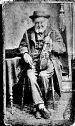
107 Sir William MacGregor in Queensland


Pictures above
1. Sir William McGregor cutting the ribbon at the Burnett Bridge (State Library of Queensland)
2. C18 Class Loco No 693, “Sir William MacGregor” used for the Prince of Wales royal train tour in 1920.Not be out done! C18 694 "Lady MacGregor" was dressed up too!
3. Old Government house donated by MacGregor to Queensland Univrsity
4. Plaque on University Physiology Dept
Many thanks to Dr Leslie Alexander, a NE ‘loon’ who contacted the web site and brought attention Sir William MacGregor and also forwarded some pictures of his name in Queensland. Dr Alexander trained in Aberdeen, spent most of his career in the South of England and then emigrated to Brisbane, Australia.
Click for details about Sir William MacGregor from Towie.
William MacGregor as Governor of Queensland and Queensland University.
Exactly 50 years after Sir George Bowen’s proclamation which cemented the establishment of the colony of Queensland, MacGregor stood before a gathering at Government House to inaugurate the new university and grant Assent to The University of Queensland Bill, and to formally dedicate Government House to its new purpose of providing a home for this centre of learning. MacGregor was appointed the University’s first Chancellor, and was active in its administration. MacGregor fought for his vision of a university that conformed to the highest standards of a British institution of higher learning. Today, The University of Queensland is one of Australia’s leading research and teaching institutions, and a key part of Sir William’s legacy to the State.
MacGregor and his wife Mary moved to the ‘temporary’ Government House at Fernberg, leased while the Queensland Government searched for another grand home to serve as the vice-regal residence. The Government purchased the estate the following year, and remodelled the House in 1937, signalling the end of Fernberg’s status as a temporary Government House. To this day, the grand hill-top estate continues to serve as the official residence of Queensland Governors.
A son of the Enlightenment, passionate and pragmatic, MacGregor used his influence to support the development of education, agriculture, and medicine. He secured support for the Institute of Tropical Medicine which had been established in Townsville in 1910, and chaired the meeting in 1913 that led to the formation of the Historical Society of Queensland. He was president of the Royal Geographical Society of Queensland and encouraged progress in the Queensland Museum to which he had sent many valuable artefacts while in New Guinea. As at the current Governor’s official visit on 18 May 2016, many of these artefacts are on display in the Papua New Guinea National Museum & Art Gallery in Port Moresby. According to Viscount Bryce, British Ambassador to the United States in the early 20th century, MacGregor’s strength and restraint made him “a model of what a colonial governor should be”.
When he left Queensland at the end of his term, The University of Queensland resolved to establish a medical school to commemorate MacGregor’s services to the Empire – a fitting tribute to this humanitarian and man of science.
IN GOVERNOR'S ROLE
From SIR WILLIAM MACGREGOR AND QUEENSLAND
By R. B. JOYCE, Reader in History, University of Queensland
MacGregor returned to Queensland as Governor late in 1909, eleven years after he had left in hopes that the dispute was over. He realised as Govender of a nationalistic State acutely aware of its self-governing rights, and acutely aware of criticism from England, that he could not openly criticise the policies of his responsible ministers. Therefore, he was hardly likely to write a despatch urging the injustice of the unsettled boundary question. He made his views, however, quite clear in his report of his visit to the Torres Strait islands in 1911, a report which was sent to the Queensland Government as well as to Britain.
I think the message comes out loud and clear in the following passages: "Formerly Murray Island had a brisk trade with the New Guinea coast from the Fly River westward. This was not carried out directly, it was conducted by a privileged tribe at Murray Island through Darnley Island and then by Darnley through Warrior Island. In this tedious and roundabout way, the Murray Islanders obtained their canoes from New Guinea, and the Papuans obtained their shell ornaments etc. But all that has been brought to an end by the Customs barrier that has been rigidly maintained during the last half score of years between the Commonwealth and Papua.
This rupture of ancient intercourse has been much felt at Murray Island and at other places in the Straits". The second quotation reads: "It appears that intermarriage between the western coast tribes of New Guinea and of those of the islands in the Straits was formerly very common. These inter-marriages will be less frequent now on account of the restrictions imposed on communication".
But let us leave this issue in 1911, its recent revival is not my immediate subject, to suggest that even with these criticisms of Queensland's inequitable blindness over the border issue MacGregor was not averse to giving praise to Queensland's work in the Torres Straits. He praised the work of the two Commissioners, the late John Douglas and his successor Hugh Milman (for his "human sympathy with these people" based on long experience) and was confident that this was backed by the Home Secretary, George Appel, who he believed was "very sympathetic towards the Aborigines of this State". Overall, he concluded that "the island population is not neglected by the Government of Queensland"
INTEREST IN ABORIGINES
My argument is that MacGregor always tried to be scrupulously fair in his judgments and the same balance can be seen in most of his arguments about Queensland policy. As the care of primitive people was so much at the centre of his attention, it is very relevant to study his views on Queensland Aboriginal policy. When he left New Guinea in 1898, he was aware that the Governor of Queensland, Baron Lamington, had written to the Colonial Office, pleading for the continuance of British interest in New Guinea especially because he distrusted Queensland's control. Byrnes, thought Lamington, had no sympathy with the Aborigines who he argued were bound to disappear and as well Byrnes defended the treatment that they had suffered as having been perfectly justifiable'.
MacGregor returned to a Queensland still under an 1897 Act dominated by the philosophy of smoothing the pillow of the dying race. This was expressed by the Queensland Home Secretary in 1921; "He did not know that there had been any definite policy in Queensland that properly dealt with the treatment of Aborigines. Governments came and went, and, of course, the Aboriginal was a decaying race and was not given much consideration".
MacGregor had no illusions about the failure of Aboriginal policy in Queensland. Thus, the conclusion to a 1914 report he wrote as Governor was pessimistic. "In the vicinity of towns, they manage to obtain a certain amount of alcohol, or opium if there were Chinese in the district. Dirt, rags, venereal disease, hunger and exposure are hurrying the native race to extinction, and, so far, it would not appear that there is to be any survival of the fittest in this race any more than the case of the aboriginal Tasmanian, or Beothic of Newfoundland. "Unless some success attends the stations under the management of the several churches another fifty years (i.e. to 1963) will extinguish the native race in Queensland".
There was a debate in the Queensland Legislative Assembly in 1913 on the Aborigines in which there was some criticism of the 1897 Act but most attitudes were complacent. Again, there were exceptions, even if complacency was dominant in the Home Secretary's Department, thus the responsible minister was George Appel whom MacGregor again praised as being "just, conscientious '
The Secretary of State, Lord Elgin minuted on 6 March “It is very sad. Queensland is so short of labour and yet by carelessness, and apparently dishonesty in some cases, these poor people are being rapidly and unnecessarily extinguished. What a good report Sir William Mac- Gregor writes." [having] humane feelings" and as being seriously concerned in improving the lot of the Aborigines. MacGregor's evidence came from his touring all over Queensland observing Aborigines in their own camps, where he was struck by the paucity of women and children and that their condition was "wretched in the extreme"^^ Specifically he based it on his visit to the Government stations at Barambah (later Cherbourg) and Taroom. At Barambah he thought rations were insufficient; the lock (venereal disease) hospital was poor — it was built of iron and he found the "inmates were outside under blankets they had spread on branches so as to escape the heat of the building and the rays of the sun"; huts were poorly built and equipped; pay was meagre^'. At Taroom agricultural efforts were hopeless, prickly pear was spreading, there was no education provided nor any medical care given; there was no nurse, most suffered from ophthalmia — spread by the myriads of house flies; the "Superintendent had no medicine chest; no preserved milk, no arrowroot, no lotion to dress wounds with, no eye lotion for ophthalmia"*".
APPRAISAL OF AUSTRALIANS
These and other blots on Queensland policy sincerely worried MacGregor and he ventilated them in Australia and Britain, hoping for improvement since he believed in Queensland. These blots did not overcome his growing liking for the State, which was becoming more his home than England or Scotland. Part of his motivation for his strong support to the new University of Queensland was his hope to maintain high standards, especially in research which could improve the State'. For instance, he wanted more scientific investigation of agriculture, especially the sugar industry, the expansion of which now without Kanaka labour, he supported quite strongly.
Although he finally returned to Scotland, he was unhappy there and identified himself more with Queensland and Australia. Thus, he wrote to Griffith in 1915; "Perhaps it is natural that in a new country like Australia the human intellect should be more sensitive than it is in the artificial life of this country. Taking the people ll round, in England and in Australia, I am decidedly disposed to say that the Australian, though perhaps not the more learned, is at the same time the better educated and understands better the natural history of man"
Despite his criticisms of Queensland's Aboriginal policy, he eventually argued that Australians, including Queenslanders, would be better fitted to control primitive people than the British. In 1917 he wrote to Sir Ronald Ferguson, the British Governor-General of Australia, I have never doubted that the islands of the Western Pacific must become Australian. My administration in Papua was carried on from first to last with that object in view. In the face of the facts that the Commonwealth has the experience gained in Papua, is to remain white, and is the only source from which the island trade can be developed, I am inclined to think that all islands to be taken from Germany west of Fiji might be made dependencies of Australia at once. But should it be deemed desirable that there be a High Commission authority over them, then it must surely be perfectly clear the High Commissioner should be the Governor General of Australia (i.e., not the Governor of Fiji).
To provide otherwise for their administration would be tantamount to saying that the welfare of the islanders could not be entrusted to the Commonwealth, which in the face of the experience of Papua would be very illogical". Logic was his watchword; it was illogical to have the Torres Strait boundary where it was, it was illogical not to accept the changing attitudes towards primitive people in Australia. His views must have been swayed by contact with Liberals such as Griffith. By the year in which he died, 1919, logic had led MacGregor to the conclusion that Australia and New Zealand "now possess a large number of officers better acquainted with the islands and with their inhabitants than could be provided by any other power, even by the Imperial Government itself. The basis upon which native administration has been carried out under the British flag in the Pacific can be studied by anyone in the case of Fiji and Papua, since 1906, Papua has been a dependency, and its administration has been under the direct control of the Federal Government. There is, therefore, before the world a practical example of the kind of administration that it may be safely assumed would be extended under the Federal Government^.
I have tried to illustrate facets of Sir William MacGregor’s love/hate relationships with Queensland, and to suggest that his support of research and logic has lessons for the present. Overall, both aspects are interrelated, and applicable to many. If I can conclude on a personal note as an outsider who has also a love/hate relationship with my adopted State of Queensland — I, like MacGregor, often long for more logic. MacGregor could be opinionated and stubborn but his conclusions were based on logical analyses.
Other places in Australia also use MacGregor’s name:
The suburbs of MacGregor in Brisbane and MacGregor in Canberra are both named after him.
There is a Sir William MacGregpr Drive in Brisbane.
There is the ‘MacGregor State High School’
The name MacGregor comes from an early Queensland Governor, Sir William MacGregor, a Scotsman of strong humanitarian principles. We uphold his legacy valuing each individual's self-worth and engaging with others in a respectful and considered way. The Scottish association is carried through in the tartan of the school uniform and the way the school is organised into clans.
Picture added on 11 April 2021 at 17:56
This picture is in the following groups
people
people
people