The Glenbuchat Image Library
No: 2393 Contributor: No Contributor Year: 2021
106 Sir William MacGregor from Towie


Pictures above
Sir William MacGregor
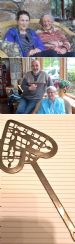
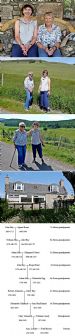
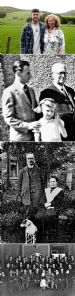
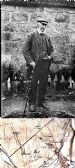
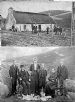
Picture of Hillockhead, Sir William’s Birthplace
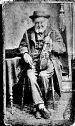
Picture of Fijian Tribal leader with son named after Sir William
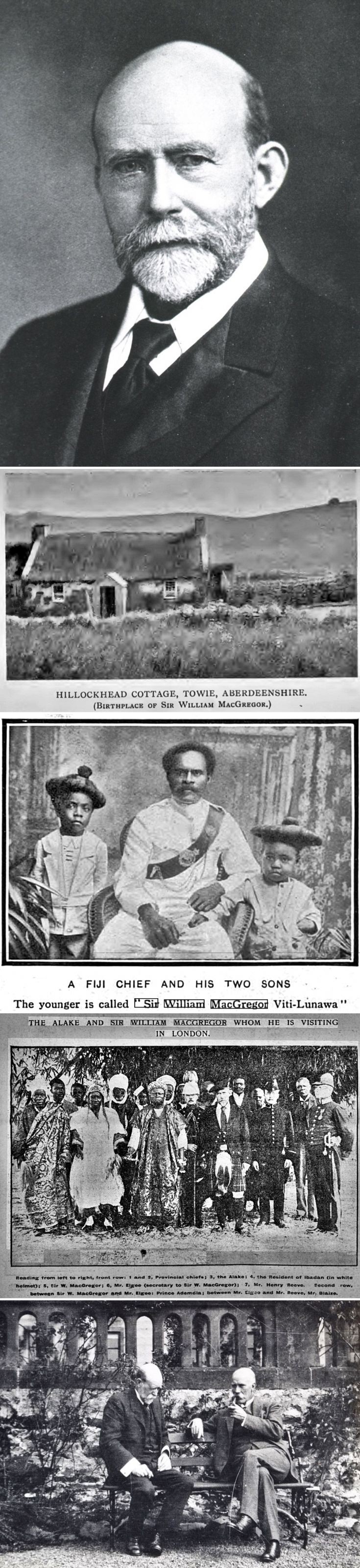
Picture of Sir William and The Alake of Abeokuta, a Nigerian Tribal King who was to visit to the UK. See the comment below on his visit to Aberdeen
Sir William in retirement with Sir David Hardie
Click for details about Sir William MacGregor in Queensland
Sir William MacGregor
Summary (from the Albert medal Citation – see below)
William MacGregor born in the parish of Towie, Aberdeenshire, Scotland, on 20 October 1846. He was the eldest son of John Macgregor, a farm labourer. Educated at the school at Tillyduke, and encouraged by his master and the local minister who recognized the boy's ability, he studied for and obtained a bursary which took him to Aberdeen and Glasgow universities. He graduated M.B. and C.M. of Aberdeen university in 1872, and obtained his M.D. in 1874. He helped to pay for his university course by obtaining farm work during his vacations.
In 1873 he became assistant medical officer at the Seychelles, and in 1874 he was appointed resident at the hospital and superintendent of the lunatic asylum at Mauritius. This brought him under the notice of Sir Arthur Gordon who was then governor of the island, and on Gordon being transferred to Fiji in 1875, he obtained Macgregor's services as chief medical officer of Fiji.
There he had to grapple with a terrible epidemic of measles, which resulted in the death of 50,000 natives. In 1877 he was made receiver-general and subsequently a variety of other offices was added, including the colonial secretaryship. On more than one occasion he acted as governor, and was also acting high commissioner and consul-general for the western Pacific. In 1884 the ship Syria, with coolies for Fiji, ran ashore about 15 miles from Suva. Macgregor organized a relief expedition and personally saved several lives. His report made no mention of his own doings, but they could not remain hidden, and he was given the Albert medal, and the Clarke gold medal of the Royal Humane Society of Australasia for saving life at sea.
In January 1886 he represented Fiji at the meeting of the federal council of Australasia held at Hobart. His experience with native races led to his being appointed administrator of British New Guinea in 1888. Here he had to deal with a warlike people cut up into many tribes, and his great problem was to get them to live together in reasonable amity. It was necessary at times to make punitive expeditions, but bloodshed was avoided as much as possible, and by tact and perseverance Macgregor eventually brought about a state of law and order. He did a large amount of exploration not only along the coast but into the interior. In 1892 the position was sufficiently settled to enable him to publish a Handbook of Information for intending Settlers in British New Guinea.
He was appointed lieutenant-governor in 1895, and retired from this position in 1898. From 1899 to 1904 he was governor of Lagos where he instituted a campaign against the prevalent malaria, draining the swamps and destroying as far as possible the mosquitoes which were responsible for the spread of the disease. Much other important work in developing the country was done by making roads and building a railway. His efforts to improve the health of his community led to his being given the Mary Kingsley medal in 1910 by the Society of Tropical Medicine. He had been transferred in 1904 to Newfoundland of which he was governor for five years. Here again his medical knowledge was most useful in the combating of tuberculosis which was then very prevalent in Newfoundland. He also did valuable work in dealing with the fisheries question, persuading the contending parties to refer the dispute to the Hague international tribunal which brought about an amicable settlement.
Towards the end of 1909 he became governor of Queensland. The claim that he was largely responsible for the founding of the university of Queensland cannot be justified, as the university act had been passed by the Kidston (q.v.) government before he arrived. He, however, did all that was possible to help in the actual inauguration of the university. He acquiesced in the handing over of Government House to be its first home, and one of his first acts was to attend the dedication ceremony on 10 December 1909. He also became the first Chancellor and took great pride in the early development of the university. In 1914 he retired and went to live on an estate in Berwickshire, Scotland. During the 1914-18 war he was able to do a certain amount of war work, and also lectured on his experience of German rule in the Pacific. He died on 3 July 1919 and was buried beside his parents in the churchyard of Towie, the village where he was born. He married in 1883 Mary, daughter of R. Cocks, who survived him with one son and three daughters. He was created C.M.G. in 1881, K.C.M.G. in 1889, C.B. in 1897, G.C.M.G. in 1907, and was made a privy councillor in 1914. He had the honorary degrees of D.Sc. Cambridge and LL.D. Aberdeen, Edinburgh, and Queensland.
A very full account or Sir William MacGregors life appeared in the Aberdeen University Review written by Prof Robert Reid. Professor Reid’s Grandparents came from Baltimore farm in Glenbuchat.
Click for more details about Professor Reid.
Click for more details about Prof Robert Reid.
His brother Dr. William Reid was head of the Aberdeen Asylum.
Click for more details about Dr William Reid.
Another brother was Major-General Sir Alexander John Forsyth Reid.
Click for more details Major-General Sir Alexander John Forsyth Reid,.
Aberdeen university Video about Sir William MacGregor
Aberdeen University Review Vol. VII. No. 19 November, 1919
By Professor Reid
Robert Reid in addition to being Professor of Anatomy, Univ Aberdeen was also the first Curator of the Anthropology Museum at Marischal College, Univ Aberdeen. Much of the exotica in that museum was sent from Fiji, New Guinea, Nigeria, Newfoundland/Labrador by Sir William MacGregor an Aberdeen medical graduate and Governor ex Towie, Donside.
Sir William MacGregor.
I write an article upon the late Right Honourable Sir William MacGregor, late Governor of Queensland, and to give a short summary of the career of one of the most distinguished graduates who ever passed through the portals of the Aberdeen University, is a difficult thing to do in an adequate manner. Books might be written on it.
He began life as a doctor of medicine, the most human of all professions, and this fact explains the key-note of his subsequent career. He was an Anthropologist in the widest sense of the term, a student of man and races, and as a consequence proved a successful administrator or governor in whatever part of the world he happened to be placed. In the case of the Colonies in which there were coloured races, he ruled not by the using of the strong hand but by setting himself to acquire a knowledge, from an unprejudiced point of view, of the mentality, morality, manners and customs of those whom he was set apart to govern, and to shape his administration accordingly.
There have been few governors or administrators in the history of the British Empire who had the gifts and qualifications of Sir William MacGregor. He was a man of wide reading and scholarship and a lifelong classical student, but most marked of all was his scientific bent of mind and unfailing interest in every branch of research, and with this was combined indomitable perseverance, great natural shrewdness and high administrative capacity.
Sir William MacGregor was a remarkable, and in some respects a unique example of a Scotsman rising by his own exertions from the humblest origin to one of the highest and most honourable offices in the British Empire.
He was descended from the MacGregors of Delavorar, near Tomintoul, Banffshire, a family founded about 1675. He was born in 1846 at the small cottage called Hillockhead, in the parish of Towie, Aberdeenshire, where his father, a farm labourer, resided. It may be mentioned that, like David Copperfield, he had a 'skeeliehoo’ (Aberdeenshire) or caul on his head, a fact to which he was frequently in the habit of referring as a charm against its owner being drowned and marking him as a favourite of fortune. He was the eldest son of a family of ten and attended the small "side" school of Tillyduke, Strathdon, conducted by Mr. James Kennedy, a very energetic and enthusiastic teacher, who soon discovered that he had in William MacGregor a pupil of outstanding aptitude and promise and one who could learn about as fast as he could instruct him. The late Reverend John Watt, minister of Strathdon, who likewise foresaw the possibilities of the lad's future, if wisely directed, took a great interest in him, helped him in his study in the Manse and gave him financial assistance. He procured for him, in the absence of Mr. Kennedy, the position of teacher in Tillyduke School, where after school hours he pored over his books by the aid of a "crusie lamp," preparing himself for the Aberdeen University Bursary Competition.
He proceeded to the Aberdeen Grammar School in 1865, and after spending two sessions there gained the Second Bursary at the Competition. He attended the Latin, Greek and English classes at King's College, Aberdeen University, during the session 1867-68, and like Allan Maclean in ''The Wedding at Westfield," a traditional ballad of King's College,
“His aim was the kirk,
But that would not do,
And so, for a doctor,
He now must pursue."
He then began the study of medicine, which he carried on at the old Andersonian College in George Street, Glasgow, and at the University of that City. The only medical classes which he attended in Aberdeen were those of Anatomy and Practical Anatomy in 1871-72, thus fulfilling the regulations in force at that time that one at least of the four years of medical and surgical study had to be spent in the Scottish University to whose degrees he aspired.
He graduated M.B. and CM. of Aberdeen University in 1872 and M.D. in 1874 and he became a Fellow of the Royal Faculty of Physicians and Surgeons of Glasgow in 1905.
From the commencement of his school career down to the time of his qualification in medicine nothing ever deterred him from prosecuting his studies, and in accordance with the custom of the time he herded cattle or was otherwise engaged in farm work during school or college vacations and so did something to lessen the burden of those who were supporting him. We are credibly informed that while a small boy he learned to multiply by studying the table which was printed on the cover of the “Shorter Catechism," which he carried with him while "minding his cows".
He worked much in the late Professor George Buchanan's Anatomy Rooms and was a dresser in Buchanan's clinique in the Royal Infirmary in Glasgow. He acted as Resident Surgeon and Resident Physician in the Glasgow Royal Infirmary, and in 187 1 he held the position of Medical Assistant in the Aberdeen Royal Lunatic Asylum, where, ac- cording to the report of the late Dr. Jamieson, Physician Superintendent of that institution, he " showed an unusual amount of scientific knowledge and zeal " in the discharge of his duties. He also was assistant for a short time to the late Dr. Robb of Towie and latterly of Portsoy, who befriended him, both financially and otherwise, when studying medicine.
Dr. MacGregor, after taking his medical qualifications, thought of settling as a medical man in Scotland, but as his over work and study had developed '' chest weakness," he was advised by his medical friends to seek a more equable climate in the Colonies. He followed their advice and was successful in obtaining the appointment of Assistant Medical Officer, Seychelles, in 1873, where, besides other medical duties, he had charge of a station in which he made a special study of leprosy, which proved of great use to him in his subsequent work in Fiji and British New Guinea. He required, in addition to medical knowledge, other qualifications, such as an acquaintance with Botany and a conversational knowledge of French in order to be able to inspect schools in which the French language was used. While holding these positions he took a direct and practical interest both officially and privately in the welfare and material prosperity of liberated African slaves, with a view to prevent their being unduly taken advantage of by their employers.
In the following year a vacancy occurred in the adjacent colony of Mauritius and Dr. MacGregor was selected in 1874 for the appointments of Resident Surgeon of the Hospital and Superintendent of the Lunatic Asylum there. During his residence in Mauritius his capacity and efficiency were brought to the favourable notice of the then Governor, Sir Arthur Gordon, who, after becoming Governor of Fiji, applied for his services and was successful in having him appointed Chief Medical Officer of Fiji.
At that time the more remote highland districts of Viti Levu were in a somewhat perturbed state, and in 1877 certain of the wilder tribes revolted against the Government and committed outrages necessitating the dispatch of a military expedition, and Dr. MacGregor accompanied it. Upon one occasion during an attack upon an enemy stronghold Dr. MacGregor, who was a capital marksman, shot one of the enemy in the thigh at a distance of some 600 yards. Upon the mountaineers retreating this native fell into the hands of the Government troops and was taken to Dr. MacGregor for medical aid. Dr. MacGregor found it was necessary to amputate the thigh. This operation he successfully performed with the help of unskilled native attendants and thereby saved the life of the man whom he had intentionally shot a short time previously.
After the cession of the Fiji group to Great Britain, ex-King Cakobau, the famous cannibal chief, proceeded to Sydney for the purpose of paying a visit to the then Governor, Sir Hercules Robinson, and upon his return home was unfortunate enough to bring back a case of measles with him. This disease, previously unknown to the island, decimated the population, and Dr. MacGregor as Chief Medical Officer did yeoman service in endeavouring to restrict and confine the epidemic, which was of a virulent type, to certain islands. Notwithstanding his almost superhuman efforts, which were largely handicapped by lack of medical assistance and the ignorance of the natives, the epidemic spread to most of the islands of the Fiji archipelago and resulted in a mortality of over 50,000, or, approximately, one-third of the population. This terrible experience convinced MacGregor that there had to be most stringent quarantine against foreign diseases, and when the first coolie ship arrived from India with immigrants on board, many of whom suffered from smallpox, MacGregor's action prevented this disease from getting ashore.
In the early eighties Sir Arthur Gordon was the Governor of New Zealand and returned to Fiji on a man-of-war, for the purpose of presiding at the meeting of the Lands' Commission, a subject upon which he was deeply interested MacGregor in his capacity of Chief Medical Officer went off to give pratique to Her Majesty's ship. Upon going alongside, he found that the vessel had not a clean bill of health from New Zealand, and he informed the Naval Surgeon that the ship was in quarantine. The captain, as can be readily understood, having come so far with such a distinguished visitor on board, was in no happy frame of mind. He then called out from the bridge to the Medical Officer, Dr. MacGregor, who was about to leave the ship's side in his boat, " Hey, Medical Officer, what are we in quarantine for? Are we in quarantine for smallpox or are we in quarantine for scarlet fever?'” MacGregor, turning his face up to the bridge, replied 'Both," and turning to his boat's crew said in Fijian " Row".
During Dr. MacGregor's term of office in Fiji, which extended over a period of something like thirteen years, he was a " Pooh Bah " — holding nearly every important position in the Government, including that of Receiver-General, Auditor, Agent-General of Immigration, Commissioner of Lands, Colonial Secretary, and subsequently acting as Governor on more than one occasion, being at the same time Acting High Commissioner and Consul-General for the Western Pacific. For several years he was a Member of the Executive and Legislative Councils and was Representative of Fiji at the first session of the Federal Council of Australasia, held at Hobart in 1885. This Council was the forerunner of those State Meetings which finally resulted in the consolidation of the States into the present Commonwealth of Australia.
While Dr. MacGregor was in Fiji the ship " Syria," with coolies for Fiji, ran upon the Naselai Reef, about fifteen miles from Suva. He at once organised a relief expedition and proceeded to the scene of the wreck. He was a man of great physical strength and dauntless courage. Upon reaching the doomed vessel, and notwithstanding that the surf was breaking heavily over it, he went on board at great personal risk, probably not unmindful of his " skeeliehoo," and was directly instrumental by using not only his hands but also his teeth in saving a large number of lives. In his subsequent report he made no mention of himself, but recommended several of those who assisted him for the Royal Humane Society's medal. Later, however. Her late Majesty had the real facts of the case reported to her and awarded him in 1884 the Albert medal for his bravery, while he was presented with the Clarke gold medal of the Royal Humane Society of Australasia in 1885 for saving life at sea.
Dr. MacGregor, having shown during the several occasions in which he acted as Governor of Fiji, special aptitude for dealing with native races, was selected in 1888 as Administrator of British New Guinea. The territory which was placed under his administrative control was an area of over 90,000 square miles and was inhabited by a wild and warlike people, who were naturally opposed to a civilised form of government and white occupation. During a period of eleven years Dr. MacGregor successfully administered this barbarous and unsettled country, managed to ingratiate himself into the confidence of the principal chiefs and did his best to turn them from inter-tribal wars to agricultural and industrial pursuits.
It is the New Guinea pioneer alone who can really grasp the magnitude of the work which Dr. MacGregor performed in New Guinea, but this perhaps can be better understood if we state that the country was inhabited by hundreds of turbulent tribes who for years had been practising head-hunting and fighting with one another and many of whom talked a dialect which was known only within the limit of each individual tribe. As expected, it was necessary from time to time to make punitive expeditions to enforce order and respect for Her Majesty's Government, and on such occasions Dr. MacGregor made a point of capturing the head men and taking them with him to head- quarters at Port Moresby, where respect for law and order was inculcated and the benefits of a settled form of government were explained, while, at the same time, they were taught many useful occupations. Upon the termination of their period of incarceration they were returned to their several districts in official capacities as policemen, clerks, etc., and thereby influenced the people of their districts in supporting and giving effect to the wishes of the Government.
He did much also to prevent the natives from being unduly exploited by curio hunters, and prevented the Tugeri head-hunters of Dutch New Guinea from invading British New Guinea and murdering the natives for the sake of carrying off their heads for the purpose of barter.
Sir William MacGregor performed a vast deal of exploration work, not only along the seaboard of British New Guinea but likewise Sir William MacGregor ascended the Fly River for 600 miles, in spite of the opposition of savage tribes, finally reaching the summit of the Mount Owen Stanley Range, with an altitude of about 13,121 feet, and named it Mount Victoria after Her late Majesty. We are credibly informed that he, dressed in a dilapidated, torn, and somewhat dirty duck suit, and two natives, were the only members of his party who ultimately reached the highest peak, which had not hitherto been scaled, and that the sole food at their disposal was the rice which he carried in his pockets. From his geographical observations the first survey maps of the interior of the country were made by the Surveyor-General of Queensland. He was awarded the Founder's medal of the Royal Geographical Society, and a mountain in the north-east of New Guinea, bearing his name, serves to preserve the memory of his work in New Guinea.
It is notable in connection with Dr. MacGregor's administration in British New Guinea that his policy throughout when fighting with wild tribes was one of peaceful penetration, avoiding bloodshed when possible, having at all times due regard for the maintenance of those native rights which were not repugnant to successful native administration.
It is not too much to say that with the work previously done by missionaries, and by the continuance of such work, Sir William MacGregor succeeded marvellously in fulfilling the Royal instructions which he carried with him, when, as first Administrator, he made the Proclamation at Port Moresby on 4th September, 1888, which finally annexed the south-eastern portion of New Guinea and adjacent islands to the British Empire. The instructions ran : '' The Administrator is to the utmost of his power to promote religion and education among the native inhabitants of the Possession : and he is especially to take care to protect them in their persons, and in the free enjoyment of their land and other possessions, and by all lawful means to prevent and restrain all violence and injustice which may in any manner be practised or attempted against them: and he is to adopt and support such measures as may appear to him conducive to their civilisation and as tending to the suppression of barbarous customs among the natives ".
He was appointed Lieutenant-Governor in 1895 and retired from the Governorship in 1898. From 1899 to 1904 Sir William MacGregor was Governor of Lagos, where he did excellent work by using his medical knowledge as well as his administrative abilities
His term of office there was marked by two outstanding events — his campaign against malaria and the opening up of the country by the construction of roads and railways. He was keenly interested in the work of Sir Ronald Ross, who had previously proved, by investigations made in India, that malaria was carried by mosquitoes, and he helped him very much in applying that information for the prevention of the disease in Lagos.
Lagos, in 1899, was a fever-ridden place, abounding in swamps and pools infested with malarial parasites. Sir William MacGregor instituted large drainage works, introduced mosquito wire netting and instructed that kerosene was to be applied to suspected places. His endeavour to stamp out malaria led to his taking large doses of quinine daily. He did this as an example to the native population, to convince it of the belief, which was held at that time, that quinine was the best preventative of the disease.
He organised a Ladies Anti-Malaria League, the ladies being of the large dark variety found in Lagos, and he might have been seen frequently in a tartan kilt with a solar topee on his head visiting the native quarter of the town, politely taking off his helmet and conversing with the dames who sold dead rats in the bazaars. He employed boys as mosquito catchers and fined them if he found a mosquito in Government House.
Sir William MacGregor fostered every movement in connection with the development of the country by building a railway into the interior, forming roads and model farms, establishing a botanic garden, and instructing young men of the country in various industrial pursuits, and he was responsible for its present good health conditions and economic prosperity. In recognition of his labours the Society of Tropical Medicine awarded him the Mary Kingsley medal in 1910.
The following anecdote was told us by one who acted as his Secretary in Lagos. It is characteristic of the man, and shows how Sir William MacGregor brought to bear all his knowledge of past history upon even trivial every day work. “The O.C. troops came to me one morning asking permission to pay his men extra daily wage when employed on road making to the rifle butts. As a matter of principle was involved, I took him in to the Governor and stated his case. ‘Can you give any precedent for extra pay. Major? ' ‘No, sir.' • Well, if you turn up ' Caesar's Wars ‘you will find his soldiers received extra pay for making roads in Britain.' Silence on the part of the visitor. Sir William added ' Well, you may go on with your roads and follow Caesar's example '."
In Lagos, as in New Guinea, Sir William ruled in the same manner, through the hereditary chiefs, and set up the two semi-independent States of Abeokuta and Ibadan with self-government on domestic affairs.
It was through his influence that the Alake of Abeokuta, a ruling chief, visited this country with the view of introducing British methods into his own State, and was granted an interview by the late King Edward. Many of the readers of the Aberdeen University Review will recall the remarkable visit of the dusky potentate and the rather rough but good-natured handling which he received at the hands of the students at Marischal College.
He raised the prestige and power of the British Government to its zenith, and peace reigned in the land for the whole term of his government.
His work in Lagos did much to bring about, in 1906, the amalgamation of the Colony of Southern Nigeria with the Colony of Lagos and its Protectorate under one administration, with the style of the Colony and Protectorate of Southern Nigeria, with headquarters at Lagos. He represented the West African Colonies and Protectorates at the Coronation of King Edward VII. in 1902.
Sir William MacGregor's health having suffered much during his term of office in Lagos, he was transferred in 1904 to the colder climate of Newfoundland as its Governor.
Soon after his appointment to Newfoundland Sir William Ma Gregor visited Balmoral and was asked by the late King Edward VII. personally, to do his best to bring about a friendly settlement with regard to the long-drawn-out French Shore question — a question arising from the French claiming since 1620 to have the exclusive right to fish round the east, north and west coasts of the island. This dispute was happily settled just before Sir William's appointment, but soon after his administration commenced fresh trouble arose through the Newfoundland fishermen resenting the presence of Americans prosecuting the herring fishing during the winter months on the west coast of the Colony, and attempts were made to close Newfoundland home waters to all foreign fishing vessels. In dealing with this matter it was imperative for Sir William MacGregor to steer a fine course, but by his strong religious bent and upright character, he soon had the trust of the people, especially the fishermen, who constituted about one-half of the population, and the three " jarring sects " to which the Newfoundlanders belonged.
It is not too much to say that by his splendid diplomacy the dispute was brought before the Hague International Tribunal and settled in an amicable manner with results greatly beneficial to the material prosperity of the Colony.
Here again as in Lagos his medical knowledge stood him in good stead, for it enabled him to begin a vigorous campaign against tuberculosis, which was then rampant in Newfoundland. He spared no pains in going about the country lecturing and instructing the people upon methods for the prevention and treatment of the disease, and his labours in this direction were most valuable.
Wherever situated, Sir William MacGregor had a great respect for missionaries of all denominations, and took a keen interest in their work, co-operating with and helping them in any way he could. The Moravian Mission in Newfoundland elicited his sympathetic support, and he was always ready to help Dr. Grenfell in his work for deep-sea fishermen.
Probably the most remarkable event of his term of office in Newfoundland was the scientific expedition which he organised and personally conducted for the purpose of surveying and obtaining a correct idea of the natural resources of the Labrador Coast. The results were of the highest scientific importance from geographical, astronomical and other points of view.
The only native races under his control were the Esquimaux and the few Indians in Labrador. In those he took the deepest interest, keeping in touch with their lonely lives and work, by visits to them every summer. On two occasions he went as far as Ungava Bay. The people in larger communities such as inhabited St. John's and other towns were more difficult of approach but Sir William triumphed over their defences and by his sincerity and trust they reposed the fullest confidence in the justice of the Governor.
He was a born ethnologist, and made large collections of objects illustrating the manners, customs and religions of the various native races under his rule. The Anthropological Museum at Marischal College owes its magnificent collection of specimens from Fiji, New Guinea, Lagos and Newfoundland, to his generosity to his “Alma Mater". He frequently used to say, that he allowed his collections to be exhibited at Marischal College in order that the students of Aberdeen University might be impressed with the fact that the universe is not limited to Aberdeen and its " twelve miles radius " by seeing objects illustrative of native life in other countries, and in addition that he might help in providing a means by which a subsequent Reader or Lecturer in Anthropology in the University might be able to illustrate his subject — a subject which he considered to be of vital importance to all engaged in medical, educational, scientific, commercial or administrative work in the British Possessions beyond the seas.
While Administrator in New Guinea, Sir William MacGregor had many times expressed the desire to someday become Governor of the neighbouring colony of Queensland. This desire was ultimately fulfilled by his being appointed Governor of that part of Australia in 1909.
For many years previous to his arrival, the idea of founding a separate University for Queensland had been in the air, but under his Governorship it rapidly materialized notwithstanding many difficulties. It was entirely owing to his exertions that Government House was converted into a University Building, and before his term of office came to an end in 1914, work in the University was in full operation. It was the pride of his life that he had accomplished the founding of the University and that he was chosen its first Chancellor.
As in other parts of the Empire under his guidance his great concern was in the educational development of the country. He laid himself out to inspect schools and took keen enjoyment in doing so. He was especially interested in all medical work in the Colony and was constantly visiting hospitals and did much to establish the Institute of Tropical Medicine in Queensland. Agricultural development, also, he encouraged in every way and made a point of attending and opening as many agricultural shows as he possibly could.
He was one of the most popular Governors Queensland ever had, and was beloved and respected by all classes. It was characteristic of the man to be able to amicably settle differences by his own personal tact and ability, as the following incident shows. In connection with the inauguration of the Queensland University a difficulty arose as to the priority between the Roman Catholic and Anglican Archbishop, in the matter of offering the prayer of dedication. Sir William MacGregor settled the matter by composing a Latin prayer, submitting it to each individual Archbishop and thereafter offering it himself.
He was offered a second term of office as Governor, but feeling that his health was not such as to allow of his being able to perform its duties to his satisfaction, he retired in 1914 to his beautiful estate of Chapel-on-Leader, in Berwickshire, in which he took a great pride, doing much to improve its amenities.
Sir William MacGregor was an accomplished linguist as shown by the fact that he wrote his private diary in French, German, and Italian. He delighted also in the study of the classics, particularly in the language of ancient Greece. He frequently communicated with his friend the late Principal Sir William Geddes on matters concerning Greek literature and while Governor of Queensland he corresponded with Sir George Adam Smith, the present Principal of his Alma Mater, regarding certain questions arising from the Septuagint text of the Old Testament, and his letters revealed how carefully he had studied this Greek version.
The war pressed heavily upon a man who had lived to the “allotted span " a life of ceaseless activity, devoted to every good cause, and who, from a through and through knowledge of Germans could not but, as he wrote, "resent their arrogance, their abuse of hospitality, their unscrupulous espionage, their intrigues in creating strife and ill-feeling and their strange vein of brutality".
Immediately after the commencement of the war, he offered him- self as a medical man to the Australian High Commissioner and Home Government, telling them at the same time, that he would be willing, and was ready to undertake any position, however subordinate it might be, to help his country in its need Unfortunately his age precluded the possibility of his services being utilised in this way. He then patriotically volunteered to the Colonial Office to replace any man of military age in its service, who might be able to go to the front to fight.
He was asked by the Colonial Office to become Chairman of the Executive Committee of the " Queen Alexandra Field Force Fund ", a fund whose object was to provide comforts for the troops at the front. After reorganizing and putting it in thorough working order, which took many months to do, much to the regret of the Committee he handed over the chairmanship to his friend, Mr. Henry Reeve, C.M.G.
He then devoted himself to lecturing on the Pacific in connection with the rule and interference of the Germans in matters in the South Pacific. He endeavoured to show how important it was that they should not be allowed to return to their former Colonies there, and his great knowledge of the German in the Pacific was largely made use of him giving valuable advice to the Secretary of State for the Colonies.
He sustained great personal bereavement by the death on active service of his son-in-law, Admiral Sir Alfred Paget, and three months later his daughter, Lady Paget, died, after unceasing war work in hospitals in France.
About a year ago his health began to break down, and on 3rd July, 1919, he died in a Nursing Home in Aberdeen, at the age of seventy-two, with a record of over forty years' service in the Colonies.
As for his own subordinates and friends in the Colonial Service, they all loved and trusted him. Many of them became Governors in due course, owing to his kindly tuition and by imitation of his pure conceptions of the duty of officials towards those whom they governed He was regarded by many in the Service who succeeded him, or who served with him, as the most perfect Governor in maintaining the ideals of the British, face, in his capacity as representative of the Crown throughout the Colonies of the Empire.
Ever mindful of the good of humanity and with an affectionate recollection of his early days he had instructed that his body was to be cremated and buried beside those of his parents in the churchyard of Towie, Aberdeenshire. His desires were fulfilled. On a beautiful July afternoon, in presence of his widow, his daughter, other relations, a representative of the Queensland Government, and a few intimate friends^ the last simple and solemn funeral rites of the Church of Scotland were performed by his old college class-fellow, the Reverend Alexander Jack, minister of Towie, and by the Reverend William Watt, minister of Strathdon, nephew of and successor to the late Reverend John Watt, who had encouraged and befriended him in his early days.
The ashes of this distinguished Pro-consul of the British Empire now lie at rest in his native glen under the shadow of the rugged ruins of the old highland castle standing close by. Sir William MacGregor was created C.B. in 1897, G.C.M.G. in 1907; and was made a Privy Council
Sir William MacGregor was created C.B. in 1897, G.C.M.G. in 1907; and was made a Privy Councillor in 1 914. He was an LL.D. of Aberdeen, Edinburgh, and Queensland Universities, and a D.Sc. of Cambridge. He was also a Fellow of the Royal Geographical Societies of England, Scotland, and Germany, and of the Royal Anthropological Society of Italy, and a Knight of Grace of St. John of Jerusalem.
In conclusion, we know of no better appreciation of the man than that of the following words written by an eminent surgeon who knew him well from his student days and onwards:" He was a great block f rough, unhewn granite, but recognized to be of sterling character and possessed of excellent, indeed unusual, ability, although I am sure no one could have predicted then that he would rise to the great position he ultimately occupied in the service of his country. As iron sharpened iron, so his intercourse with all sorts of men in so many parts of the Empire, hewed and polished his roughness of manner, until he became the polite and courteous man of later life. But even that did not remove all his angles. He maintained to the last an independent reticence and a stubborn opinionativeness, which were the result no doubt of a life which had fought its own way through a hard fight to a position of great eminence. I am sure, that if there had been a Carnegie Trust in his day, and all his fees had been paid for him, he would never have been the Governor of Newfoundland and Queensland. To bear loneliness and poverty in youth and to despise them and struggle on in spite of them, is to get an original impetus, which no obstacles in after years can wholly withstand. To the man who has conquered such initial difficulties, anything seems to be possible.
R. W. REID.
Albert medal
Sir William Macgregor was presented with the Albert Medal after a ship wreck rescue in Fiji.
The Albert Medal for Lifesaving was a British medal awarded to recognize the saving of life. It has since been replaced by the George Cross. The Albert Medal was first instituted by a Royal Warrant on 7 March 1866 and discontinued in 1971
CITATION:
The " Syria " bound from Calcutta to the Fiji Islands, with 494 Coolie emigrants, stranded on the evening of Sunday, 11th May last, upon the Nasalai Reef, some 25 miles to the eastward of Suva, Fiji. This reef is exposed to the full force of the south-east trade winds, which, at the time of the wreck, were blowing with great force; also, to the long roll of the sea from the vast expanse of the South Pacific.
Owing to the peculiar set of the tides over the reef, the shipwrecked emigrants who committed themselves to the water in the hopes of swimming shore were irresistibly carried in an opposite direction, and swept out into the surf, which was breaking 30 feet high over the edge of the reef. The Captain did not leave the wreck until he believed that all the people were out of it, he then started from the after part of the ship, bringing an Indian woman, who was half drunk, along with him, and was conducting her across a piece of broken mast which lay at a slight incline across the gap that existed between the two portions of the hull, when both were knocked over and over towards the perpendicular edge of the reef, the woman grasping the Captain by the neck like a vice.
An official who was at hand, at the risk of his own life, dashed into the breakers to their rescue, but no sooner had he reached the drowning couple, than he too was thrown down, and all three were being rolled along to destruction, when Dr. MACGREGOR, who was at the time standing by the wreck of the fallen mainmast, leading and directing the removal of the struggling Indians, instantly seized a line forming part of the ship's running rigging, that was floating by, and taking two or three turns with it round his wrist plunged into the surf at the imminent risk of his own life, grasped the struggling bodies of the drifting people, and by main strength dragged them back into shallow water from the destruction which appeared to be inevitable. it is also stated that but for the energetic, able, and cool way in which Dr. MACGREGOR led the relieving party, the loss of life, which was great, 59 in all, must have been appalling.
THE ALAKE OF ABEOKUTA AT ABERDEEN.
In 1904 Sir William accompanied The Alake of Abeokuta, a Nigerian Tribal King, to Aberdeen. Unfortunately, it was marred by some student pranks. As noted in the newspapers.
LETTER FROM SIR WILLIAM MACGREGOR.
Provost Walker, Aberdeen, has received the following letter from Sir' William MacGregor: North British Hotel, Edinburgh, 20th June, 1904.
My Pear Lord Provost,
I should not leave this ancient realm without expressing to you my gratitude for the exceedingly kind and sympathetic reception you gave the Alake. Nothing could exceed the cordiality and kindness with which you treated the chief. The lessons he learned at Aberdeen will certainly be of use-to his people, and to that he attaches very great importance, for, if anything, he is patriotic. Rest assured, therefore, that both the Alake and myself are grateful to you, and that shall never forget your courtesy and generous reception.
Sincerely yours,
William MacGregor.
THE STUDENTS' RECEPTION.
'With reference the apology sent on behalf of the Aberdeen students the Alake, the President of the Students' Representation Council received a letter Sir Wm. MacGregor which said, "The Alake wishes you to inform the Council that he was greatly pleased and gratified the very enthusiastic ana kind receptions he had from the students as whole, reception the cordiality of which cannot forget or misunderstand through the discourtesy of one or two individuals.
THE ALAKE AND THE STRAW HAT.
The Alake of Abeokuta, daring his visit to Aberdeen, drove to Marischal College, where the students were very demonstrative. On the Alake taking his seat in the carriage to drive away one of them jumped on the back of the vehicle and placed his straw hat on the head of the distinguished visitor. The Alake resented this particular form of attention, and although it was explained to him that this was a mark of goodwill and honour the Alake did hot appear to accept this 'explanation, and rt the residence of fhe Lord Provost, whither he was driven to luncheon, he declined to partake of any food. Later on the Alake took a trip on a trawler, and this he enjoyed exceedingly despite rather choppy sea. He had regained bis customary good humour, and partook of milk and sandwiches. The conduct of the students towards the Alake is regarded very heinous. Sir William MacGregor declares the Alake felt his dignity seriously insulted, and that he had never seen him so annoyed, and, besides placing the straw hat on the Alake’s head, it seems the students interfered with his gorgeous robe and tore it, and as the robe is very sacred in the Alake's ryes their behaviour caused great offence. The last of the incident has not been heard.
THE SIR WILLIAM MACGREGOR COLLECTION
From ‘Collecting a colony: the Sir William MacGregor Collection of British New Guinea’
During his time as Administrator (later Lieutenant-Governor) of British New Guinea from 1888 to 1898, William MacGregor assembled a collection of over 10,000 ethnographic and natural history specimens on behalf of the colony. MacGregor’s collection represents the earliest attempt at systematic scientific collecting in Papua New Guinea and the first instance of an official museum collection assembled by a colonial government. From the outset, he conceived of this collection as the inalienable patrimony of the colony and its constituent subjects. A Scottish doctor by training, he had come to the position of Administrator after many years in the British Colonial Service, where he had formed strong opinions on the importance of collecting ethnological and other specimens ‘before it was too late’ (MacGregor 1895: 88). His career in the Service had been stimulated by an interest in making a contribution to science, stimulated by his Scottish medical education and informed by established Enlightenment traditions of scientific collecting. Within this tradition, objects collected on behalf of science were imbued with a special status; conceived of as objects of universal scientific patrimony. While housed in individual university and state museums, they were nonetheless held on behalf of all humankind. This paper explores the genesis of the MacGregor collection with particular reference to how differential concepts of shared patrimony—of clan, village, wantok, colony, nation state and universal science—affected its formation and influenced the multiple agents involved in its assemblage.
MacGregor bequeathed over 1,200 ethnographic objects to Marischal Museum, collected during his extensive career abroad. MacGregor’s collection at Aberdeen University was his personal one. However, he left an even bigger collection, about 8000 objects, in trust with the Queensland Museum in Australia with the wish that they be repatriated to Papua New Guinea for the people there when a suitable museum was created. Much of the material has been repatriated and is housed at the PNG National Museum and Art Gallery in Port Moresby.
SIR W. MACOREGOR'S WILL.
Bequests to Aberdeen University. The Right Hon. Sir William Macgregor, P.C. G.C.M.G., C.B., of Chapel-on-Leader, and Berwick, and 34 Road, London, has left a will dated 12fch October, 1918, in which he directs his trustees that his death his body is to be cremated and the ashes to be interned with the remains of his parents in the cemetery at Towie. Aberdeenshire.
Sir William has bequeathed to the of Aberdeen the ethnological and ornithological collections at Chapel-on-Leader be placed the museum the University, along with collections he had already lent to the University. The bequest is subject to the condition that his wife will be entitled to retain from the collection, as her own property, any special articles she may desire have before it is handed over to the University, and that the ethnological collection should be properly mounted and preserved by the authorities University.
Sir William has also bequeathed to the University of Queensland a memento, of the Chancellorship that school, the connection with which was one of the joys of his life. His banner now suspended in the Chapel of St Michael and St George in Paul's London, and also the pen and inkstand used by him when he dedicated Government House, Brisbane, to the University of Queensland.
Small mementoes are directed to be selected by the trustees his wife to be given Right Hon. Sir Charles K. McKellar, G, C.M.G. M.L.C.; Professor John Marnoch, C.V.O, and Henry Fenwick Reeve, C.M.G. The other provisions in the will are and domestic character.
After an operation for intestinal adhesions and gall-stones MacGregor died on 3 July 1919 It is thought that Professor Marnoch was included as he had operated on Sir William.
Picture added on 05 April 2021 at 18:13
This picture is in the following groups
people
people
Sir William McGregor was my Great Grandfathers Brother. I was facinated to read the information about him. I do have a bit of info on him but can always add to it. He is also mention in the book Aberdeenshire to Africa by John D Hargreaves. I did see his exhibition when it was in Marischal College and then it was transferred to the Old Aberdeen Town House.
Added by Sylvia B Alexander on 11 April 2021
people