The Glenbuchat Image Library
No: 2294 Contributor: No Contributor Year: 2020
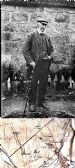
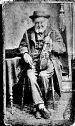
97 Dr. Charles Wattie from the Milton Glenbucket


Dr Charles L Wattie Glenbucket (1846-1888)
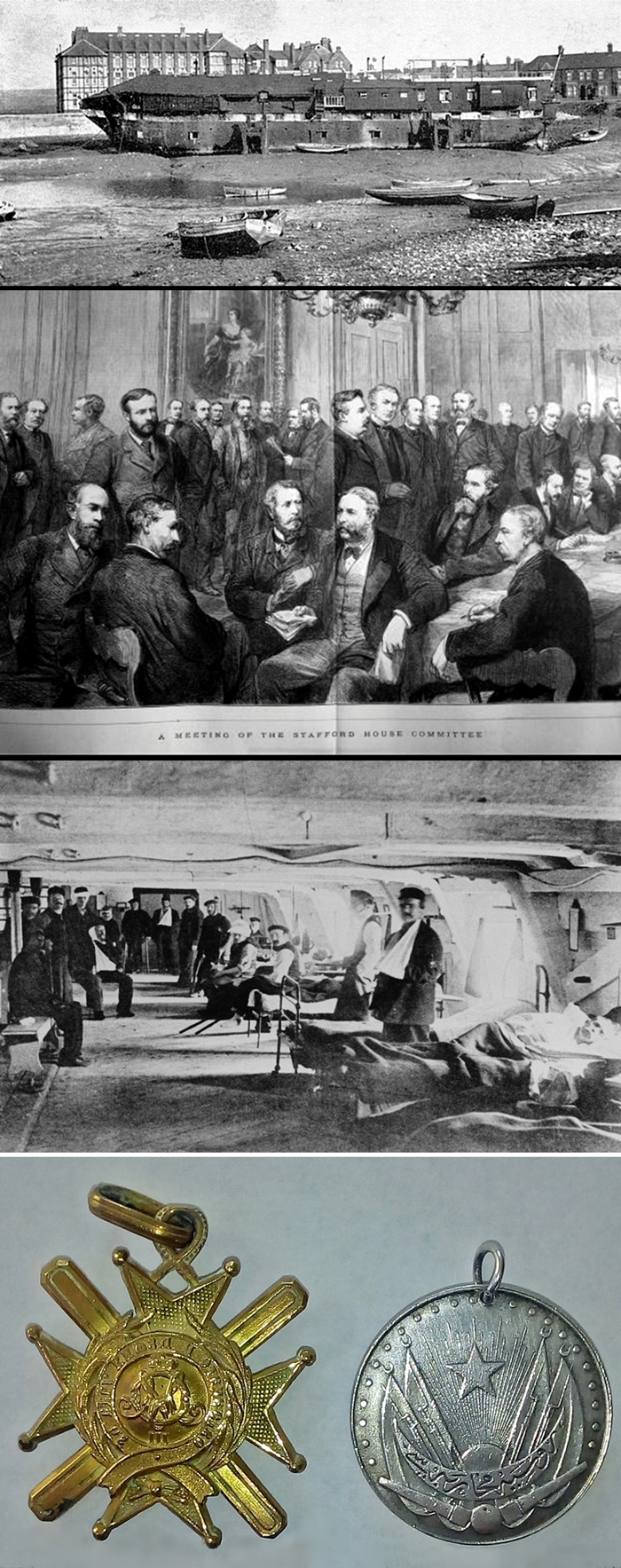
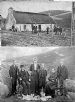
The pictures above show:
1. The Hospital Ship Hamadryad in Cardiff Bay
2. Patients inside the Hospital Ship
3. The Stafford House Committee
4. Dr Wattie's medals
The life of Dr Wattie, who was born in 1846, was a short but eventful one, ending with his death in 1888 at the age of 42. Dr Wattie was born in Glenbucket in a distant Aberdeenshire Glen, which at that time was a relative isolated part of the country. Despite this, he managed to get an education which enabled him to study Medicine at Aberdeen University, travel to work in London and Cardiff and travel to the Balkans to take part in a Serbian war. He finally ended up back home as a General Medical Practitioner in Alford and Glenbucket.
I am grateful to Dr Wattie's distant relatives for providing photos of the medals and also arranging for the medals to be placed in the care of the Aberdeen Medico Chirurgical Society.
Dr Wattie’s family history is noted at the end of the article.
The following is a commemoration of his life in the Aberdeen Evening Express of Monday 28th May 1888 at the time of his death.
DEATH OF WATTIE. GLENBUCKET.
“We regret have to record the death of! Dr Charles Lindsay Glenbucket, which took place on Saturday, at comparatively early age. Although laid aside from active work for some considerable time, Wattie has had somewhat varied' and remarkable career. Educated at the Grammar School and University Aberdeen, he went, shortly after taking his degree, to London, and, was for some years, assistant, and afterwards surgeon, at the Charing Cross Hospital. On the outbreak of the Serbian War, a somewhat restless indisposition induced him to volunteer one of the surgeons sent out to the seat of war by the Marquis of Bute at his own expense, and went through the whole of the war, and earned the special thanks of the Serbian Government. Shortly after the outbreak of the Russo Turkish war he again went to the seat of war as a surgeon the Staff of the Turkish army, being attached to the army under the command of Mahomet Ali Pasha, who had a great regard for him. He was present at many the principal engagements in the war the date the capture of Sofia, which, along with another English surgeon, he was taken prisoner by the Russians, and kept in close confinement by them for, six weeks, until exchanged at the conclusion of the war. Wattie received the thanks the Turkish Government, and the Order the Osmanieh—third degree—from the Sultan. His health was very much shattered by the many privations bad undergone, however, and although, after the conclusion of the war, he returned home with a view to recover his health, and, an opportunity affording, started practice in his native district His constitution gradually broke down, until nearly three years ago he had to give up active work altogether. Dr Wattie was, in private lite, of an exceedingly amiable and modest disposition, and himself in no ordinary degree to his patients, whilst, as a medical practitioner. be had the confidence of all classes in a wide district of country. “
Children in Glenbucket in the 1850’s would have gone to the local Parish school in Glenbucket run by the church. When children seemed to have some academic promise, they were encouraged to go to university. The local teacher, Minister and Doctor would identify such children and persuade their parents to let them go away for education. Usually they went to the Aberdeen Grammar School for two years before going on to Aberdeen University. Assistance was probably given in finding suitable accommodation for them in Aberdeen. Chares Wattie graduated M.B., C.M. in 1870; and later he gained an MD in 1883.
In the 1871 Census, Dr Wattie is in Foddery (village beside Dingwall) with Helen Reid, probably an aunt, and employed as an Assistant Physician and Surgeon
In the Morning Advertiser of Saturday 29th July 1871, it was reported that: “Charles Lindsay Wattie, MB., C.M., has been appointed resident assistant medical officer to the Hamadryad Hospital Ship”,
The Hamadryad Hospital Ship (picture above) was an interesting ship especially as it was not afloat. It was an old ship beached in Cardiff docks to act as a hospital for seamen. This was the only second such Hospital Ship, the other being the Dreadnought Seamen's Hospital at Greenwich. It was felt that seafarers who had spent a lifetime afloat would be happier in a ship environment than in a Hospital on land.
From the BRITISH MEDICAL JOURNAL VOLUME 281 20-27 DECEMBER 1980
Medical History, The Hamadryad Hospital Ship for Seamen, 1866-1905 by J F MAYBERRY
“HMS Hamadryad was the third ship of that name. The third Hamadryad was built at Pembroke Dock between 1819 and 1823 for £24 683 but never saw active service. Laid up at Devonport until 1866, orders were given for her to be broken up, but a month later arrangements were completed for her conversion into a seamen’s hospital ship for use in the Port of Cardiff. She was fitted out at a cost of £1414 to receive between 60 and 65 inpatients, with facilities for a doctor, his medical staff, a matron, and her nursing staff. When the ship arrived at Cardiff, she was grounded on wasteland known as Rat Island an area that subsequently grew into Tiger Bay.
Hospital staff included a medical officer, hospital sergeant, nurses, a cook, and stewardess. The medical officer resided on board, and his practice was restricted to the ship's patients. Despite the unusual surroundings, his medical duties differed little from those of his contemporaries. He visited his patients at least twice daily and followed the professional advice of the honorary staff. In addition to these medical duties he was expected to supervise the cleanliness and ventilation of the wards, collect penny deposits on medicine bottles, prepare wills, and arrange burials.
The 1872 Hospital report the Medical Superintendent stated: I must take this opportunity of tendering my sincere thanks to the resident assistant surgeon, Dr. Wattie for his valuable assistance to me in the discharge of our arduous duties, and also for the efficient manner in which he has taken entire charge of the Hospital during my absence on leave.”
On Tuesday 08 June 1875 the London Evening Standard reported:
“Charles Lindsay Wattie, M.D., CM. Univ Aberdeen assistant medical officer and dispenser to the new asylum in Cleveland-street:”
The Metropolitan Poor Law Act was passed in March 1867 to improve the provision of care for the sick poor in London, particularly through the provision of hospital accommodation separate from the workhouse. The operation of the Act was overseen by the Metropolitan Asylums Board under which six Sick Asylum Districts were formed. one of which was Central London formed in 1868
It would seem that after this Dr Wattie joined the Surgical Staff at Charing Cross Hospital and undertook surgical training.
In 1887 war broke out between Serbia and the Ottoman Empire. In Britain it was seen as a conflict between Christians and Muslims. Because of reported suffering and lack of medical care a number of Aristocrats and others set up charities to pay for medical aid to be sent to Serbia. Two main ones were the Stafford House Committee under the Duke of Sutherland and one under Lord Blantyre
Stafford House Committee
In 1877, seeking more adventure, Dr Wattie joined Lord Blantyre’s (Duke of Sutherland’s son, Charles Stuart) team of 4 Surgeons. The two groups however worked closely together. According to the Committee’s report, by March 1879, they and Lord Blantyre combined had raised £43,750 12s 4d or, in 2014 money, using the economic 108cost which assesses project expenditures in relation to the percentage of GDP, £68,880,000.00.This sum provided fifty salaried medical staff (surgeons and physicians), five staff in charge of logistics, nineteen translators and, directly reporting to their agent Kennett-Barrington, a central office of four accountants and clerical staff. This medical team carried out their work in twenty-one hospitals under their control, three evacuation operations by train and contributed to a refugee shelter. Each surgeon received a salary or stipend of £1 a day for their services to the Committee. By July 1878, 71,274 medical cases had been treated.
Second Serbian–Ottoman War (1877–1878)
In conjunction with the Principality of Montenegro, Serbia declared war on the Ottoman Empire on 30 June 1876. By the intervention of major European powers, ceasefire was concluded in autumn, and the Constantinople Conference was organized. Peace was signed on 28 February 1877. After a brief period of formal peace, Serbia declared war on the Ottoman Empire on 11 December 1877. Renewed hostilities lasted until February 1878. Final outcome of wars was decided by the Congress of Berlin (1878). Serbia gained international recognition as an independent state, and its territory was expanded
The Russo-Turkish War of 1877–1878
This was a conflict between the Ottoman Empire and the Eastern Orthodox coalition led by the Russian Empire and composed of Bulgaria, Romania, Serbia, and Montenegro
In 1877 war broke out between Serbia and the Ottoman Empire. In Britain it was seen as a conflict between Christians and Muslims. Because of reported suffering and lack of medical care a number of Aristocrats and others set up charities to pay for medical aid to be sent to Serbia. Two main ones were the Stafford House Committee under the Duke of Sutherland and one under Lord Blantyre
The Report of the Stafford House Committee produced in 1789 has a number of references to Dr Wattie:
Sofia Hospital.
Period of service: Nov. 14, 1877, to Feb. 14, 17F8.—Treated in hospital, 269 Wounded; average number of beds occupied, 130. The following served on the staff of this section = Surgeons Busby and Wattie, Assistant-Surgeon Boyd, Dispenser Gurlits, and Mr. Cullen.
In November 1877, in consequence of urgent requests for help from Sofia, an ambulance section under Surgeon Bushy was sent to that town, together with a large supply of stores. Surgeon Bushy first undertook the charge of 150 wounded men in three private houses, and then established a hospital in the Pavilion. The town was occupied by the Russians on Jan. 3, but the S. H. surgeons continued at their posts until the end of the month, when they evacuated or transferred to the Government hospitals all their wounded, and returned themselves to Constantinople.
Serra Hospital.
Period of service: Nov. 14-, 1577, to Feb. 14-, 1878. -— Treated in hospital, 269 wounded; average number of beds occupied, 130. The following served on the staff of this section: Surgeons Busby and Wattie, Assistant-Surgeon Boyd, Dispenser Gurlitz, and Mr. Cullen.
In November 1877, in consequence of urgent requests for help from Sofia, an ambulance section under Surgeon Busby was sent to that town, together with a. large supply of stores. Surgeon Busby first undertook the charge of 150 wounded men in three private houses, and then established a. hospital in the Pavilion. The town was occupied by the Russians on Jan. 3, but the S. H. surgeons continued at their posts until the end of the month, when they evacuated or transferred to the Government hospitals all their wounded, and returned themselves to Constantinople.
The following are extracts from Reports to the Chief Commissioner:
Sofia, Nov. 28, l8?7.
We arrived here Friday afternoon, and delivered your letter to the rnédecin-en-chief the next morning. I told him we were prepared either to do work as an ambulance at the front or establish an hospital here. He said that. should Mehemet. Ali approve of the latter course, he would give us a. hospital, but that we must wait for Mehemet Ali's decision as to which of the two we should do. Unfortunately, he was away at the front, but his return was expected daily. We set about hiring a bus so as to take us up to Orkhanie. But arabas here are very scarce, and we found we could not organise this in so short a time; moreover, we heard that all that ground was well occupied by the Red Crescent men. Being convinced. that we were more likely to do good by remaining hero, I went. to the médecin-en-chef again and told him we were anxious to get to work at once, and proposed taking an hospital without waiting for Mehemet Ali's return. They promised to see about thin, and let me know later, but nothing came of it. We told him we were not willing to remain inactive so long, and proposed that, it he could hand over to us an hospital with its patients, and all the necessary requisites for carrying on the work, we would replace these requisites with our own as soon as we could get them up from Constantinople. On these conditions we are to receive an hospital for 150 beds, and begin work to-morrow.
Sofia, Dec. 15. 1877.
Drs. Wattie, Boyd, and myself began work on Dec. 1, in a house with 87 wounded. On the following day another house, containing 55 more, was handed over to us; and on the 5th we received a third house, lull of patients, making the total number of wounded under our mm 159. The houses are overcrowded, the patients lying on the floor, the bedding being miserably insufficient and dirty. This is at probably unavoidable, owing to the large number of wounded constantly coming in, and the disturbed state of the town, making it impossible to obtain immediately what. is necessary; but I hope the next. report will show a considerable improvement. The Turkish regular hospitals, however, are good and well found, and are managed by a competent medical staff. Amongst. the more important canes we have as follows: —Thirty. Five wounds of thigh; four bullet-wounds of knee-joint (one death), seventeen of leg (one death, three amputations), five ankle-joint, seven of fem. (one frostbite, loss oi toes both feel); ten wounds of arm (two amputations), six of forearm and nineteen of hand, seven 0! back and loins ten of head (one death); four non-penetrating wounds of chest, and one wound of chest with penetration of lung (death). The remainder are lighter eases-flesh-wounds and wounds of fingers (oi which there have been four amputations
Dr Wattie’s Report:
Assaf Pasha’: Camp, Senankeui, Sept. 18, 1877.
“I beg to forward some details of the work we have done since we left Varna. We reached Rasgrad on Aug. 2, and after some days we went on to Shumla, where we were courteously received by Mehemet Ali, the Commander-in-Chief, who promised us all assistance, and telegraphed to the different stations as to where our services would be most urgently wanted. Accordingly, on Aug. 14, we set out for Rasgrad, and, joining with Drs.Bushy and Lake, became attached to the division under Nedjb Pacha for the next nine days, we treated, on an average, 30 sick cases n day, mostly ague and dysentery. On Aug. 21, we moved along with Nedjb Pacha’s division up to Spagalar. Here we remained till Aug. 30, the sick-list averaging -10 per day, all of which were treated by us, while we transported some of the more urgent canes to Rasgrad. There were also occasional wounded brought in by reconnoitring parties from day to tiny. On Aug. 30, we were present, with twenty ambulance wagons, at the battle of Karahassan, where nearly, if not. all, the Turkish wounded fell into our hands. During that day and the following night and morning, we attended to (including operations) 251 wounded; remaining with them (luring the night, and transporting as many of the more urgent eases as possible to Rasgrad, the Turkish ambulance helping with the remainder. Next day we passed on with the army to Karahassan, and there remained for. few days, the sick-list averaging 35 per day. On Sept. 4, the army advanced to Yenikeui, where we spent the night; and next day, I65 wounded were attended to by us at the battle of Kaselevo. During that. day and the following, we remained with the wounded, also throughout the night, making them as comfortable as possible beside a stack of barley. The night was very wet. and cold; the wounded suffered terribly. Next day, after the wounded were transported to different places, we went forward to the village of Kaselevo to look for more wounded, but finding none, we went on to Cherissa, where, during that day and the following, 225 wounded soldiers passed through our hands; these being collected from the left. bank of the Lom by the Turkish ambulance, Mr. Boyd at this time working with the Turkish ambulance. Our wagon here did good work in transporting the wounded to the Turkish hospital at Salonica. During the afternoon of the following day, we were joined by Mr. Pratt. at Cherissa, accompanied by Drs Beresford and McQueen, who attended to the remainder, we returning to the comp of Safvet Pascha. During the next few days, we were engaged in attending to the usual number of sick cases, about 40 a day, chiefly ague and dysentery, with occasional wounded; and on Sept, 13 we advanced with Assaf Pacha 12 miles in a westerly direction, and at night encamped near the village of Senankeui. Mr. lake, who had suffered severely from dysentery, hurl, two days previously, left us to recruit at Varna. Next day, Sept. 14, at the battle of Senankeui, we attended 180 wounded men, employing our ambulances in transporting the wounded from the field. Next. day we asked his Excellency Assaf Pacha to lead us help in the transportation, which he at once did, sending for 50 wagons to help us to send them to Rasgrad. In this bottle, as at Karahassan, almost all of the wounded were attended to by us. The wounded suffered badly in the night, which was very cold, we doing’ our best in making large fires and collecting fuel from the neighbouring woods. 'We have received many severely wounded which had been dressed by Turkish surgeons previously. In none of these cases whatever have we Been a splint used or the bullets extracted. We are glad to any we have received the greatest courtesy from all the authorities with whom we have come in contact.”
Along with another English surgeon, Dr Wattie was taken prisoner by the Russians, and kept in close confinement by them for, six weeks, until exchanged at the conclusion of the war. During the war his health suffered resulting in continued disability and early death.
The press reported the news of presentations to Dr Wattie for his work in the Balkans.
SERBIAN GOLD CROSS FOR AN ABERDEEN DOCTOR
“We learn with great pleasure that Dr C. Lindsay Wattle, son of Mr John Wattie, Glenbucket, and graduate of Aberdeen university, has been presented by the Serbian Government with the Gold Cross of the Order of Takovo, in recognition of the eminent services rendered by him in aid of the sick and wounded in the late Turco-Servian war. Free Press.”
North British Agriculturist - Wednesday 18 April 1877
(See picture of Gold Cross above. It was instituted in the Principality of Serbia in 1865 to mark the 50th anniversary of the Second Serbian Uprising against the Ottoman Empire, which had started in Takovo, Serbia.)
“It is gratifying to learn that those of our countrymen who went out to attend the Turkish sick and wounded in the late war, in the pay of the Stafford House Committee, are not going unrewarded. Dr C. Lindsay Wattie, son of Mr John Wattie, Glenbucket, has just received from the Ottoman Government the Turkish war medal and ribbon. The presentation, we understand, was made through Nedjil Pasha, General of Division in Mehemet Ali’s army, with whom Dr Wattle was more immediately connected, and by whom his services were highly valued.
Following the wars, Dr Wattie returned home to Glenbucket and took the opportunity of becoming the doctor in the rea covering Alford and Glenbucket. In the 1881 Census he is living at his old home at Miltown of Glenbucket with his family. He never married. His occupation was recorded as General Practitioner. Dr Wattie continued to engage with the local population and below is a record of him giving a talk on his Balkan experiences at the local Towie Hall.
Aberdeen Press and Journal - Saturday 20 April 1878
“TOWIE. —Social Meeting. —On Friday evening social meeting was held in the Public Schoolroom for the purpose of defraying the expense of recent extensive repairs on the footbridge over the Don here. This bridge being the only means of crossing a place where there is considerable traffic, is a great convenience to the district, and it was therefore expected there would be large turnout. This expectation was rapidly realised, the proceeds amounting to the very respectable sum, after paying all expenses, £6 14s..T'he Rev. Robert Milne, minister of the parish, resided in very genial manner. Dr Wattie, Milltown of Glenbucket, who has lately returned from the seat of war in the East, where he was professionally engaged with the Turkish army, gave two short but very interesting addresses descriptive of his travels experiences. First when with Mehemtet Ali's army, and afterwards when at Sophia, where he was taken prisoner by the Russians. The rest of the programme vas mainly musical, consisting of solos, duets, and part songs, with piano accompaniment, all of which were rendered in highly efficient and tasteful style by and gentleman amateurs. After votes of thanks been very cordially given to Dr Wattie, the committee. the performers, and the chairman, this highly successful meeting was brought to a close singing God save the Queen”
A descendant of Dr Wattie kindly provided a story from his time in General Practice:
“The only story that springs to mind is about Dr. Charles Wattie, my grandmother's uncle who returned from the Serbian and Russo-Turkish wars to work as G.P. in Bridge of Alford and Glenbuchat. He was not a well man, and was looked after by his sister, Jean Wattie, who took on the role of housekeeper to the doctor. When patients came to the door requiring help from the doctor, they first had to get past the formidable Jean who would ask - What's wrang wi ye?
I've got an afa sair back'
Can ye eat?
Oh aye, I'm eatin a' right.
Weel, if ye can tak yer maet, there's nathin comin ower ye.
AND THE DOOR WOULD SHUT.”
On May 26 1888 Dr Charles Wattie died at the age of 46.
Another Doctor in the Wattie family was Charles’s nephew, Alexander who also worked in Alford. He also died young and his bereavement notice is below:
Aberdeen Evening Express - Wednesday 09 August 1893
DEATH OF DR WATTIE, ALFORD
The death announced of Dr Wattie, Alford, late Strathdon, which occurred yesterday at Martin Cottage, Alford. Deceased was a member of a family well known and highly respected on Upper Donside, being the third son of the late Mr James Wattie, merchant, Bellabeg, whose younger sons still carry on the mercantile, post-office, and banking businesses at Bellabeg. Alexander was educated at the parish school of his native strath, and at the Grammar School, Aberdeen. He afterwards studied Marischal College, where, after a distinguished career, he graduated with the degrees M B., C.M. At the close of his course west Shetland, but shortly afterwards proceeded Manchester, where he practised for some time. After a short stay in England. Dr Wattie came north Echt, from which was transferred Strathdon by appointment of the Local Authority. Some five years ago, in consequence of ill-health, he had to resign active duty, and went the south of England with a view to recruiting his strength. His constitution, however, which was never robust, did not benefit much the change, and ultimately returned to Alford where he spent the remainder of his days, and where yesterday passed away at the early age of 38. Deceased was regarded a skilful practitioner. His delicate state of health prevented him from taking any active part in public affairs, and beyond the circle of his friends and patients he was but little known those who knew him, however, was a frequent favourite, and was held in high esteem. Wattie leaves widow and young family.
Both Charles and Alexander were remembered in toasts at a local function.
Aberdeen Press and Journal - Saturday 07 August 1897
“Mr J Forbes proposed the Medical profession. Dr Howie, in replying, referred to the progress made in medicine and sanitation during the last 50 years. That part of the country and especially Glenbucket, had produced many of our best medical men, and those he might mention were the late Dr Charlee Wattie, Dr Alexander Wattie, and Professor Reid. So far as both local practitioners were concerned, they had doubtlessly many hardships to get through, but for his path, had always reeved the greatest kindness from the people of Glenbucket”
Wattie Family History:
William Wattie 1770–1855
Birth 1770
Death before 1855 St. Nicholas, Aberdeen
Parents
Unknown Father
Unknown Mother
Spouse
Helen Ronald
1776–1855
Children
John Wattie 1805–1890
William Wattie 1806–1866
John Wattie 1804 - 1890
Birth 10 May 1804 Kildrummy
Died 17 Feb 1890 Glenbucket/Glenbuchat
Spouse
Charlotte Reid, b. 27 Mar 1808, Glenbucket/Glenbuchat
Married 27 Nov 1830 Glenbucket/Glenbuchat
Children
1. William Wattie, b. 25 May 1828, Glenbucket/Glenbuchat
2. Charlotte Reid Wattie, b. 02 Oct 1832, Old Machar
3. John Wattie, b. 12 Dec 1837, Glenbucket/Glenbuchat
4. Jean Wattie, b. 27 Sep 1839, Glenbucket/Glenbuchat
5. Helen Wattie, b. 21 Aug 1842, Glenbucket/Glenbuchat
6. Charles Wattie, b. 05 Mar 1846, Glenbucket/Glenbuchat
7. Mary Forsyth Wattie, b. 31 Jan 1852, Glenbucket/Glenbuchat
Histories census
1841 enumerated @ Easter Mont Bleaton, Gamrie (farmer) with wife and children Charlotte, John and Jean
1851 enumerated @ Milton, Glenbucket (farmer) with wife and children Charlotte, John, Jean, Helen and Charles
1861 enumerated @ Milton, Glenbucket (farmer) with wife and children Charlotte, John, Jean, Charles and Mary
1881 enumerated @ Milltown, Glenbucket (farmer) with wife and children Charlotte, John and Charles
Charles Wattie 1846 - 1888
Birth 05 Mar 1846 Glenbucket/Glenbuchat
Died 25 May 1888 Glenbucket/Glenbuchat
Father
John Wattie, b. 10 May 1804, Kildrummy
Mother
Charlotte Reid, b. 27 Mar 1808, Glenbucket/Glenbuchat
Histories census
1851 enumerated @ Milton, Glenbucket with parents and siblings Charlotte, John, Jean and Helen
1861 enumerated @ Milton, Glenbucket with parents and siblings Charlotte, John, Jean and Mary
1881 enumerated @ Milltown, Glenbucket (medical practitioner) with parents and siblings Charlotte and John
Picture added on 04 November 2020 at 16:37
This picture is in the following groups
people
people
people



Email sent to comment author
Ed