The Glenbuchat Image Library
No: 2206 Contributor: No Contributor Year: 2019
60 Glenbuchat Hall Angels


Glenbuchat Hall Angels
Where are the Glenbuchat Hall Angels?
Pictures above
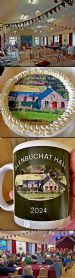
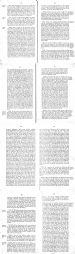
1. Glenbuchat hall showing sloping roof on the east side. Possible site of the angels.
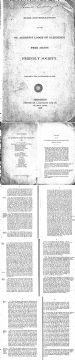
2. Self Portrait of Phoebe Traquair
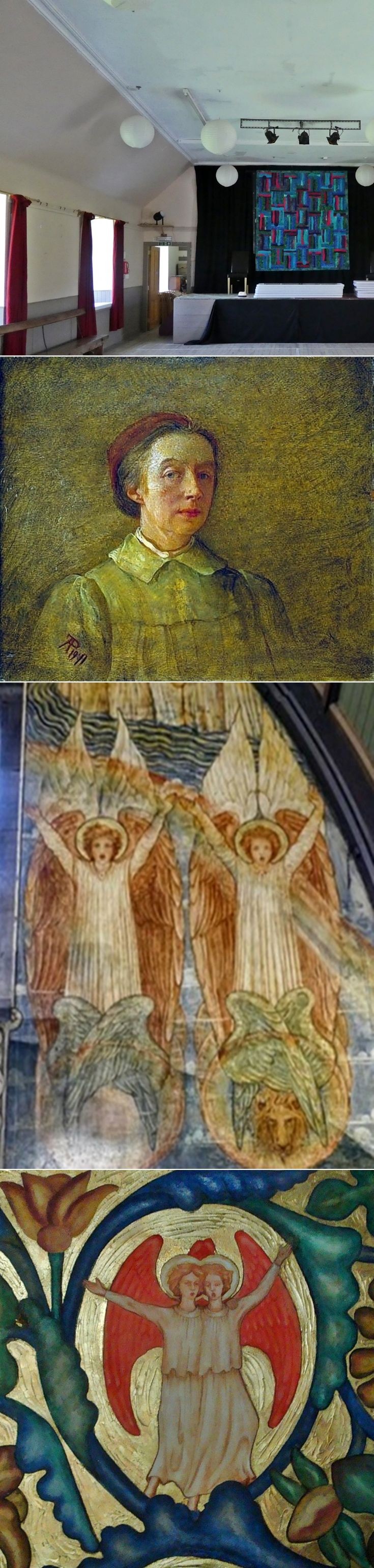
3. Angels at St Mary’s Cathedral Edinburgh
4. Angels at St Peter, Clayworth, Nottinghamshire.
(Below is the story behind the ‘Angels’ which are at present not visible. If anyone has knowledge about them or ideally a photograph, I would be delighted to hear about it. Editor)
The hunt for the ‘Glenbuchat Angels’ started with an article about Johnny Coutts in the Strathdon News Letter. The article stated:
“I remember at Glenbuchat Hall …. All my dancing days I remember the angels that were painted on the ceiling there, they were really bonny and colourful. don't know what happened to them. “
This encouraged more enquiries to find out more about the angels.
I found that Rita Moir nee Sandison has seen the ‘Angels’ as a child. Rita was the daughter of Mr and Mrs Sandison and she spent the first 25 years of her life at Netherton Glenbuchat. She remembers seeing the angels when she was very young but thinks they were painted over in the early 1960’s. For some time after that in certain conditions the vague shadow of the angels could still be seen. It seems they were on the east side of the sloping part of the roof.
Rita stated:
“As I remember them in the fifties, there were maybe three or four large ones, full face, with big wings, they must have been painted over in the sixties. For some time after, when the hall was in use, you could see them.
Each was on its own, and as I recall, large, filling the flat slope between the ceiling and the wall. They were spaced out, all along. Face on, with long hair and large wings, as I believe angels are supposed have!”
Rita contacted a cousin of David Soul, a descendant of the Barclay family and he stated that hadn’t heard of them but gave me the name of an artist who did work for James William Barclay of Glenbuchat who died in1907. This was a well-known Scottish artist of the turn of the century, Phoebe Traquair. If it was by her, they would be significant paintings.
It is worth nothing that one of her works at Kellie Castle was painted over in the 1940’s and restored in 1996 by the National Trust.
If it is her work, why was she painting at Glenbuchat? She was taught enamelling by the wife of Thomas David Gibson-Carmichael, 1st Baron Carmichael a Scottish politician. Since James William Barclay the laird of Glenbuchat was an MP he would possibly have known about Phoebe Traquair through Gibson-Carmichael.
From Wikipedia:
Phoebe Traquair
Phoebe Traquair was born Phoebe Anna Moss on 24 May 1852 in Kilternan, County Dublin. Her parents were physician Dr William Moss and Teresa Moss (née Richardson). Phoebe was the sixth of their seven children. Traquair studied art at the School of Design of the Royal Dublin Society between 1869 and 1872. She married the Scottish palaeontologist Ramsay Heatley Traquair on 5 June 1873. The couple moved to Colinton Farm in the south-west of Edinburgh in spring 1874. Some of her work was palaeontological drawings related to her husband's research on fossil fish, and these drawings are held in the special library collections of National Museums Scotland. Their children were Ramsay, Harry and Hilda.
Phoebe's elder brother was William Richardson Moss, a keen art collector who owned a number of works by Dante Gabriel Rossetti. Traquair shared with her brother this love of art, including a particular fascination with the work of Rossetti and that of William Blake, and her style and choice of subject matter remained deeply influenced by Blake and Rossetti's art and poetry throughout her life.
Career
During the late 1870s Traquair continued to develop her art, working mostly on embroidered domestic textiles. By the mid-1880s the Traquair's social circle included the socio-biologist Patrick Geddes, a founder of the Edinburgh Social Union, who commissioned Traquair to decorate the Mortuary Chapel of the Royal Hospital for Sick Children, Edinburgh. This was the first of four Edinburgh interiors Traquair painted between 1885 and 1901.
Royal Hospital for Sick Children, Mortuary Chapel Murals, Edinburgh
During 1885 and 1886 Traquair created a series of murals for the Mortuary Chapel of the Royal Hospital for Sick Children, Edinburgh. The mural is of Three Maidens (Divine Powers) which is bordered by images within lunettes of writers, artists and critics, such as Edward Burne-Jones, William Bell Scott, Noel Paton and John Ruskin, who was a considerable influence on Traquair. This was her first work as a professional artist. The mortuary was a small windowless room, formerly a coalhouse, where bodies could be left "reverently and lovingly" prior to burial.[The work was completed in 1886 and before the building was further developed in 1894, the murals were transferred to a new site and Traquair restored and added them, albeit in a simpler composition, between 1896 and 1898.[
Salvation of Mankind (detail) by Phoebe Anna Traquair, 1886 to 1893
Her murals of the song school of St Mary's Cathedral (1888–92) won Traquair national recognition. Within a tunnel-vaulted interior, the east wall depicts the cathedral clergy and choir. The south wall depicts Traquair's admired contemporaries such as Dante Gabriel Rossetti, William Holman Hunt, and George Frederic Watts. On the north wall birds and choristers sing together, and the west wall shows the four beasts singing the Sanctus.]The Song School is still used daily for practice by the Choristers.
Mansfield Place Church
Traquair's best-known work is in the vast former Catholic Apostolic Church (1893–1901) on Mansfield Place (now called the Mansfield Traquair Centre) at the foot of Broughton Street, which has been called "Edinburgh’s Sistine Chapel”, and "a jewelled crown". It was this work which "helped to confirm her international recognition."
Other works
A notable work by Traquair can be viewed in the Thistle Chapel of St Giles Cathedral where she designed the earliest enamel armorial panels over the knights' seats. Another of her major works is a key Arts and Crafts illuminated manuscript of Sonnets from the Portuguese by the Victorian poet Elizabeth Barrett Browning, which is held by the National Library of Scotland (NLS) and a version is available on the NLS Digital Library. Traquair was a prolific artist who, as well as her murals and embroidery, produced hundreds of pieces of jewellery. She was invited to exhibit at the World's Fair in Chicago in 1893 and her four silk-embroidered panels The Progress of the Soul were displayed in St. Louis in 1904. That year she returned to mural painting with a work for the chancel of the St. Peter's Church at Clayworth in Nottinghamshire. Her final mural was completed for the Manners family chapel at Thorney Hill in the New Forest between 1920 and 1922. A large number of other works by Traquair, including: Enamels; Illuminated manuscripts of Rossetti's sonnet sequence Willowwood; a piano with a case made by Traquair's friend and artistic collaborator Robert Lorimer and painted with scenes from Willowwood, the Biblical Song of Songs, and the story of Psyche and Pan; a triptych of embroideries based on the story of the Redcrosse Knight from Edmund Spenser's Faerie Queene, are on display at National Museums Scotland in Edinburgh.
At Kellie Castle in Fife in 1897, Traquair completed the Painted Panel above the fireplace in the Castle's Drawing room. The painting is based on Botticelli's "primavera" and was completed when John Henry Lorimer occupied the Castle. However, the painting was covered over in the late 1940s but was restored in 1996 by the National Trust for Scotland.
Picture added on 02 September 2019 at 22:45
This picture is in the following groups
hall
hall
hall